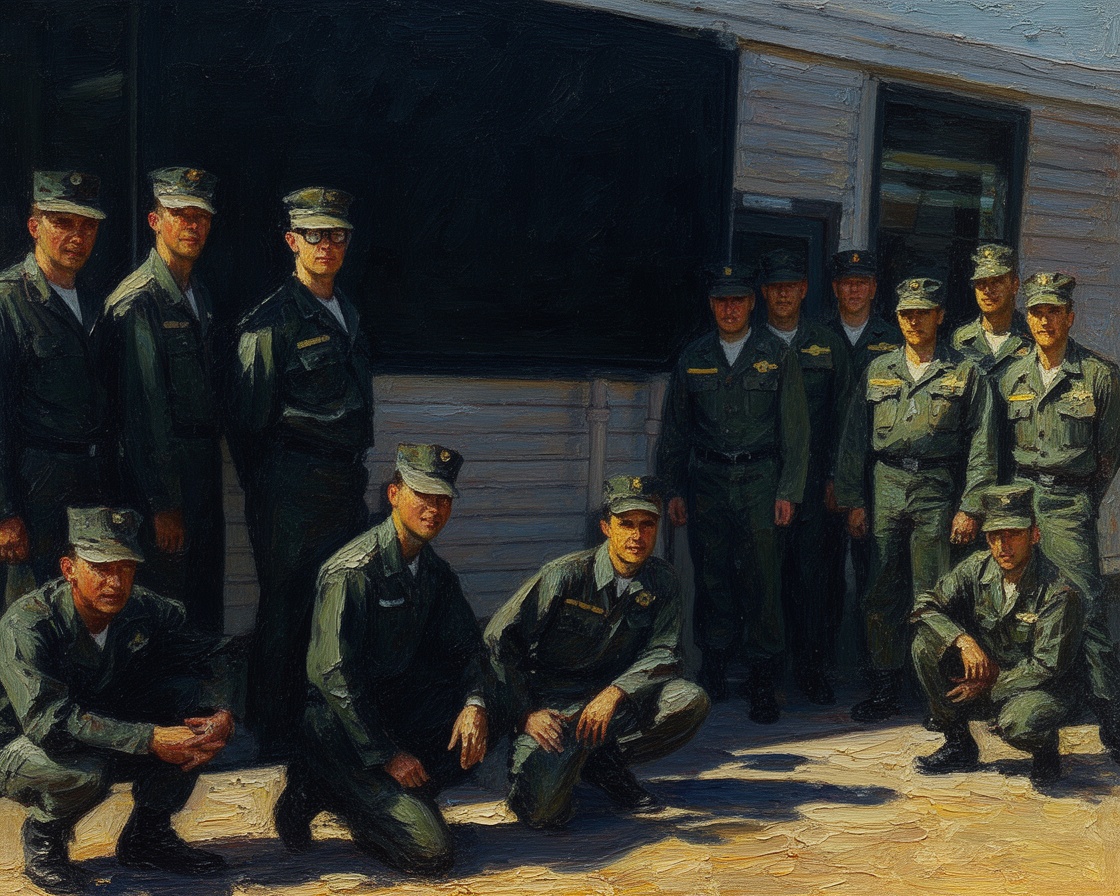
The only Navy Seabee awarded the nation’s highest award for valor
A historical battlefield moment near Dong Xoai propelled a lesser-known unit into the annals of military valor. Marvin Shields, a Navy Seabee, earned the Medal of Honor for heroism during a brutal defense of a Special Forces camp. The action helped shape early U.S. counterinsurgency narratives in Vietnam and remains a stark exemplar of individual sacrifice under fire.
The fiercest hours around a Special Forces camp near Dong Xoai tested a small, mixed unit to the breaking point. Marines and Seabees, supported by irregular forces, faced sustained assault from a numerically superior enemy. Marvin Shields stood in the breach, taking risks that preserved a critical defensive arc and bought time for extraction. His courage under direct enemy fire became a defining moment in the early phase of the Vietnam War.
The broader context is the rapid expansion of U.S. advisors and regional counterinsurgency efforts in the early 1960s. Dong Xoai was one of several outposts that signaled the shift from advisory missions to kinetic engagement. Shields’ action occurred under chaotic conditions, when communications were degraded and urgency dictated decisions in real time. The battle hardened U.S. judgment on how to defend isolated camps and protect convoys along critical supply routes.
Strategically, Shields’ defense reinforced the perception that disciplined, well-supported outposts could deter rapid insurgent incursions and protect a broader footprint. The incident fed into the growing emphasis on combined-arms readiness, supporting fires, and rapid reaction forces in Vietnam. It also highlighted the Seabees’ dual role as engineering builders and frontline defense, challenging the traditional separation between construction and combat duties.
Technically, Shields’ award acknowledged acts of conspicuous gallantry in the face of extreme danger. The specific combat details—weapon engagements, casualty figures, and the timing of engagements—were later codified in the Medal of Honor citation and associated records. The defense demonstrated how a small group could leverage terrain, suppressive fire, and improvised fortifications to slow an overwhelming assault and stabilize the camp’s perimeter.
Looking ahead, the Dong Xoai defense informed U.S. tactical posture in the early insurgency, stressing the necessity of robust perimeter defense, rapid medevac, and sustained resupply. The legacy of Shields’ actions contributed to doctrinal debates on small-unit resilience, air mobility, and the integration of support units into frontline operations. In the broader arc of the war, the episode underscored the high price of early engagement and the enduring importance of individual valor in shaping strategic outcomes.