Technological Innovations Reshaping U.S. Naval Operations
A new eBook explores how unmanned systems and digital integration are transforming U.S. Navy capabilities. These advancements signify a shift in naval strategy and operational effectiveness.
The recent release of Breaking Defense’s eBook sheds light on the transformative impact of unmanned systems, digital integration, and emerging technologies on U.S. naval operations. It underscores the necessity for the Navy to adapt its strategic framework to leverage these advancements for enhanced maritime security and operational efficiency. As global threats evolve, so must the tools and strategies employed by military forces to maintain dominance at sea.
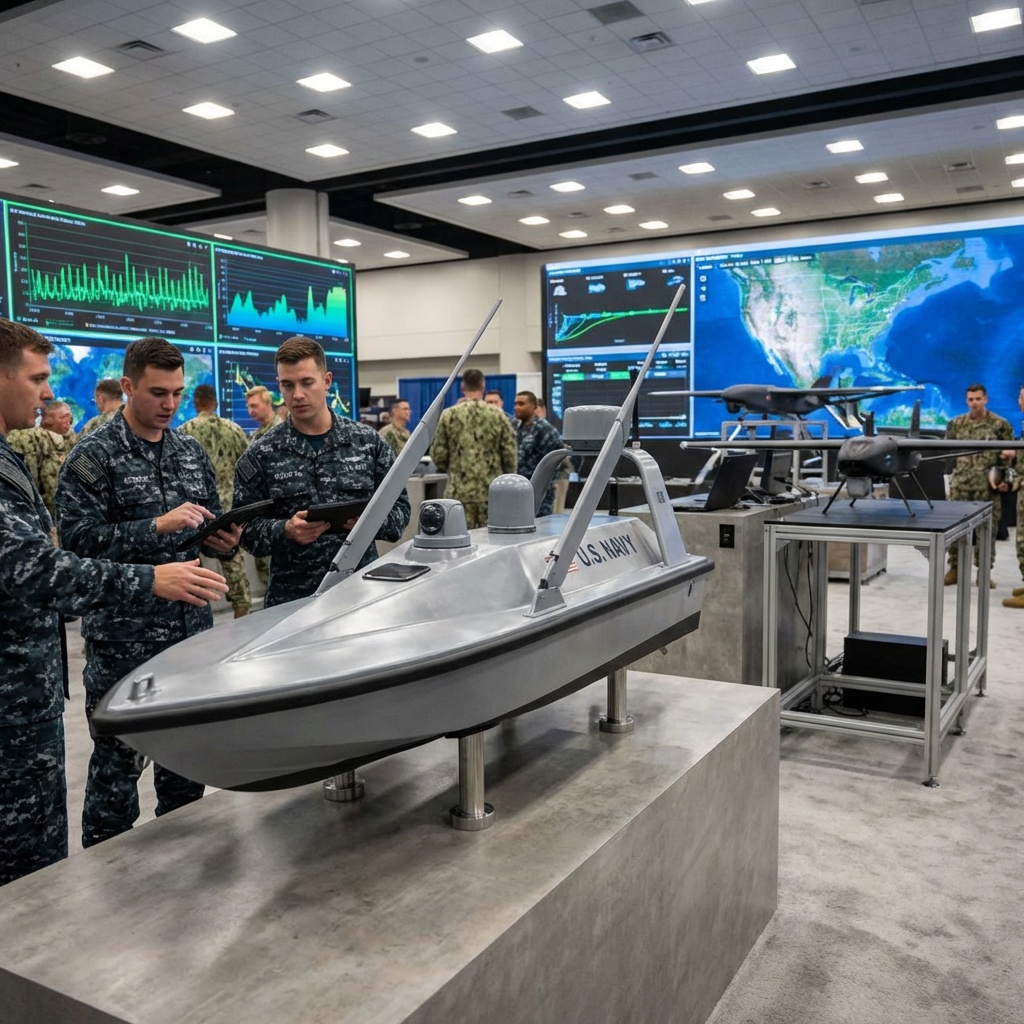
Central to this transformation are unmanned systems, which are increasingly being integrated into naval fleets to provide real-time intelligence, surveillance, and reconnaissance (ISR) capabilities. The use of unmanned aerial vehicles (UAVs) and unmanned underwater vehicles (UUVs) allows for extended operational ranges and reduced risks for personnel in high-threat environments. These system enhancements enable better situational awareness and more effective decision-making processes in military operations.
Furthermore, the integration of digital technologies, including artificial intelligence and machine learning, plays a critical role in streamlining operations. Advanced data analytics can improve mission planning and resource allocation, ensuring that naval forces can respond more swiftly and effectively to emerging threats. This technological synergy not only optimizes current capabilities but also facilitates the development of next-generation platforms and systems.
Strategically, the evolution of the U.S. Navy's capabilities through these technologies represents a shift in naval warfare philosophy. The emphasis is moving towards agility, networked operations, and multi-domain engagement, aligning with the broader U.S. military strategy. As adversaries invest in similar technologies, maintaining a competitive edge through innovation is paramount for the Navy's long-term effectiveness.
The insights presented in this eBook highlight contributions from various manufacturers and developers who are leading this charge, including established defense contractors and start-ups dedicated to crafting advanced naval solutions. As these technologies mature, their potential applications will extend beyond conventional warfare, potentially encompassing humanitarian assistance, disaster relief, and collaborative international maritime security efforts.