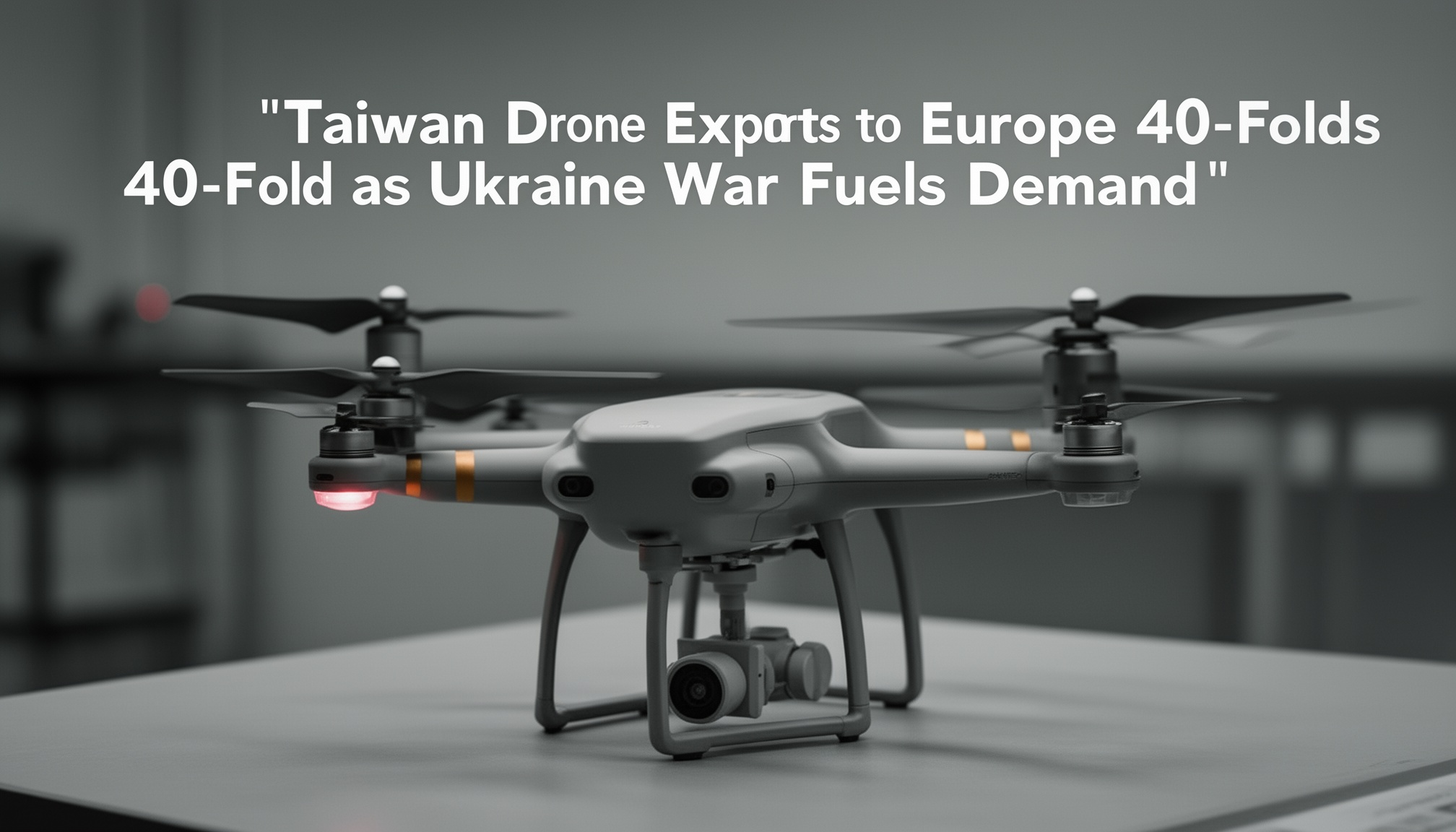
Taiwan Drone Exports to Europe Surge 40-Fold as Ukraine War Fuels Demand
European demand for Taiwanese unmanned aircraft surges, driven by Ukraine-related security concerns and expanding export controls. The 40-fold rise signals a shift in international defense supply chains and deterring capabilities for European partners. Analysts warn of heightened competition, regulatory hurdles, and potential countermeasures by regional powers.
European defense markets have seen a dramatic rebound in Taiwanese drone shipments, with exports surging roughly 40-fold compared to prior periods. The spike is closely tied to the ongoing conflict in Ukraine, which has intensified demand for off-the-shelf and specialized unmanned systems. Buyers in multiple European states are prioritizing short-range, reconnaissance, and light-combat drones to bolster border and frontline resilience. Supply chains, financing, and export licensing continue to shape the trajectory of this trend.
Historically, Taiwan has positioned itself as a reliable supplier of small and medium-sized drones to international buyers, emphasizing ease of deployment and rapid sustainment. The current uptick in European orders underscores a broader reorientation of defense procurement toward rapid, modular systems that can be fielded with limited training. It also elevates Taiwan's status in regional security dialogues, given its sensitive political position and strategic value in deterring near-term threats that could spill over from the war in Ukraine.
Strategically, Europe is balancing deterrence and alliance cohesion while expanding access to advanced ISR and light strike capabilities. The Taiwan-export surge may pressure rival producers to accelerate development in anti-drone and counter-UAS systems, as well as push Western allies to harmonize export controls to avoid bottlenecks. The trend also complicates China-Taiwan dynamics, as Beijing canvasses options to influence foreign drone markets and global supply chains.
Technical specifics are evolving alongside demand: most exports center on small-class quadcopters and fixed-wing platforms with modular payloads, including basic ISR sensors and lightweight munitions. Production remains distributed among several Taiwanese manufacturers with varying degrees of vertical integration. Budgets for defense procurement in recipient countries continue to grow, reflecting a broader push to modernize unmanned capabilities and sustain muscle in high-intensity contingencies.
The likely consequences include tighter integration of Taiwanese drones into European defense plans, expanded cooperative development programs, and enhanced interoperability with NATO-standard communications. Analysts expect continued price competition as more players enter the market and as export controls tighten in some jurisdictions. In the medium term, the market could reshape regional deterrence calculations and spur new sanctions or countermeasures from states wary of widening drone access.