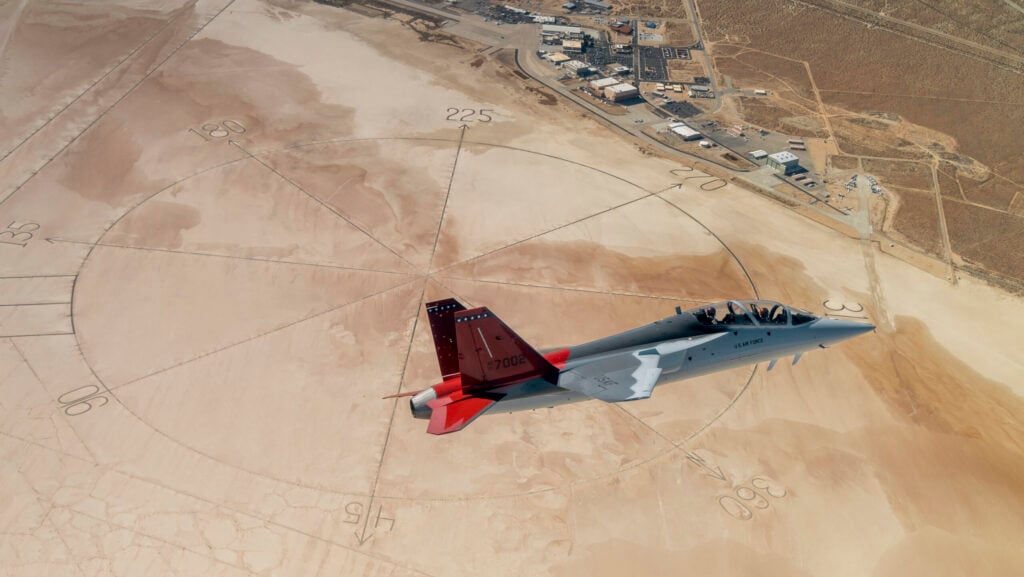
T-7 Trainer Production Approved by Air Force, Major Step for Advanced Pilot Training
The U.S. Air Force is set to approve the production of the T-7 Red Hawk trainer aircraft, enhancing future pilot training capabilities. This decision signifies a strategic investment in modernizing the training fleet ahead of an anticipated demand for new pilots amid evolving aerial combat requirements.
The U.S. Air Force is reportedly on the verge of approving production for the T-7 Red Hawk trainer aircraft, with formal confirmation expected within days. The T-7, designed by Boeing and Saab, is intended to replace the aging T-38 Talon fleet and facilitate advanced pilot training for various mission profiles. Air Force Program Executive Officer for Training Rodney Stevens expressed confidence in the aircraft's design and readiness for mass production, stating, 'We're ready to start proving that we can produce the aircraft at rate.'
The decision to move forward with T-7 production comes at a critical juncture for the U.S. military, which is grappling with a shortage of trained pilots. With projected requirements for increased aircrew in response to a rapidly changing global threat landscape, the T-7 is positioned to play a significant role in addressing this gap and ensuring the tactical superiority of U.S. air operations.
Key players include Boeing and Saab, who have partnered in the development of this aircraft, as well as the U.S. Air Force which is determined to modernize its training processes. The successful rollout of the T-7 will support not only current U.S. Air Force operations but may also impact international defense partnerships as allied nations seek modern training solutions.
The implications of this approval extend beyond national security; it underscores a commitment to maintaining technological edge in pilot training capabilities. As other nations also pursue advancements in military aviation training, the U.S. could enhance its alliances by offering the T-7 as part of defense cooperation agreements, securing a strategic foothold in pilot training industry globally.
Historically, advancements in training aircraft have paved the way for better-prepared pilots, thus influencing aerial conflict outcomes. The introduction of the T-7 could mirror previous pilot training initiatives, which significantly impacted air warfare during conflicts involving U.S. air forces.
In conclusion, this decision is a pivotal step toward bolstering the U.S. Air Force’s readiness and operational effectiveness, with potential positive ramifications for allied air power integration and joint operations in diverse theaters of conflict.