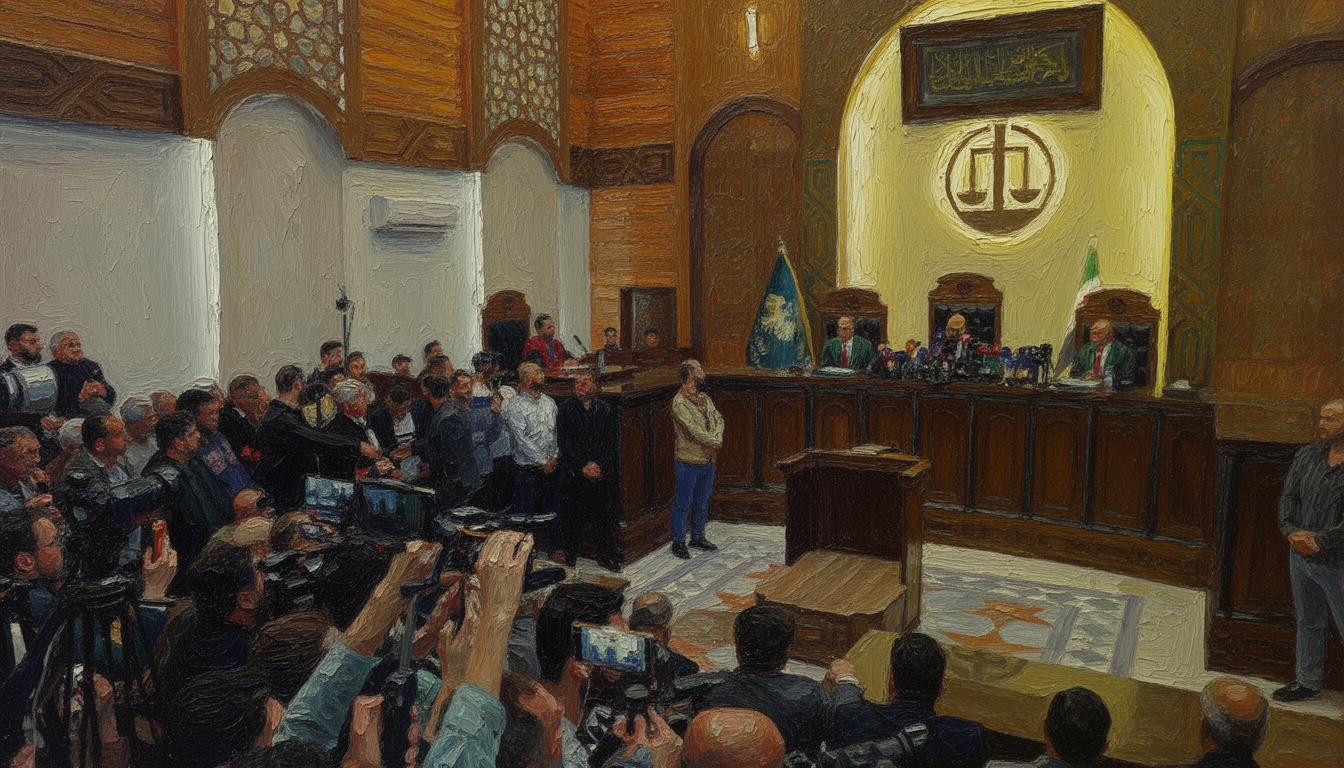
Syria launches long-awaited trial of Assad-era security officials
A public trial opens in Damascus, targeting officials tied to Bashar al-Assad’s security apparatus. The proceedings mark a rare, domestic accountability moment with potential ripple effects on internal power dynamics and regional perceptions of Damascus's willingness to confront past abuses. The case signals a broader push to address wartime conduct, though outcomes remain uncertain for stability and reform.
The first public trial in Syria of officials linked to the regime of former President Bashar al-Assad opened in Damascus, signaling a high-profile move toward accountability after years of conflict. The proceedings center on individuals accused of crimes against the Syrian people, and they confront the regime’s security establishment with a direct test of post-conflict legitimacy. The courtroom appearance by Atef Najib, a former brigadier general who headed the Political Security Branch in Daraa and who is a cousin of Assad, places a personal face on the broader purge of senior security figures. The charges, as described by state media, immediately raise the stakes for the regime’s domestic political optics and for veterans of the security services who still operate inside the system. The trial thus blends domestic legal theater with signaling to both loyalists and adversaries that some reckoning may occur, even as the conflict remains unresolved on the ground.
Context matters: Syria’s war period produced a vast apparatus of security agencies and a culture of impunity that has long complicated any transition toward credible rule of law. The opening of this trial follows a trajectory of sporadic accountability efforts that have struggled to establish consistent precedents or reliable judicial mechanisms. It also reflects ongoing international attention to crimes committed during the conflict, and to the regime’s willingness to subject figures from the security ecosystem to legal scrutiny. The case comes amid shifting regional alignments and renewed emphasis on stabilizing governance structures in a post-2011 landscape, where international actors increasingly scrutinize Damascus’s human-rights record and accountability promises. The timing suggests a potential calibration by the regime to demonstrate internal discipline while avoiding a broader crisis of legitimacy that could jeopardize its hold on power.
Strategic significance centers on how Damascus handles internal accountability without triggering wider political fracture. The trial could influence loyalty dynamics within the security services, where senior figures command networks that extend into provincial bottlenecks and local militias. A credible process may marginalize impunity narratives and offer a platform for victims’ voices, thus shaping civil-military relations and public confidence in state institutions. Conversely, any perceived sham or partial justice risk deepening distrust among communities most affected by wartime abuses and could fuel fractures or protests that threaten stability. The outcome will also shape how foreign partners view Syria’s trajectory toward governance reforms or continued coercive control under the regime.
Operational and legal specifics remain scarce in this initial report, but the profile of Atef Najib indicates the case targets the nexus of political security and regional command. Najib’s role in Daraa places him at the heart of one of Syria’s most volatile early-frontline provinces, where rebel and regime clashes produced a defining phase of the conflict. The charge of crimes against the Syrian people signals a broad, perhaps sweeping, legal rubric intended to capture systemic abuses rather than isolated incidents. Details on trial procedures, jurisdiction, and potential penalties remain to be announced, but the case already tests the regime’s capacity to circumscribe its own security apparatus through formal legal channels. The narrative flow suggests the state intends to project an image of legal accountability even as it preserves operational security around ongoing investigations.
Forward assessment points to several likely dynamics: domestically, the trial could recalibrate the balance of power within the security establishment, potentially creating openings for reform-minded officials or, alternatively, provoking a hardening of loyalty among hardliners. Regionally, the development may influence actors who have supported Damascus through alternate governance models or through security nullifying behaviors, prompting reassessments of aid, investment, and diplomatic engagement. Internationally, the trial could become a focal point for human-rights advocacy and calls for verifiable accountability, potentially affecting sanctions regimes and conditional engagement frameworks. Predicting the trajectory remains challenging; the regime’s survival calculus will weigh credibility gains from any genuine accountability against the risk of exposing delicate internal fault lines that could destabilize core governance pillars.