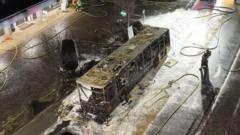
Swiss Bus Fire Linked to Mental Crisis, Not Terrorism
A man’s self-immolation aboard a Swiss bus highlights vulnerabilities in public safety and mental health crises. Officials dismiss terrorism claims but the incident raises serious security concerns.
A shocking incident occurred aboard a bus in Switzerland when a man reportedly set himself on fire, leading to an immediate evacuation and panic among passengers. Swiss authorities have confirmed that the man is believed to have psychological issues rather than connections to terrorism. This grim event underscores the potential risks posed by individuals in mental distress in crowded public spaces.
The background context reveals a broader concern regarding mental health in Europe, where the debate surrounding mental illness, societal stigma, and public safety has gained momentum. In recent years, many nations have struggled to adequately address mental health needs, often leading to tragic outcomes in crowded settings. The incident follows a series of similar events where mental health crises led to unintended public danger, highlighting the urgent need for better preventive measures and mental health resources.
The significance of this incident reverberates beyond the immediate shock, revealing profound vulnerabilities within public safety protocols and mental health systems. While this case is not classified as a terrorism act, it raises questions about how societies cope with individuals exhibiting dangerous behavior linked to psychological conditions. The implications for public transport safety are concerning, suggesting that mental health crises could pose risks that resemble those associated with terrorism.
Key actors in this scenario include Swiss lawmakers and health officials who have faced mounting pressure to address mental health issues effectively. Their stated positions often revolve around improving community mental health services, yet the lack of immediate solutions exposes a debilitating lag in actionable policies. The authorities will likely face scrutiny regarding how they prepare for and mitigate risks associated with individuals facing severe psychological distress.
Operationally, the response to this incident involved swift evacuation and emergency services, but the lack of an overarching strategy for mental health emergencies in public spaces remains concerning. Despite initial assurances of safety, the reality remains that public transport systems need enhanced protocols and training for recognizing and addressing mental health crises. Building resilience in public systems is critical, but funding and strategic initiatives appear inadequate as evident in the aftermath of this incident.
As a result, potential consequences include increased regulation and shifts in public policy regarding mental health support mechanisms. Anticipating how officials choose to react can reveal much regarding the priorities of Swiss society and its leaders in the face of rising mental health challenges. If left unaddressed, the intersection of mental health and public safety may escalate further, leading to subsequent crises.
Historically, cases of public safety incidents caused by individuals with mental health issues echo past socio-political discussions around security and public welfare. For instance, several European nations have seen similar situations in the past where individual crises led to public fear and tightened security measures, thus creating a cycle of reaction rather than proactive preparation.
Moving forward, intelligence indicators to monitor include legislative changes regarding mental health laws, public transport safety protocols, and community outreach programs designed to support at-risk individuals. Continued media scrutiny and public discourse could drive reform, but the challenge will be ensuring that mental health issues are treated with urgency rather than stigma, potentially averting future crises.