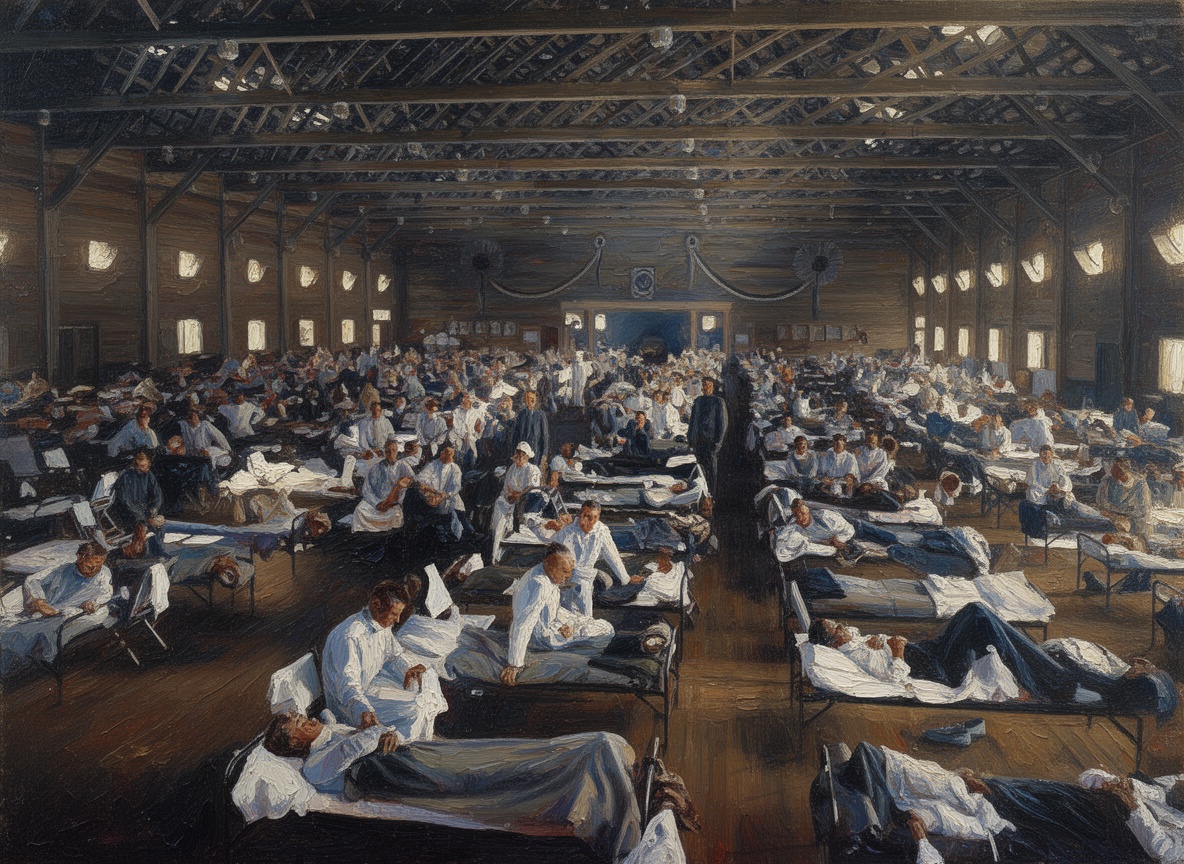
Spanish Flu Emerged at US Base, Killed 43,000 Service Members
The 1918 influenza outbreak began at an Army installation in Kansas, spreading rapidly through training camps and frontline units. It claimed roughly 43,000 American service members, reshaping military readiness and public health responses. The episode exposed vulnerabilities in mobilization, medical logistics, and disease surveillance that reverberate through security planning today.
The Spanish Flu began at a U.S. Army base in Haskell County, Kansas, where the first identified cases appeared among military personnel. Within weeks, the virus escaped the garrison and moved through training camps, then into crowded transport and combat units. The outbreak accelerated during the final year of World War I, complicating efforts to mobilize, train, and deploy forces amid heightened tension and operational tempo.
Historically, the pandemic stayed largely within wartime networks, exploiting the mass movements of troops and the often limited medical infrastructure of the era. Commanders faced an invisible adversary that overwhelmed field hospitals, reduced effective strength, and forced changes in daily routines. Public health authorities struggled to implement quarantines, ventilation improvements, and contagion controls in an era before antibiotics or modern virology.
Strategically, the episode underscored how disease can become a force multiplier for or against military campaigns. Illness disrupted schedules, degraded unit cohesion, and complicated supply chains. The experience spurred reforms in soldier health surveillance, hospital capacity, and planning for non-combat casualties as integral to readiness and deterrence.
Technically, the influenza strain involved high transmission in close quarters, with rapid spread through barracks, mess halls, and transport ships. Medical data from later reconstructions estimate tens of thousands of U.S. service members were killed or debilitated by influenza and secondary infections. The episode influenced future vaccination programs, respiratory disease research, and the design of rapid-response medical units for mobilized forces.
Looking forward, the Spanish Flu taught defenders to integrate epidemiology with logistics and operations planning. Modern militaries now treat health security as a core element of readiness, investing in surveillance, vaccination, and rapid medical evacuation. The lesson endures: a biological shock can realign power balances as surely as any battlefield engagement.