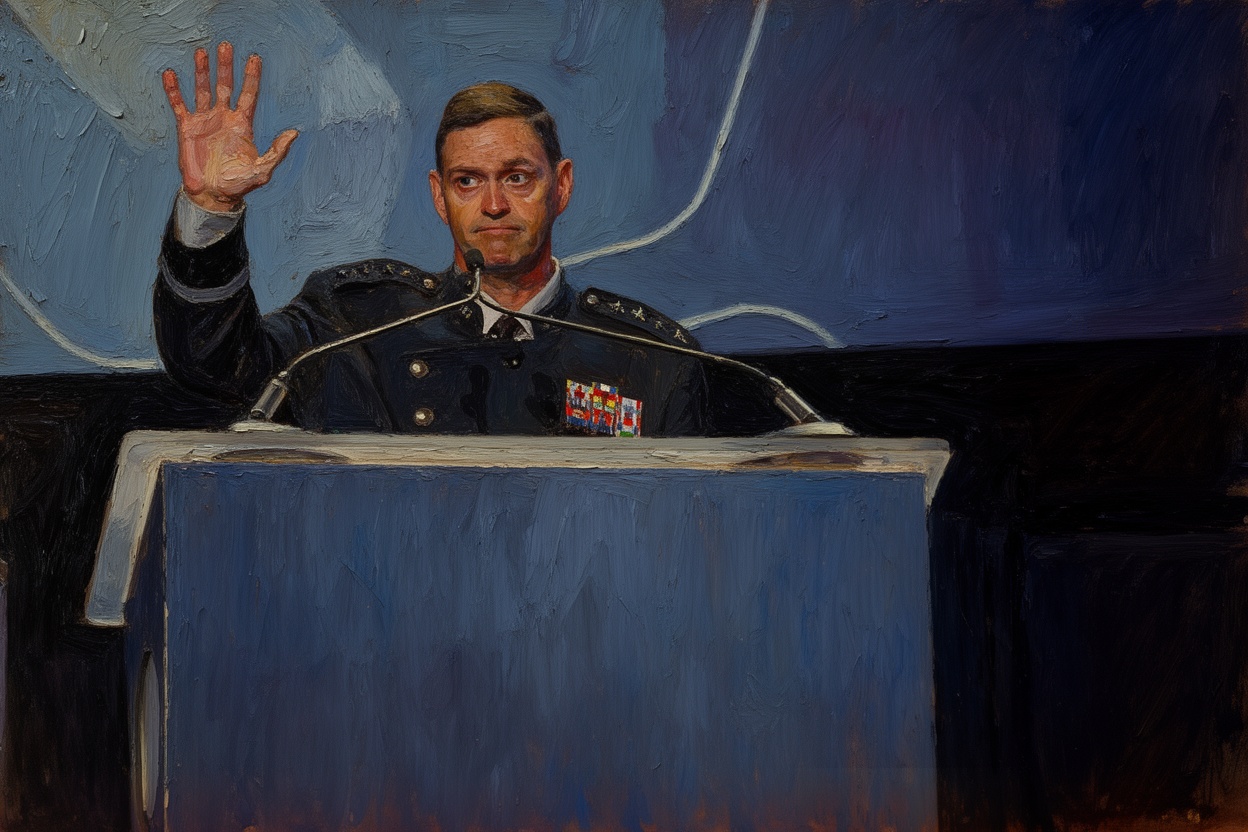
Space Force 2040: 30,000 satellites, ‘thousands’ more Guardians
By 2040, the Space Force envisions a massive orbital network and a significant expansion of Cyber/Space Guardians. Most specifics remain classified, but leadership confirms appetite for new orbital warfare equipment. The plan signals a decisive push to shape space superiority through massed assets and advanced electronic warfare.
The Space Force is laying out an ambitious 2040 vision focused on a vast orbital architecture and a rapid growth of Guardians for space operations. The core assertion is a target of tens of thousands of satellites and a workforce that runs into the thousands of Guardians dedicated to orbital warfare and electronic warfare. While the exact force structure and equipment lists are classified, senior leaders have confirmed the service’s intent to procure and upgrade sensors, communications constellations, and offensive counterspace capabilities. The blunt takeaway: the United States seeks to saturate space with assets that provide persistent situational awareness and the ability to disrupt adversaries’ space and electronic networks in contested environments.
Background context shows space has shifted from a technology proving ground to a central theatre for deterrence and crisis management. The 2040 planning horizon follows a long trajectory of rapid modernization, industrial-scale launch programs, and increasingly capable small-satellite architectures. Within the broader defense policy environment, the push aligns with growing Great Power competition in space domains, including anti-satellite threats, electronic warfare, and resilient command-and-control networks. The emphasis on orbital warfare is part of an integrated approach that couples space assets with terrestrial forces and allied space architectures. Expect intensifying debates over survivability, redundancy, and legal norms as more actors pursue similar capabilities.
Strategically, the plan signals a shift in deterrence calculus. A 30,000-satellite backbone would raise the difficulty of attribution and complicate adversaries’ targeting calculations. The “Guardians” concept implies a large, specialized cadre trained for space control, cyber-physical operations, and precise electronic warfare. If realized, this expansion would tighten space-domain dominance for the United States while pressuring rivals to accelerate counterspace programs, possibly triggering a race to space resilience and force multipliers. The geopolitical effects would extend to allied networks, with partner nations potentially adapting to new orbital architectures and security guarantees.
Technical or operational details remain tightly held, but the framework hints at advanced sensors, laser communications, and hardened ground segments. The numbers imply massive launch throughput, heavy reliance on small-sat formations, and distributed networked warfare capabilities. Budgetary and industrial implications include a surge in propulsion, satellite buses, and on-orbit servicing capabilities, as well as robust cyber and EW instrumentation. Critics will push for clearer definitions of thresholds for kinetic versus non-kinetic actions in space, and for transparent metrics on resilience and risk exposure in a contested space environment. Forward assessment suggests a period of rapid modernization with potential frictions in international space governance and alliance dynamics.
If the force structure materializes as projected, allied space architectures will recalibrate to maintain interoperability and deter escalations. The risk landscape includes accidental confrontations in crowded orbits, escalation spirals from miscalculations, and increased reliance on space-based advantages that could invite countermeasures. The coming years will reveal how aggressively the United States seeks to lock in space superiority against a rapidly maturing set of competitors and how partners adapt their own space ambitions to the evolving balance of power.