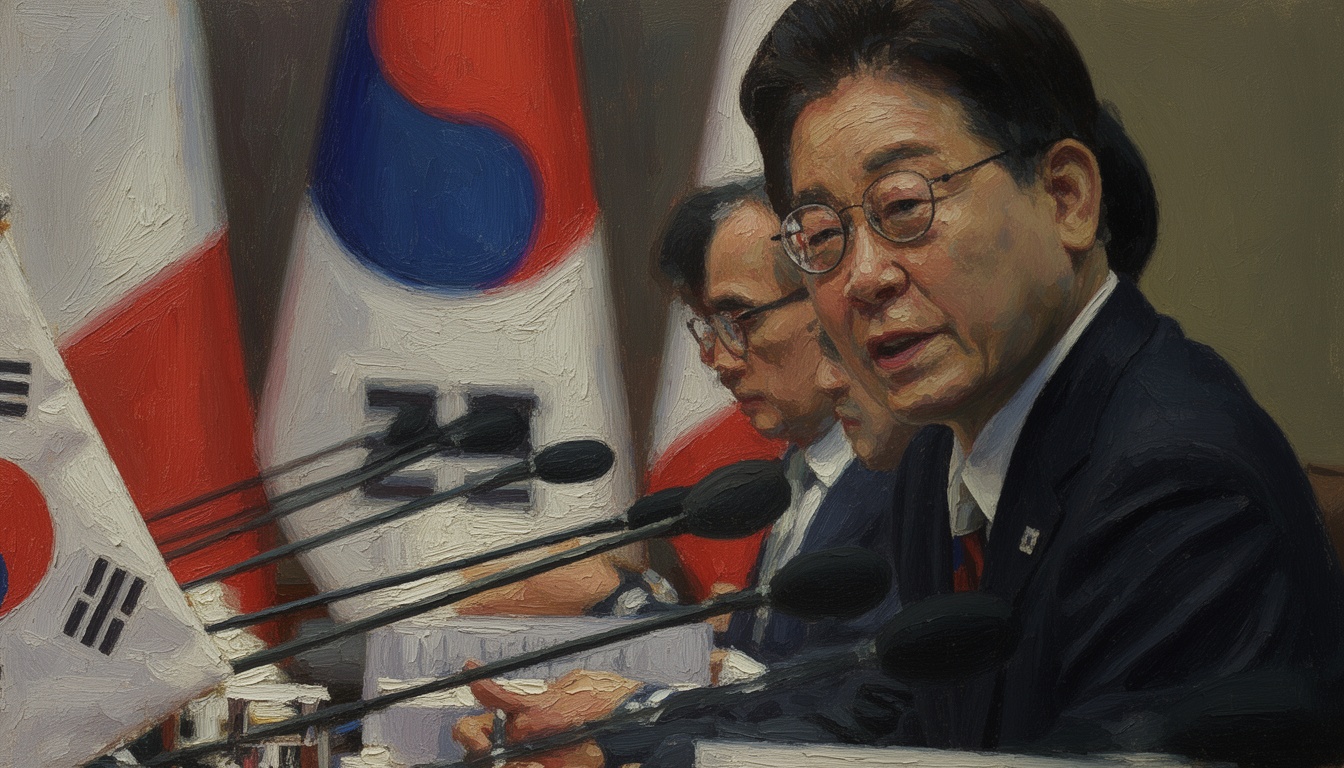
South Korea’s leader fires back at Israel over ‘disturbing’ video
Seoul sharpens a diplomatic row after Seoul accuses Israel of not addressing alleged rights abuses while Israel accuses Seoul of spreading disinformation. The dispute centers on a social media video showing a caption alleging Israeli soldiers torture a Palestinian child. The incident tests cross-regional ties and press freedoms amid mounting tensions in the Middle East and Northeast Asia.
The Korean president, Lee Jae Myung, publicly challenged Israel this weekend, accusing it of failing to reflect on allegations of rights abuses by its forces. The exchange followed Israel’s criticism of Lee for amplifying social media claims that many view as disinformation. The row intensified after a video circulating online allegedly depicted Israeli soldiers torturing a Palestinian child and shoving him off a roof. Lee said he would investigate the clip’s authenticity and potential official responses.
Background to the spat rests on a long-standing scrutiny of Israeli conduct in Palestinian territories and a global debate over how social media content shapes diplomatic narratives. Israel’s government has repeatedly rejected foreign accusations as biased or unfounded, emphasizing security concerns and counterterrorism operations. The incident adds another layer to Seoul’s delicate balancing act in regional security diplomacy, where it seeks to maintain relations with both Western partners and Middle East allies.
Strategically, the confrontation underlines the broader battle over information warfare and international legitimacy. For Seoul, the issue tests its ability to police or endorse online content linked to human rights claims in a volatile regional orbit. For Tel Aviv, the episode is a reminder of the reputational risks that accompany viral media and the potential for misinterpretation across languages and cultures. The outcome may shape future guidance on messaging around complex international crises.
Operationally, the episode leaves little room for immediate military calculations but signals fatigue in diplomatic channels. Israel’s messaging apparatus and South Korea’s own public-relations posture are on display as they navigate competing narratives. Analysts will watch for subsequent statements from Seoul and any clarifications from Jerusalem that could either de-escalate or harden the dispute. In the near term, expect continued rhetoric and possible calls for calmer dialogue to prevent a wider diplomatic crack in regional alignments.
Likely consequences include increased scrutiny of social media’s role in international disputes and heightened sensitivity to how ally nations frame human rights concerns. If the clip’s authenticity is established, it could prompt Seoul to issue formal clarifications or policy thresholds on content linked to conflicts. Conversely, a rebuke from Israel could consolidate a media-driven confrontation that reinforces political fault lines across Asia and the Middle East.