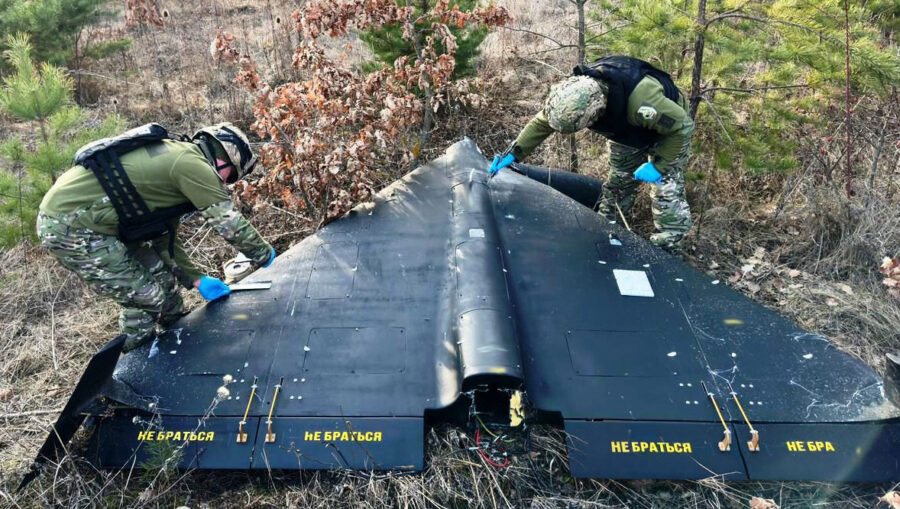
Shahed Drones Proliferate: Iranian, Russian, US Variants Dominate Conflict
Shahed-class one-way attack drones are now central to the 2026 US-Iran conflict, with advanced variants fielded by Iran, Russia, and the United States. The convergence of these designs exposes global vulnerabilities and marks a dramatic shift in drone warfare’s strategic calculus.
Shahed-class drones, originally designed by Iran, have become the decisive weapon in the ongoing US-Iran conflict following the launch of Operation Epic Fury on February 28, 2026. What began as a regional asset is now a platform fielded—and upgraded—by three major military powers: Iran, Russia, and the United States. The sudden dominance of one-way attack variants derived from the Shahed template signals a global proliferation crisis and a major evolution in asymmetric warfare.
Since their combat debut in the Middle East, Iranian Shahed-131 and Shahed-136 drones have spread rapidly. Russia adopted and modified the design as the Geran-2, deploying thousands in Ukraine to devastating effect. Recently, documented evidence shows the US and its allies have produced functional clones, seeking both to counter adversaries and exploit the proven lethality for their own operations.
This cross-contamination is strategically significant: it shreds traditional technological overmatch, making swarms of cheap, high-impact drones available to multiple actors. State-on-state conflicts now risk devolving into attritional drone slugfests, undermining high-end air defense investments and upending the balance of power across Eurasia and beyond.
States are driven by harsh pragmatism, not stated postures. Iran leverages the Shahed line for deterrence and power projection, Russia for affordable standoff strikes, and the US for rapid battlefield adaptation under technological urgency. None seeks parity—each is racing for dominance in a new era of drone escalation.
Technical documentation confirms a complex field: Shahed variants (1,500-2,000 km range, 40-50 kg warheads, cost below $20,000), Russian Geran-2 adaptations with Western navigation chips, and US clones integrating networked swarm logic. Field quantities now number in the thousands per side, with significant export risk to non-state actors. The US is reportedly testing drone mass-production lines with possible output above 10,000 annually.
Consequences are escalating. Precision drone strikes have overwhelmed air defense nodes, destroyed armored columns, and targeted high-value assets. The low cost enables saturation attacks previously only feasible with cruise missiles at exponentially higher expense. As proliferation accelerates, even technologically advanced militaries are being forced on the defensive.
Precedents for this kind of mass adoption are rare. The Kalashnikov rifle’s global spread is the closest historical parallel—a cheap, reliable technology reshaping battlefield tactics for generations. What’s different now is the speed and autonomy of drone adaptation, suggesting that centralized control of escalation is eroding.
Analysts should track indicators including sudden spikes in drone purchases, novel countermeasures emerging in kinetic theaters, and defect reports from crashed vehicles. Watch for escalation in output figures and export activity from state and non-state actors alike. The drone balance is highly unstable, threatening unpredictable shocks across Eurasia.