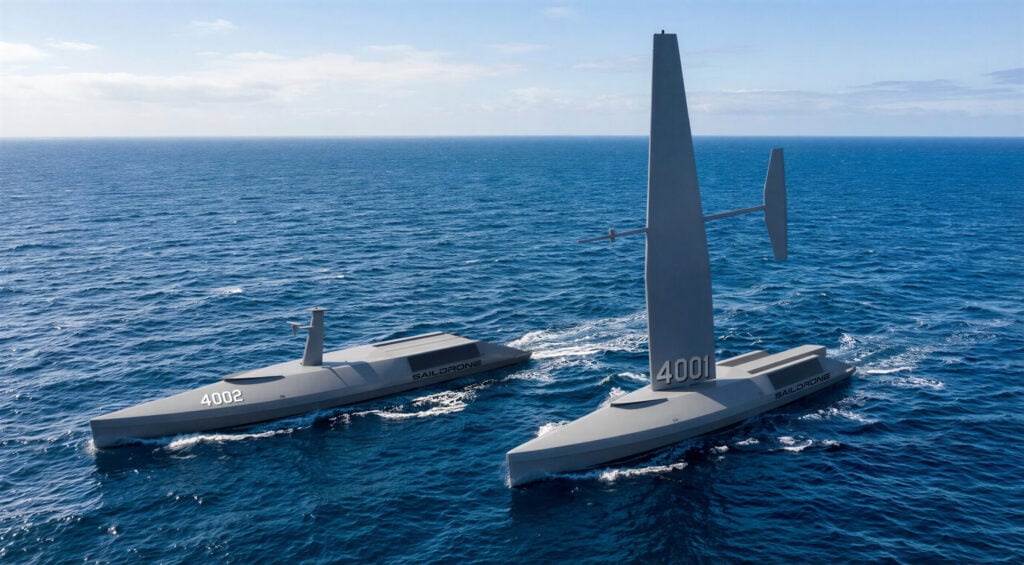
Saildrone unveils new MUSV for ASW and ISR
Saildrone reveals a medium unmanned surface vessel system designed for anti-submarine warfare and intelligence, surveillance, and reconnaissance. Two variants position the MUSV for endurance and stealth strike missions, expanding naval unmanned capabilities and force multiplication. The development signals growing emphasis on persistent maritime intelligence and sea-control assets among advanced navies.
Saildrone has introduced a new medium unmanned surface vessel (MUSV) intended for anti-submarine warfare and intelligence, surveillance, and reconnaissance. The two variants for the MUSV are the Spectre Silent Endurance and the Spectre Stealth Strike. This move underscores a strategic shift toward persistent, autonomous maritime systems capable of operating in contested environments. The introduction aligns with ongoing naval experimentation with unmanned platforms to extend reach without putting sailors at risk.
The MUSV arrives as navies increasingly rely on unmanned systems to monitor sea lanes, track underwater threats, and provide real-time ISR data. Industry and defense observers note a growing appetite for platforms that can stay on station longer and operate with reduced sensor signatures. Saildrone emphasizes the MUSV's dual-role capability, combining endurance for sensor-driven missions with a stealth-oriented configuration for flexible strike and reconnaissance tasks.
Strategically, the Spectre variants reflect an emphasis on modular mission packages and autonomous navigation. Operators seek to balance persistent presence with the ability to adapt to evolving maritime threats. The MUSV is expected to bolster littoral and open-ocean operations by expanding the navy’s distributed sensor network and potentially enabling coordinated swarms with other unmanned and manned assets.
Technical and operational details remain sparse in initial disclosures. The Spectre Silent Endurance is framed for long-endurance missions, while the Spectre Stealth Strike targets higher stealth and rapid-response tasks. Both variants purportedly integrate Saildrone’s existing autonomy and data-link capabilities, enabling over-the-horizon data collection and command-and-control integration with allied platforms. Budgetary and production details were not disclosed, leaving questions about scale and deployment timelines.
Looking ahead, the MUSV could reshape future naval procurements by informing new concepts of operation for unmanned maritime systems. If fielded at scale, the Spectre series would augment submarine-detection networks, expand ISR reach, and complicate anti-access/area-denial environments for adversaries. Analysts will watch for live-fire tests, integration with other sensors, and interoperability with allied fleets as the program progresses.