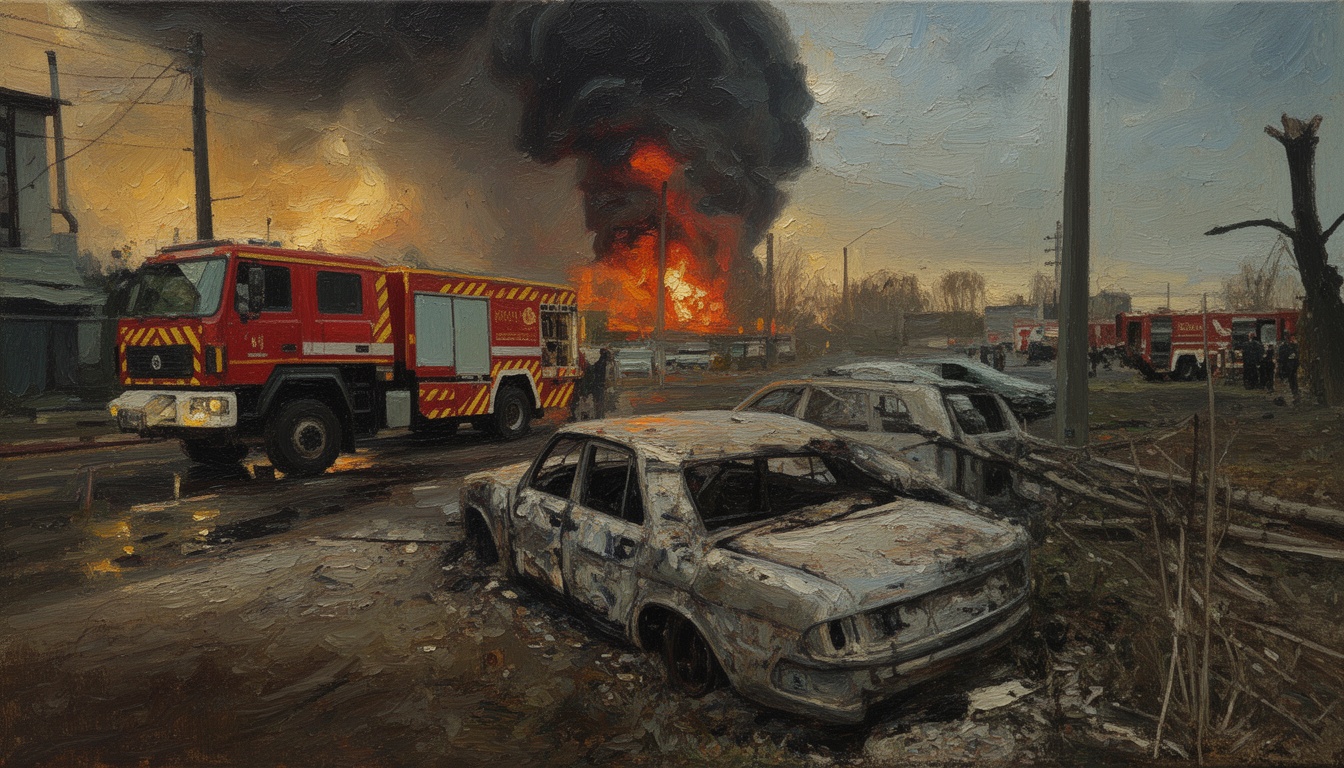
Russia's drone and missile campaign kills civilians; Ukraine rescue crews seek armored vehicles
Russia ratchets up aerial assault on Ukraine, striking civilian areas with drones and missiles. At least 16 killed and over 100 wounded. Rescue services warn they need armored protection as Russia targets emergency responders. The incident underscores the deteriorating safety environment for humanitarian operations and the risk to frontline rescue teams.
The conflict intensified as Russian forces pressed a wide drone and missile strike on Ukrainian civilian infrastructure and urban areas. Officials reported at least 16 fatalities and more than 100 injuries, underscoring the widening human cost of the campaign. In an interview with a foreign broadcaster, a Ukrainian NGO founder highlighted the escalating danger faced by emergency workers, signaling a push for armored transport and protection for medics and rescue crews.
The background to today’s events lies in Russia's persistent targeting of non-combatants and critical civilian facilities. Ukrainian authorities have repeatedly warned that defensive and relief operations are increasingly vulnerable to air and drone strikes. Humanitarian networks, already stretched by the siege around eastern towns, are trying to maintain lifesaving services while adapting to new risks posed by the assault on rescue personnel. This pattern signals a broader strategy to degrade civilian resilience and emergency response capabilities.
Strategically, the assault compounds the security calculus for Kyiv and its international partners. The bombardment of civilian areas aims to complicate humanitarian access and interrupt evacuation corridors. For Ukraine, the escalation pressures both domestic stability and international support, as foreign capitals weigh the cost of sustained aid missions and potential escalations in defensive aid terms. The risk of spillover into wider regional tensions remains a key variable for NATO and partner militaries.
Operational details indicate a large use of unmanned systems alongside missiles, targeting urban neighborhoods and likely critical infrastructure. The humanitarian response landscape has to adapt quickly: rescue crews require armored vehicles, enhanced protective gear, and secure routes to operate under continuous threat. Budgetary and logistical support will be required to rapidly re-equip emergency services, and to safeguard frontline responders from recurring drone and missile threats.
Looking ahead, the likely consequence is heightened caution for emergency operations in conflict zones. International donors and Ukrainian authorities may accelerate procurement of armored ambulances, medevac-capable vehicles, and rapid-deployment recovery teams. The risk calculus for rescue missions will tilt toward armored protection, multi-layered security perimeters, and remote guidance to reduce exposure of frontline responders to ongoing air assaults.