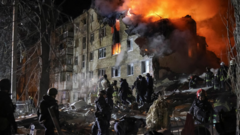
Russian Strike Kills Seven in Kharkiv Apartment Block Crisis
The deadly strike on a civilian apartment block in Kharkiv exemplifies Russia's escalating aggression against Ukraine. This incident reveals the ongoing risk to civilian lives and infrastructure amid the intensified conflict.
A Russian missile strike on an apartment block in Kharkiv has resulted in at least seven fatalities, further escalating the humanitarian crisis in Ukraine. The attack, which occurred during the early hours on a weekday, left ten others injured, including children, as rescuers continue to sift through the rubble for survivors. This incident is part of a broader pattern of indiscriminate targeting of civilian infrastructure as hostilities between Russia and Ukraine persist unabated.
This strike comes amidst ongoing battles in eastern Ukraine, where Russian forces have intensified their operations. Kharkiv, located close to the Russian border, has repeatedly faced aerial bombardments since the war began in February 2022. The attacks on urban centers reflect a strategy aimed at spreading fear and undermining Ukrainian resilience, drawing international condemnation yet maintaining consistent military action from Moscow.
The significance of this attack lies not only in the loss of innocent lives but also in the operational tactics being employed by Russian forces. The targeted strikes against civilian structures raise severe strategic risks, as they signal a willingness to engage in conflict with minimal regard for international humanitarian law. This could lead to increased calls from the international community for harsher sanctions against Russia and a reassessment of military support for Ukraine.
Key actors in this crisis include the Russian military, which appears increasingly emboldened despite ongoing sanctions and international isolation. President Vladimir Putin’s regime continues to pursue its military objectives in Ukraine, likely motivated by a desire to assert dominance in the region, secure strategic territorial gains, and deter Western influence. The Russian leadership is likely aware that such strikes could provoke stronger responses from NATO and allied nations, yet they persist in implementing this brutal strategy.
The operational specifics of the attack indicate the use of precision missiles, likely from systems such as the Iskander-M or Kalibr, which can strike targets from a considerable distance with deadly accuracy. These missile systems are part of a broader Russian arsenal that underscores their capability to strike deep within Ukrainian territory. As casualty figures climb, the financial burden of the conflict rises, with Ukraine's military costs escalating, prompting calls for greater international military aid.
The aftermath of this attack may lead to heightened retaliatory measures from Ukraine, potentially including intensified air defense initiatives and efforts to target Russian supply lines. The resultant dynamics could ignite further escalation, with either side seeking to gain the upper hand by increasing military operations away from the frontline.
Historical precedents indicate that such civilian-targeted strikes have often backfired, galvanizing both domestic and international support for the besieged nation. During the Syrian conflict, similar tactics prompted stronger anti-regime sentiments, indicating a potential parallel in Ukraine as citizen outrage mounts alongside tragic casualties.
Looking forward, observers should monitor further developments, particularly in military aid commitments from Western nations and Ukraine's strategic responses to such aggression. Signs of increasing international support or shifts in battlefield dynamics could signal a critical turning point in this ongoing conflict.