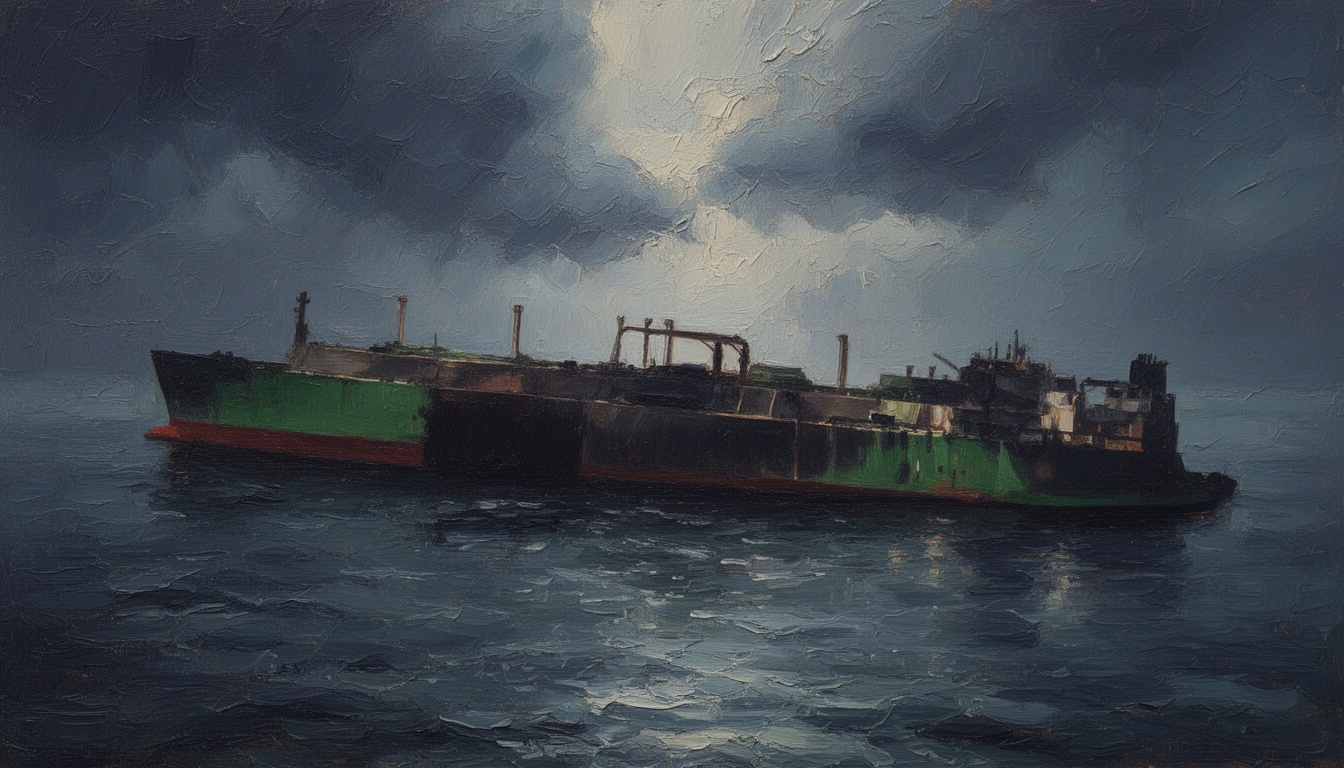
Russian Shadow Fleet LNG Tanker Drifts Off Libya After Explosion
Russia’s Arctic Metagaz LNG tanker remains adrift in the Mediterranean after a Libyan towing failure following an explosion over a month ago. This incident highlights the operational risks and challenges posed by Russia’s shadow fleet vessels operating far from their bases. The situation signals potential environmental hazards and strategic vulnerabilities in Mediterranean shipping lanes.
The Russian LNG tanker Arctic Metagaz, part of the so-called "shadow fleet" used to circumvent sanctions, is currently drifting in the Mediterranean Sea after a failed towing attempt by Libyan forces. The tanker sustained damage from an explosion more than a month ago, rendering it incapacitated and vulnerable to drifting.
The shadow fleet, consisting of vessels that often operate under opaque registries or nominal ownerships to avoid sanctions and scrutiny, poses a growing challenge for maritime security, especially in geopolitically sensitive waters like the Mediterranean. Arctic Metagaz’s stranding highlights the fragile condition of these assets far from Russian territorial support.
Strategically, the tanker’s drifting raises risks of environmental disaster due to potential LNG leaks and escalating tensions among Mediterranean nations concerned about maritime safety and security. The incident exposes the difficulties of crisis response when dealing with shadow fleets operating in contested regions with limited oversight.
Technically, Arctic Metagaz is a liquid natural gas carrier built to transport LNG over great distances. The failed towing operation by Libyan tugboats ended with the ship breaking free, leaving it adrift without power or maneuverability. This raises concerns over salvage operations, environmental containment, and the geopolitical implications of losing control over such critical energy infrastructure.
The Arctic Metagaz’s fate remains uncertain. The inability to secure or properly manage the vessel could lead to environmental damage or further diplomatic fallout. This event underscores the broader risks shadow fleet operations pose to maritime security and regional stability in key international waterways such as the Mediterranean Sea.