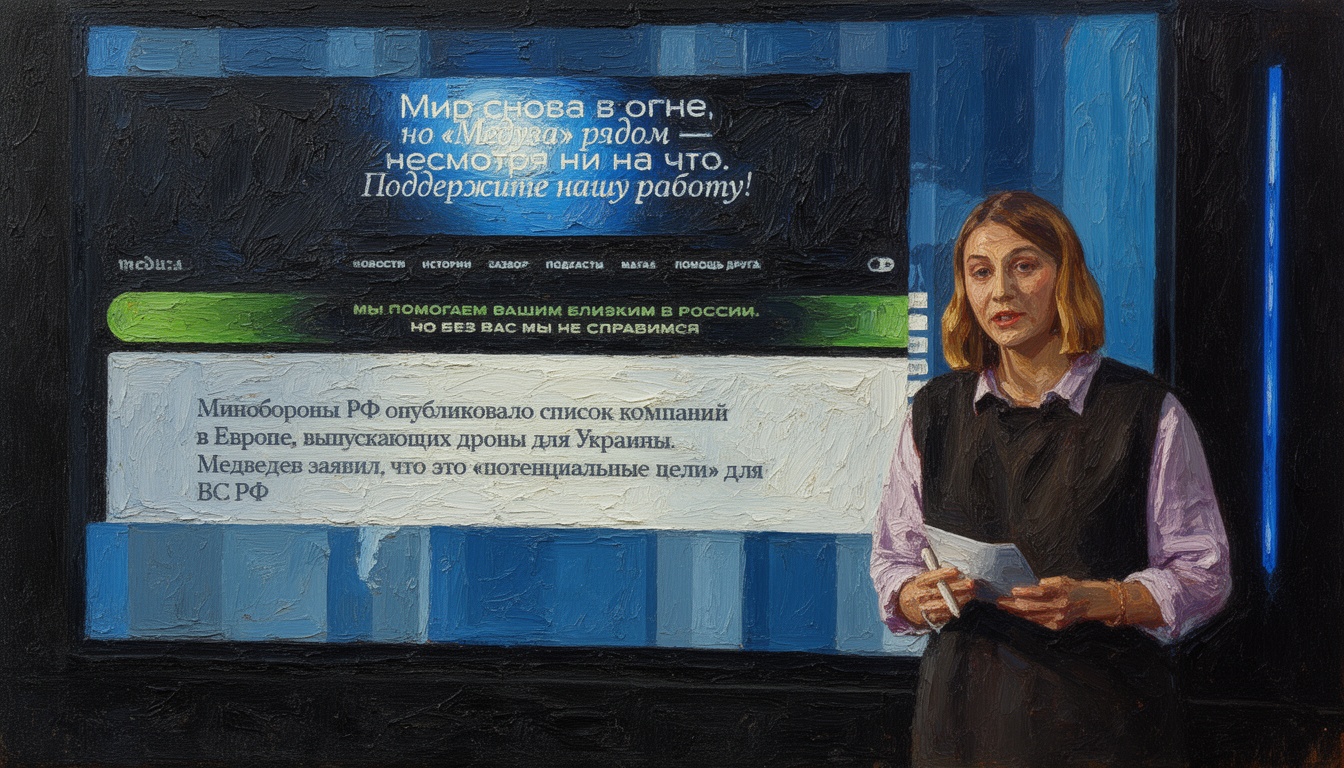
Russia warns European drone firms may become targets
Moscow signals heightened risk to civilian and commercial unmanned systems in Europe. The warning comes as European drone markets expand amid regulatory and security tensions. Analysts fear the rhetoric could presage escalatory cyber and kinetic actions against industry players.
Russia has issued a stark warning that European drone companies could become potential targets in a worsening security landscape. The statement follows a pattern of Moscow leveraging drone technology as a tool of deterrence, signaling that civilian and commercial operations could face increased risk. The rhetoric coincides with broader tensions over drone proliferation, dual-use technology, and intelligence competition between Russia and Western states. Observers note that this is less about specific operations and more about signaling intent to deter European deployment of advanced unmanned systems.
Context matters: European drone markets have expanded rapidly in the past five years, driven by civil aviation data collection, agricultural use, and defense procurement efforts. Meanwhile, Western export controls on certain drone components intersect with Moscow’s strategic messaging. The warning frames the issue as a national security concern rather than a strictly commercial risk, implying potential state-backed or state-tolerated actions against industry actors. Analysts warn that such rhetoric can contribute to a chilling effect on innovation and cross-border collaboration.
Strategically, the statement underscores the fragility of the global unmanned ecosystem in high-tension environments. If European drone companies perceive elevated threats, investment, partnerships, and supply chains may reorient toward less risky regions. The move could slow the deployment of next-generation swarms, long-endurance platforms, and precision payloads that rely on international ecosystems. For European policymakers, the message intensifies the need for resilient cyber defenses, diversified supply chains, and robust insurance frameworks for drone operators and manufacturers.
Technically, there are few disclosed details about what constitutes a target, and no public claim of successful attacks or incidents. The risk remains oriented around access to critical markets, protection of intellectual property, and potential disruption of manufacturing lines or testing programs. Budgets for defense industrial security in Europe are likely to rise in response, with greater emphasis on vendor vetting, hardening of industrial control systems, and critical infrastructure protection. Forward, the market could see tighter alliances with North American suppliers or a pivot toward domestic production to reduce exposure.
Consequence-wise, the incident heightens the cost of doing business in Europe’s drone sector and could complicate international collaborations on safety standards and certification schemes. If the warning translates into real-world actions, smaller firms may exit high-risk corridors or pause joint ventures with foreign players. Expect heightened diplomatic activity to manage risk perception, along with calls for clearer red lines on what constitutes legitimate state behavior in the unmanned arena.