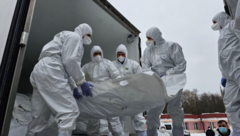
Russia and Ukraine Clash Over Exchange of 1,000 Soldiers' Bodies
A significant military crisis unfolds as Russia and Ukraine exchange over 1,000 soldiers' bodies, underlining the deepening grave of their ongoing conflict. This latest development highlights the relentless human cost of war as diplomatic talks occur in Switzerland amidst escalating tensions.
In a stark reminder of the brutal toll of their conflict, Russia and Ukraine have exchanged the remains of over 1,000 soldiers, emphasizing the human cost of this prolonged war. This exchange, characterized more as a grim transaction than a humanitarian effort, underscores the continued hostilities and lack of resolution between both nations. The announcement coincides with ongoing diplomatic talks involving Ukraine's chief negotiator and US envoys in Geneva, yet it does little to alleviate the escalating violence on the ground.
The Russia-Ukraine conflict, ignited in 2014 by Russia's annexation of Crimea and further escalated by Moscow's support for separatists in Eastern Ukraine, has morphed into a full-scale war since February 2022. Prior to this recent exchange, both countries had witnessed relentless clashes in the eastern Donbas region, where artillery bombardments and skirmishes have become commonplace. The toll on military personnel has been staggering, with estimates suggesting tens of thousands of casualties on both sides since the onset of this full-scale aggression.
The significance of this military exchange lies in its stark illustration of the persistent casualties and ongoing violence between Ukraine and Russia. Each body exchanged signifies not merely loss but a continuation of animosities that could potentially reignite larger-scale confrontations. With Ukraine now emboldened by Western military support, there is a tangible risk for miscalculations that could escalate into broader hostilities across the region, drawing in neighboring states and international players.
Key actors in this tragedy include Russia, which seeks to assert its dominance through military might, and Ukraine, which is heavily reliant on Western military aid to sustain its defense strategies. Ukraine's negotiations with US officials in Geneva reflect a precarious balancing act; while seeking to renew diplomatic engagement, it also aims to secure more lethal assistance against a much larger adversary. Russia’s motivations, contrasted with its rhetoric, reveal a desire both to reclaim lost territories and maintain a sphere of influence within former Soviet states.
On a tactical level, the exchange involved the remains of both regular and special forces soldiers from Belarus and the Crimean Peninsula, with the operation showcasing intricate logistical arrangements under wartime conditions. The situation underscores thousands of military personnel involved in the conflict with satellite intelligence revealing troop movements and artillery placements that expose vulnerabilities on both sides. Current estimates of military spending by Russia surpass $100 billion with direct allocations toward personnel and armaments, further inflating the conflict's costs.
The likely consequences of this exchange involve a continuation of hostilities in the Donbas region, particularly as both sides prepare for renewed offensives during upcoming military campaigns. Increased rhetoric accompanying such exchanges often serves as a precursor to further escalations, with both sides preparing for potential counter-offensives. As military strategies evolve, the specter of heightened violence remains palpable amidst these