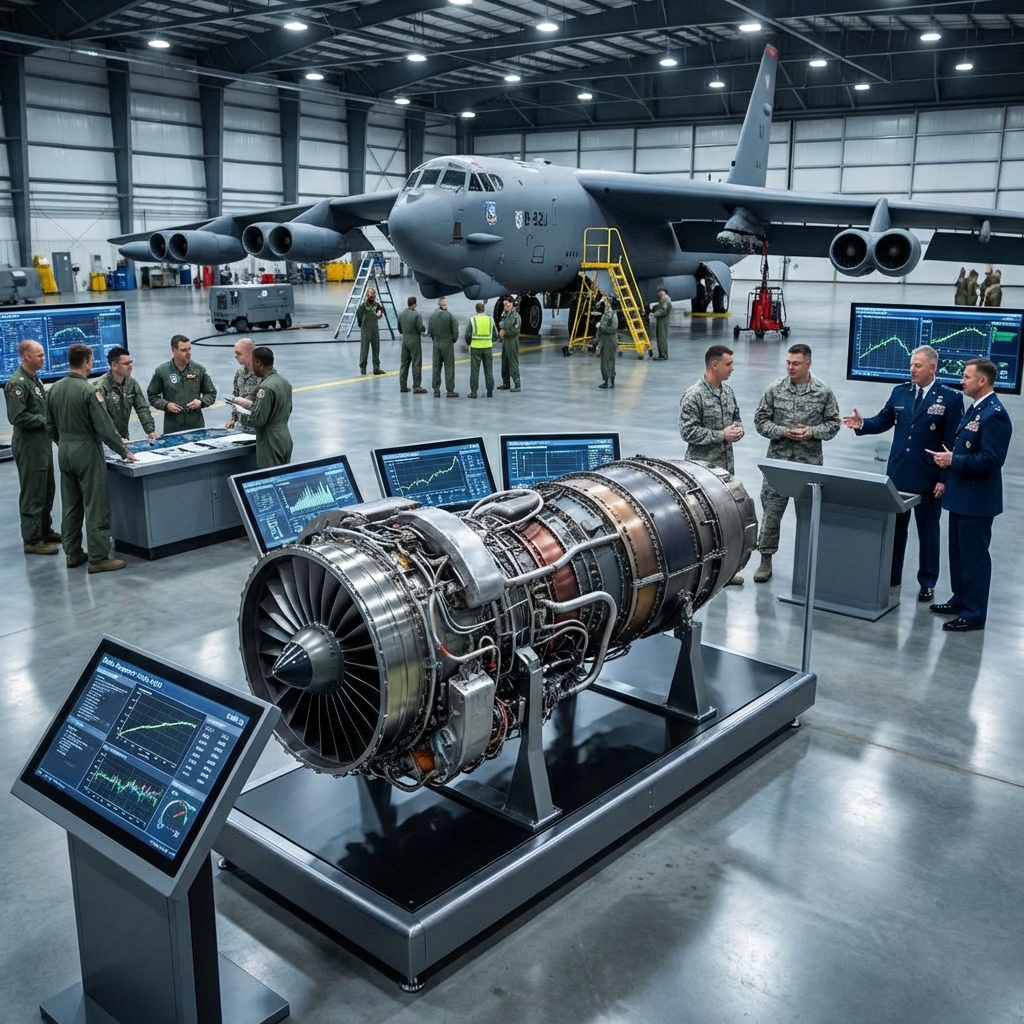
Rolls-Royce F130 Engine Passes US Air Force Testing Milestones
Rolls-Royce has successfully completed altitude and operability tests for its F130 engine, integral to the USAF's B-52J Stratofortress re-engining program. These tests mark a significant milestone in the modernization efforts for the aging bomber fleet.
In a notable advancement for the United States Air Force (USAF), Rolls-Royce has announced the successful completion of altitude and operability testing for its F130 engine, an essential component of the B-52J Stratofortress re-engining initiative. The F130 is designed to replace the aging TF33 engines currently in use, offering enhanced performance and reliability. The tests, conducted under rigorous conditions, evaluated the engine's performance at various altitudes, confirming its operability in the operational environment expected for the next-generation bomber aircraft.
The F130 engine is built upon proven technology derived from Rolls-Royce's successful AE 1107C engine, known for its use in the V-22 Osprey. This engineering pedigree allows the F130 to provide superior thrust performance while maintaining compatibility with existing B-52 systems. The design prioritizes fuel efficiency, aiming to reduce operational costs for the USAF while extending the bomber's operational range and capabilities. The engine's advanced materials and design also promise reduced maintenance requirements, which is crucial for sustaining fleet readiness over the decades to come.
Strategically, the upgrade to the F130 engine serves multiple objectives: enhancing the B-52's payload capabilities, increasing its operational range, and ensuring its viability in a multi-domain operational context. The B-52J variant is expected to remain in service well into the 2050s, underscoring the necessity for an updated propulsion system to meet evolving mission requirements. This modernization effort is part of a broader strategy focused on maintaining air superiority against peer adversaries, as well as adapting to rapid technological advancements in the aerospace domain.
Rolls-Royce's involvement extends beyond just providing the propulsion system; the company is also deeply engaged in collaboration with the USAF to ensure seamless integration of the F130 engine within the B-52's existing infrastructure and operational paradigms. As such, the anticipated operational capability improvements will likely include enhanced adaptability to emerging technologies, such as digital and AI systems, which the USAF is actively exploring to complement its current fleet.
Potential applications for the F130 engine extend to modernizing existing platforms as well as future airpower initiatives within the USAF. In addition to fulfilling the immediate needs of the B-52 fleet, Rolls-Royce's proven technology could serve as a basis for propulsion solutions in other military aircraft programs, thereby reinforcing the company's position as a key player in military aviation propulsion technology.