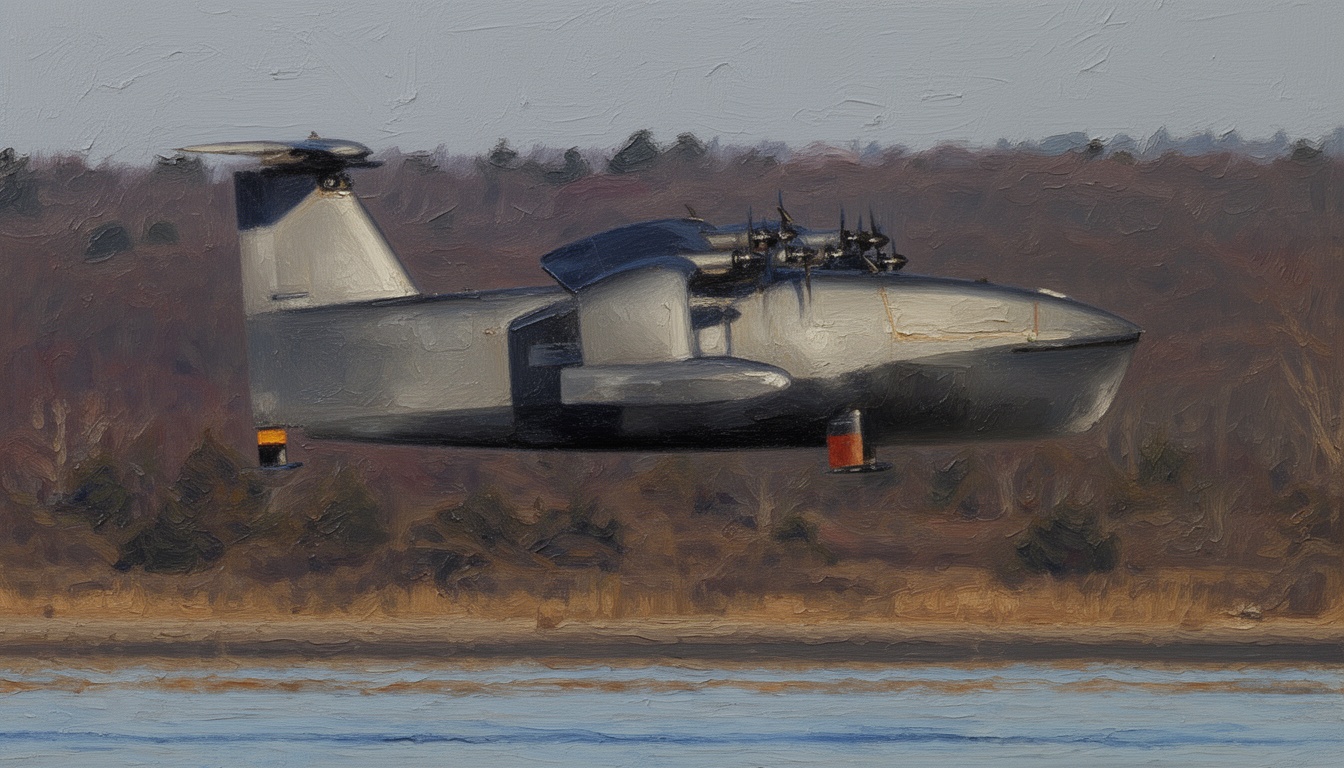
Regent Squire Drone Demonstrator Makes First Flight
A new Wing-In-Ground-Effect (WIG) drone demonstrator, Regent Squire, has completed its initial flight. The U.S. Marine Corps is watching the program closely as it explores multipurpose roles for future operations.
The Regent Squire Wing-In-Ground-Effect Drone Demonstrator has completed its first flight, marking a formal milestone for the program. The aircraft is designed to support a range of missions, with the Marines stating they are actively monitoring its progress and evaluating potential role fit. This initial flight establishes a baseline for flight envelope testing and subsequent iteration cycles.
Background: Wing-In-Ground-Effect platforms attempt to blend characteristics of fixed-wing and hovercraft dynamics, leveraging ground-effect to improve lift-to-drag ratios at low altitudes. The Squire demonstrator is positioned as a technology demonstrator rather than a production system, aimed at validating control strategies, aerodynamics in ground-effect, and mission adaptability. Marines have long pursued scalable, low-altitude ISR and combat support options, and WIG concepts have periodically resurfaced as potential multipurpose tools within that pursuit. This flight comes amid a broader push to expand unmanned capabilities for littoral and expeditionary missions.
Strategic significance: A successful first flight signals progress in a niche but increasingly relevant domain of unmanned mobility. If the Squire program proves viable, it could influence how future unmanned platforms compete for cost, speed, and survivability in contested littorals. While the demonstrator itself is not a fielded system, the concept could shape future Marine Corps experiments, joint force planning, and potential collaborations with allied navies exploring similar ground-effect concepts. The development contributes to a broader trend toward diversified unmanned fleets capable of rapid, low-altitude coverage in complex environments.
Technical and operational details: Specifics on propulsion, control architecture, and payload have not been released publicly. The aircraft is described as a wing-in-ground-effect demonstrator designed to enable multipurpose roles, suggesting configurable sensors, communications relays, and potential surface-search or ISR tasks. The Marines emphasize ongoing monitoring, implying planned iterative flight tests, risk-reduction activities, and performance benchmarking against conventional aerial platforms. Budget and schedule information remain undisclosed, typical of early-stage demonstrator programs.
Consequences and forward assessment: If the Squire demonstrator demonstrates stable, controllable flight in ground-effect with adaptable payloads, it could push further experimentation with mixed-momain unmanned platforms within the Marine repertoire. Analysts will watch for indicators of scalable design choices, integration with shipboard and expeditionary operations, and potential transition paths to near-term or mid-term capabilities. The program could also influence allied discussions on low-altitude, high-endurance ISR and supporting fires in congested littoral zones.