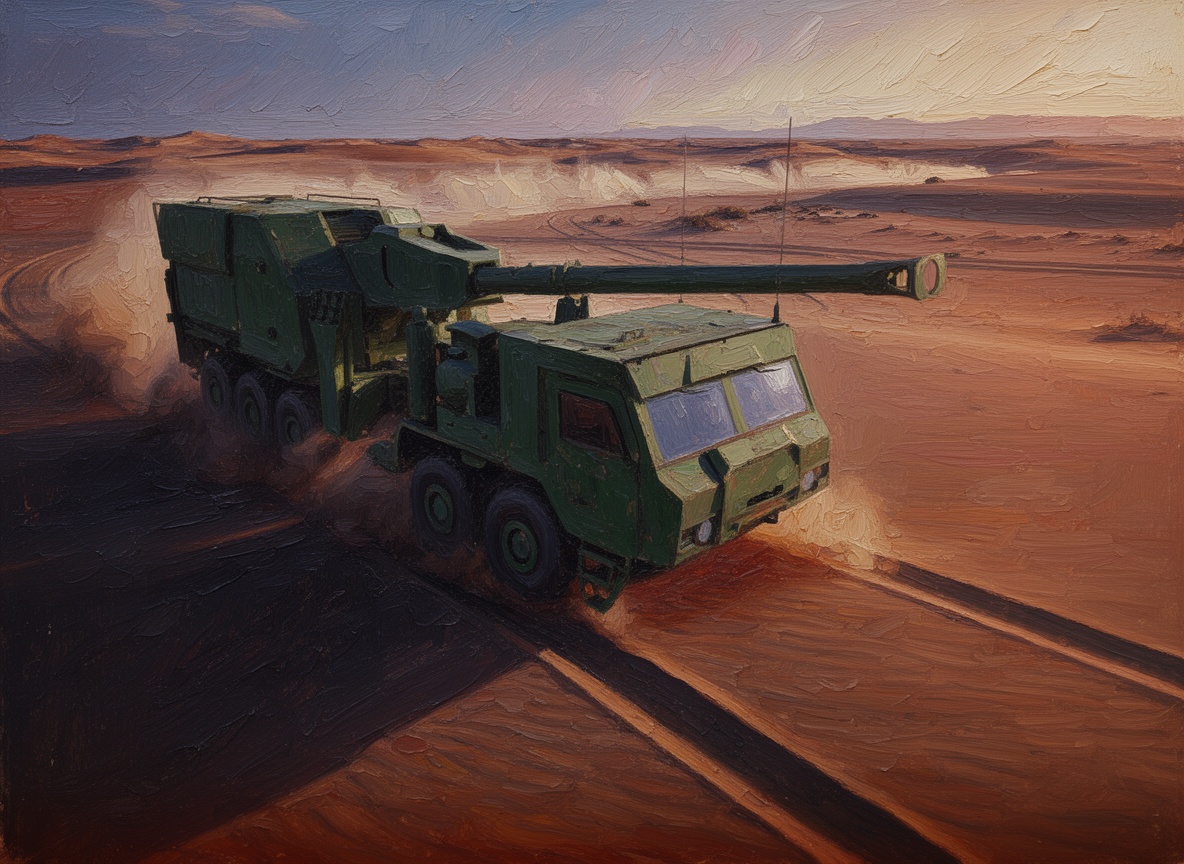
Redefining mobile artillery for a faster, more lethal fight
Strategic shifts in mobile artillery design promise greater range, mobility, and rate of fire. Domestic production advances reduce supply chain risk and bolster deterrence. The development signals a broader push to modernize indirect fire capabilities amid intensifying great-power competition.
The core development: Mobile artillery systems are being redesigned to deliver faster response and higher lethality on the battlefield. The emphasis is on extended-range projectiles, lighter chassis, and improved autopilot and fire-control interfaces. This redefinition aims to close the kill-chain gap between maneuver units and indirect-fire support. In practice, the upgraded platforms can reposition rapidly, engage from dispersed positions, and sustain higher volumes of fire under modern electronic warfare environments.
Background context: Mobile artillery has long balanced firepower with mobility. The current push reflects lessons from multi-domain conflict experiences where speed and survivability determine engagement outcomes. NATO, allied coalitions, and regional forces are all tracking how next-generation howitzers integrate with drones, air surveillance, and counter-battery systems. Domestic manufacturing efforts emerge as a key variable, reducing dependency on foreign supply chains and enabling faster iteration cycles.
Strategic significance: The trend reinforces the shift toward integrated, mobile combined-arms warfare. Higher mobility diminishes table-top defenses that rely on static emplacements, complicating enemy targeting and attribution. For adversaries, the development elevates the risk calculus in both deterrence and crisis management scenarios. It also pressures adversary setup times for counter-battery operations and prompts accelerations in defensive modernization among rival states.
Technical/operational details: Expected enhancements include longer-range 155mm/152mm family ammunition, added modularity for rapid reconfiguration, and networked fire-control nodes linked to unmanned aerial and ground surveillance. The platforms’ weight reduction and advanced suspension improve cross-terrain performance. Budget allocations and domestic suppliers are narrowing lead times for fielding, enabling more rapid force-wide deployment. The outcome is a higher sustainable rate of fire with improved accuracy across dispersed firing positions.
Consequences and forward assessment: If these mobile systems achieve stated capabilities, expect a broader regionalization of indirect-fire superiority. The balance between counter-battery and electronic-war defenses will determine true battlefield dominance. In the near term, alliances may accelerate joint testing and interoperability drills to validate kill chains from sensor to shells. The longer-term effect could be a sustained shift in deterrence dynamics, with a greater emphasis on mobility-led fire support in both offense and defense.