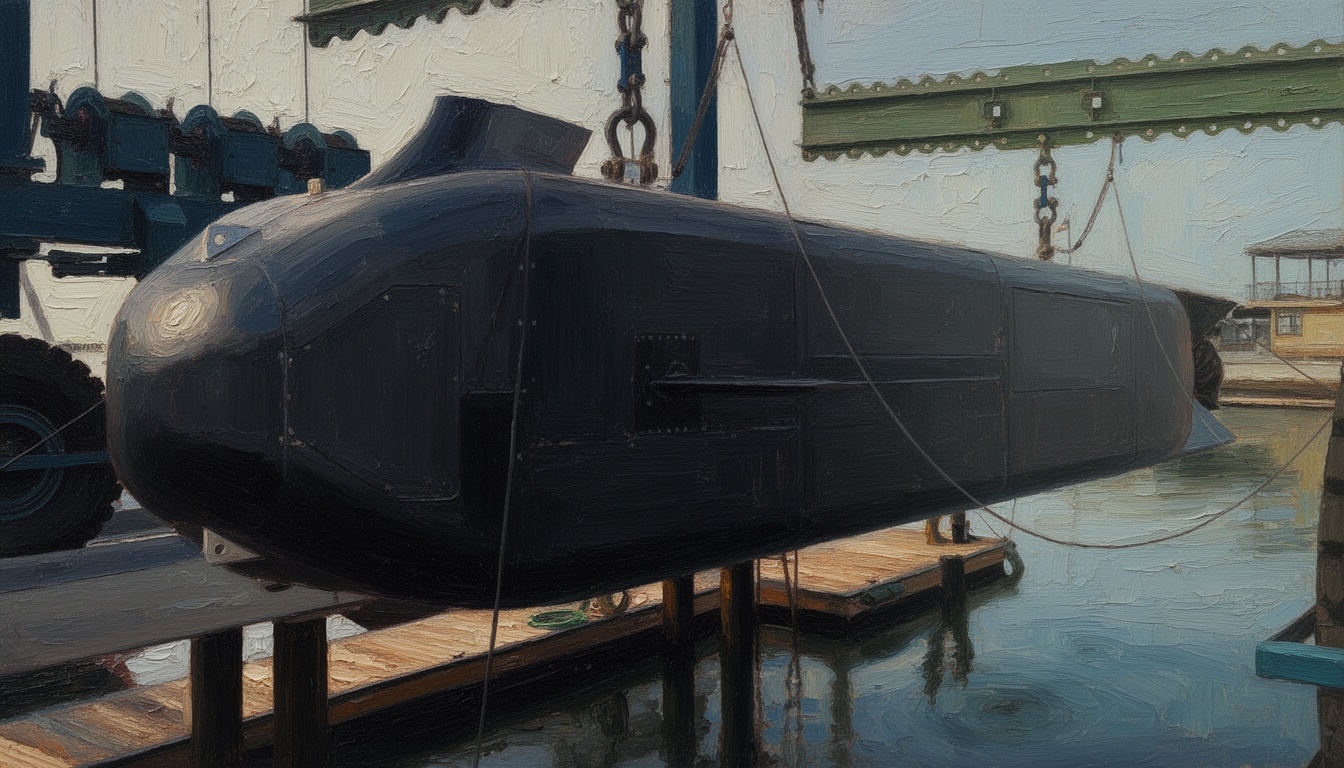
RAN launches MASU to boost autonomous maritime operations
Australia’s Navy establishes a dedicated Maritime Autonomous Systems Unit to accelerate uncrewed maritime capabilities. The move signals rising emphasis on autonomy, sensor fusion, and distributed command in sea domains. MASU aims to scale experimentation, prototyping, and integration across service platforms to support future naval operations.
The Royal Australian Navy has formally established the Maritime Autonomous Systems Unit (MASU) to accelerate the uptake of unmanned maritime technologies across its fleet. The unit will coordinate experiments, trials, and capability integration efforts, with a focus on surface and undersea unmanned systems, as well as associated data and autonomy software. MASU represents a structured approach to maturing autonomy from sandbox tests into certified, deployable capabilities. The move reflects Australia’s broader defense modernization program and its desire to keep pace with regional competitors investing heavily in autonomous platforms.
MASU’s creation comes amid a global push toward distributed maritime operations, where unmanned systems operate in swarms or in concert with manned platforms. The unit will work closely with defence industry, research institutions, and allied navies to share lessons learned and accelerate standardization. The emphasis will be on risk-managed experimentation, safety, and interoperability, ensuring that autonomous assets can operate in contested environments. This initiative also aligns with Australia’s cyber and space resilience priorities, which rely on resilient data links and secure command frameworks for autonomous operations.
Strategic significance centers on deterrence and situational awareness in the Indo-Pacific theatre. MASU enables broader sensor coverage, persistent maritime presence, and rapid reconfiguration of task forces in response to evolving threats. By institutionalizing autonomy, Canberra seeks to reduce lifecycle costs and shorten timelines from concept to capability, while keeping human oversight in critical decision loops. The unit’s work is poised to influence allied procurement and investment decisions for related unmanned systems and command-and-control architectures.
Technical and operational details remain unfolding, but MASU is expected to oversee a pipeline of projects spanning surface vessels, UUVs (uncrewed underwater vehicles), and aerial-dropped payloads for reconnaissance and logistics. Expect emphasis on autonomy software stacks, mission planning interfaces, and robust data fusion across sensors. The unit will likely broker test ranges, simulate contested environments, and publish lessons learned to shape standards for interoperability with regional partners. Forward outlook suggests MASU will become a hub for rapid prototyping, risk reduction, and capability maturation within Australia’s naval modernization program.
The likely consequences include faster adoption of unmanned systems across Australian maritime operations, enhanced deterrence given persistent presence, and stronger collaboration with allies on joint exercises and interoperability. As autonomy matures, the RAN could deploy modular unmanned modules that extend reach without increasing risk to crews. Analysts expect MASU to influence future budgetary planning, industrial partnerships, and training pipelines to sustain an expanding autonomous maritime capability over the next decade.