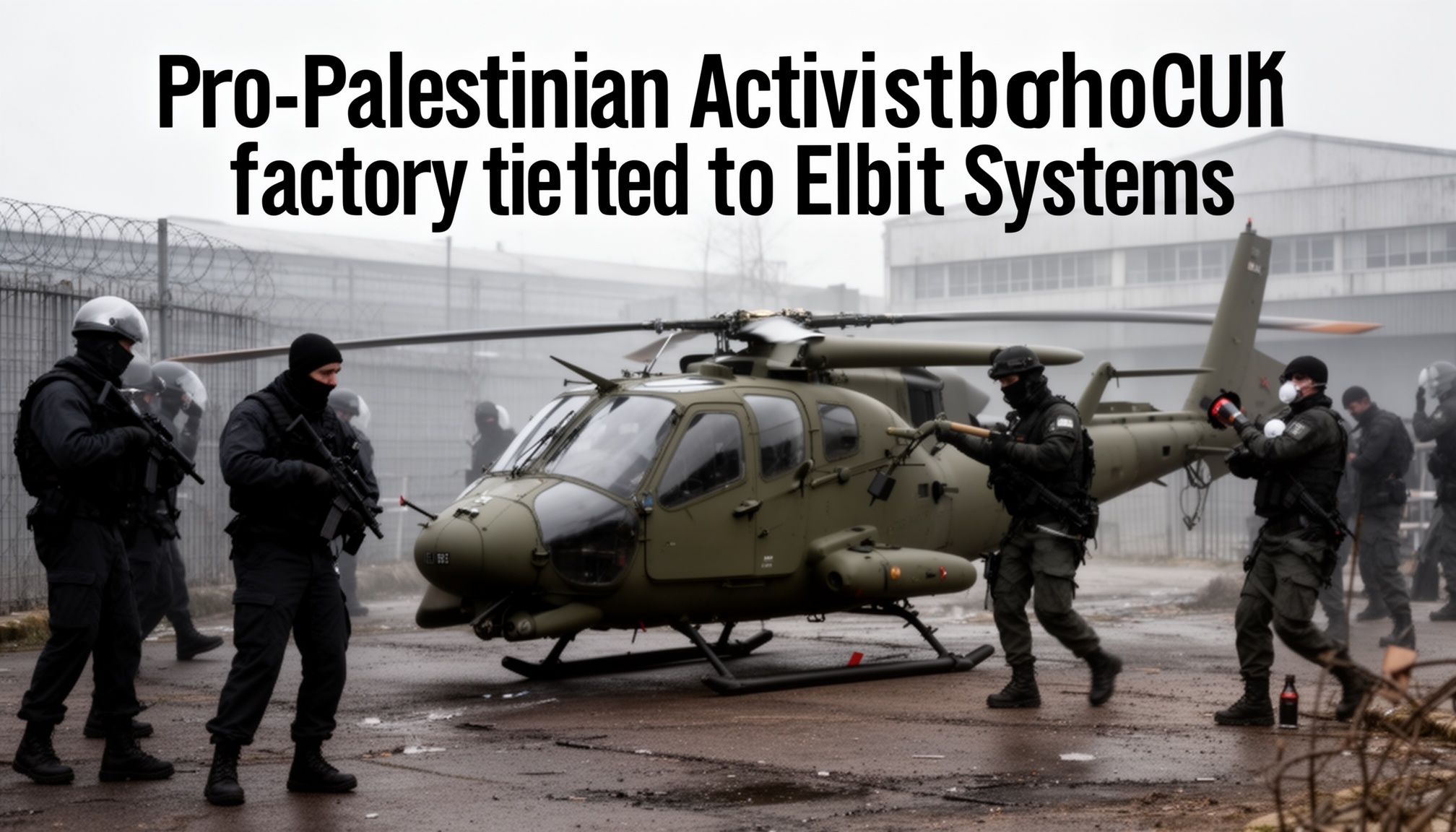
Pro-Palestinian activists breach UK drone factory tied to Elbit Systems
Pro-Palestine activists breached a United Kingdom factory, claiming drones produced there were destined for Israel’s military. The incident raises questions about export controls, supply chains, and potential escalation in regional tensions. Analysts will watch for government responses and any implications for defense trade policy.
Pro-Palestinian activists breached a UK factory that authorities describe as suspected of producing drones for Israel's military. The breach occurred amid ongoing protests tied to the broader Gaza conflict, amplifying pressure on arms supply chains and corporate accountability. Police have detained several individuals as part of an ongoing investigation. The factory's exact output and client lists remain under scrutiny as investigators assess potential violations of export controls.
The incident follows a wave of political action against defense manufacturers linked to contested exports. Local officials have pledged to review licensing and oversight mechanisms, while several lawmakers have signaled a broader debate on the ethics of arms sales. The event underscores how external conflicts can ripple into domestic industrial security and corporate risk management. International observers are watching to see whether this act translates into a broader push for sanctions or policy reform.
Strategically, the breach exposes vulnerabilities in supply-chain transparency for drone components and assemblies. If confirmed, the factory’s connection to Israel’s military could feed arguments for tighter export scrutiny in ally countries and potential reputational backlash for defense contractors. The episode could encourage activists to target other facilities with perceived ties to controversial programs, raising the tempo of insurgent-style pressure on the defense sector. Analysts warn that next moves will hinge on legal outcomes and political will.
Technical details remain unclear: the scale of the breach, the number of drones produced, and the exact military relevance of the suspected output are still unconfirmed. Government sources have not released a full brief, and investigators are compiling evidence to determine whether any sensitive blueprints or restricted materials are involved. If investigations reveal deliberate intent to facilitate prohibited transfers, authorities may pursue charges under export-control and industrial-security statutes. The incident could catalyze reforms in how firms disclose defense collaborations and how governments monitor foreign military assistance through private factories.
Looking ahead, expect heightened scrutiny of defense supply chains in the UK and allied markets. A protracted legal process could set precedents for protest-related investigations into corporate production lines. On the strategic plane, the event feeds into broader deterrence calculations about export controls, supplier due diligence, and the political feasibility of restricting defense collaborations with contested partners. The long arc will depend on enforcement actions, political dynamics, and the persistence of public pressure against arms exports.