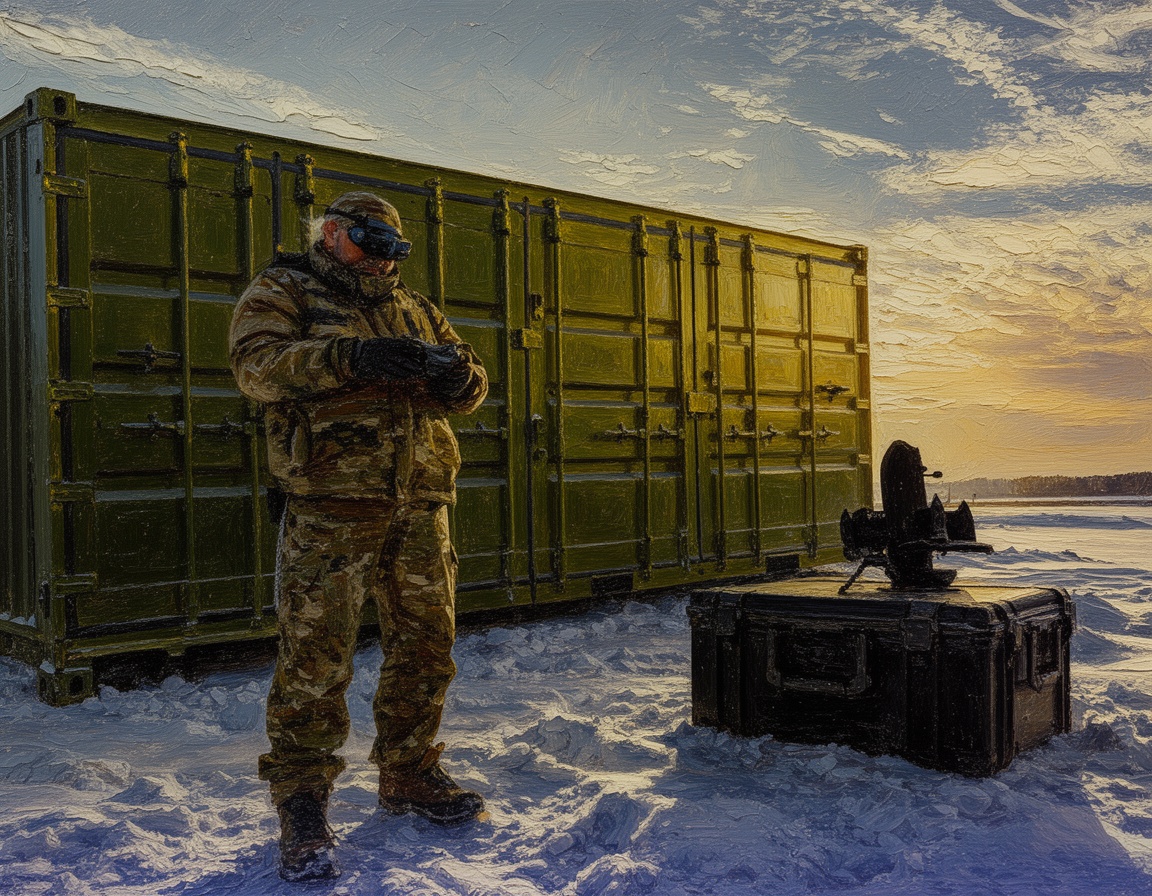
Portable Interceptor Drone Factories Drive Global Defense Race
The Iran conflict intensifies global demand for interceptor drones, sparking a race among defense startups to miniaturize drone production into shipping containers. This innovation promises rapid, flexible deployment of drone defenses worldwide, reshaping military industrial logistics.
The escalating war in Iran has accelerated demand for sophisticated interceptor drones globally, spurring defense companies to innovate new production methods. Startups are racing to embed entire manufacturing lines into shipping containers, transforming industrial infrastructure into strategic weapons. This shift promises rapid deployment of drone defenses close to conflict zones, bypassing traditional manufacturing bottlenecks.
Historically, drone production has relied on large facilities centralized in specific regions. The Iran war’s pressures have exposed vulnerabilities in supply chains, prompting militaries to support modular, transportable production solutions. These advances respond to the urgent need for local and timely interceptor availability to counter increasingly sophisticated unmanned threats.
Strategically, portable interceptor factories disrupt traditional defense supply paradigms by decentralizing manufacturing and accelerating response times. These containerized units enable contested regions to become quasi-factories, complicating adversaries’ targeting efforts and strengthening defensive postures. They also support allied forces by providing scalable production capacity within theater boundaries.
From a technical perspective, these containerized factories must integrate precision robotics, additive manufacturing, and advanced quality control systems within limited space. They aim to produce high-end drones like kinetic interceptors or electronic warfare UAVs at scale. Defense startups estimate that a container-based line can produce hundreds of units monthly, with flexible reconfiguration to meet evolving battlefield requirements.
Looking ahead, the rise of portable interceptor factories could herald a new arms production model emphasizing agility and dispersion. Militaries may adopt these modular units for rapid scaling during conflicts, fundamentally altering drone warfare industrial bases. However, this also increases risks of proliferation and raises challenges for arms control and export regulation frameworks.