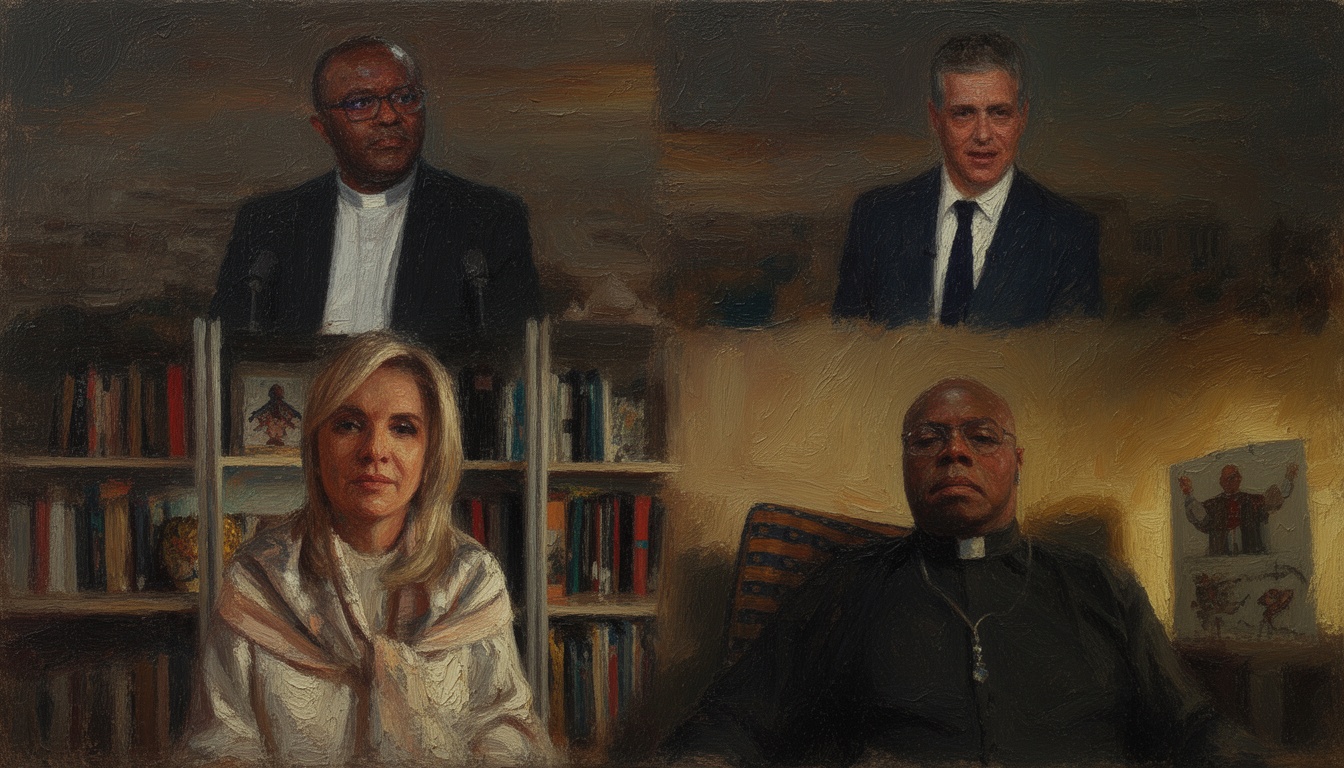
Pope's sharp Cameroon message targets rulers and militants
A U.S.-born pope visits Cameroon's contested English-speaking northwest. He casts religious authority as a check against militarized manipulation of faith, directly addressing the Cameroonian leadership and those who exploit religion for gain. The encounter underscores a high-stakes intersection of faith, politics, and regional instability.
The pope delivered a blunt critique during his first visit to Cameroon's restive English-speaking northwest. He condemned those who weaponize religion and the name of God for military, economic, and political gain. The pontiff warned that such exploitation drags the sacred into darkness and filth, a centrifugal accusation aimed at shaping perception inside a tense domestic contest. The message arrived as he met with Cameroonians in Bamenda and then in Yaoundé, signaling a unified stance across the Catholic Church and its global audience.
Context matters: Cameroon's English-speaking regions have endured years of unrest tied to governance, language rights, and security force conduct. The pope's visit, while pastoral in tone, enters a charged political landscape that sees both regional grievances and national leadership scrutinized by international observers. His exhortation to peacemaking sits against a backdrop of protests, parallel political narratives, and a security posture that seeks to contain violence without broad concessions. The pope's presence adds moral legitimacy to calls for restraint, even as local actors interpret the visit through competing political lenses.
Strategically, the pope's message operates on multiple levels. It reinforces the Vatican's long-standing effort to position the church as a mediator in conflict dynamics, especially in multilingual and politically divided states. For Cameroon, the tension between President Paul Biya's aging regime and regional dissidents remains a core risk vector for political stability and external perception. The pope's framing could influence domestic discourse, potentially pressuring leaders to adopt more inclusive rhetoric or risk eroding legitimacy by appearing to tolerate manipulation of faith for political ends.
Technical and operational details are sparse in the public record of this trip, but the implications are clear. The pope's remarks intersect with Cameroon’s security apparatus, civil society, and religious networks, which together shape the resilience of the state in the northwest. Financial and political pressures—both domestic and international—will likely respond to perceived shifts in legitimacy following a visit of this symbolic magnitude. Observers will watch whether the pope’s words translate into tangible policy signals or remain a moral exhortation that reframes the terms of the national debate.
The likely consequences point toward a cautious recalibration of rhetoric from Cameroon's leadership and from regional actors alike. The pope’s stance risks escalating expectations for inclusive dialogue, while potentially hardening hardline positions among militant or semi-militant factions who interpret religious language as an instrument of disunity or control. Over the medium term, the visit could spur renewed international attention on humanitarian access, governance reform, and the prospects for a negotiated settlement in the northwest, even as systemic tensions persist.