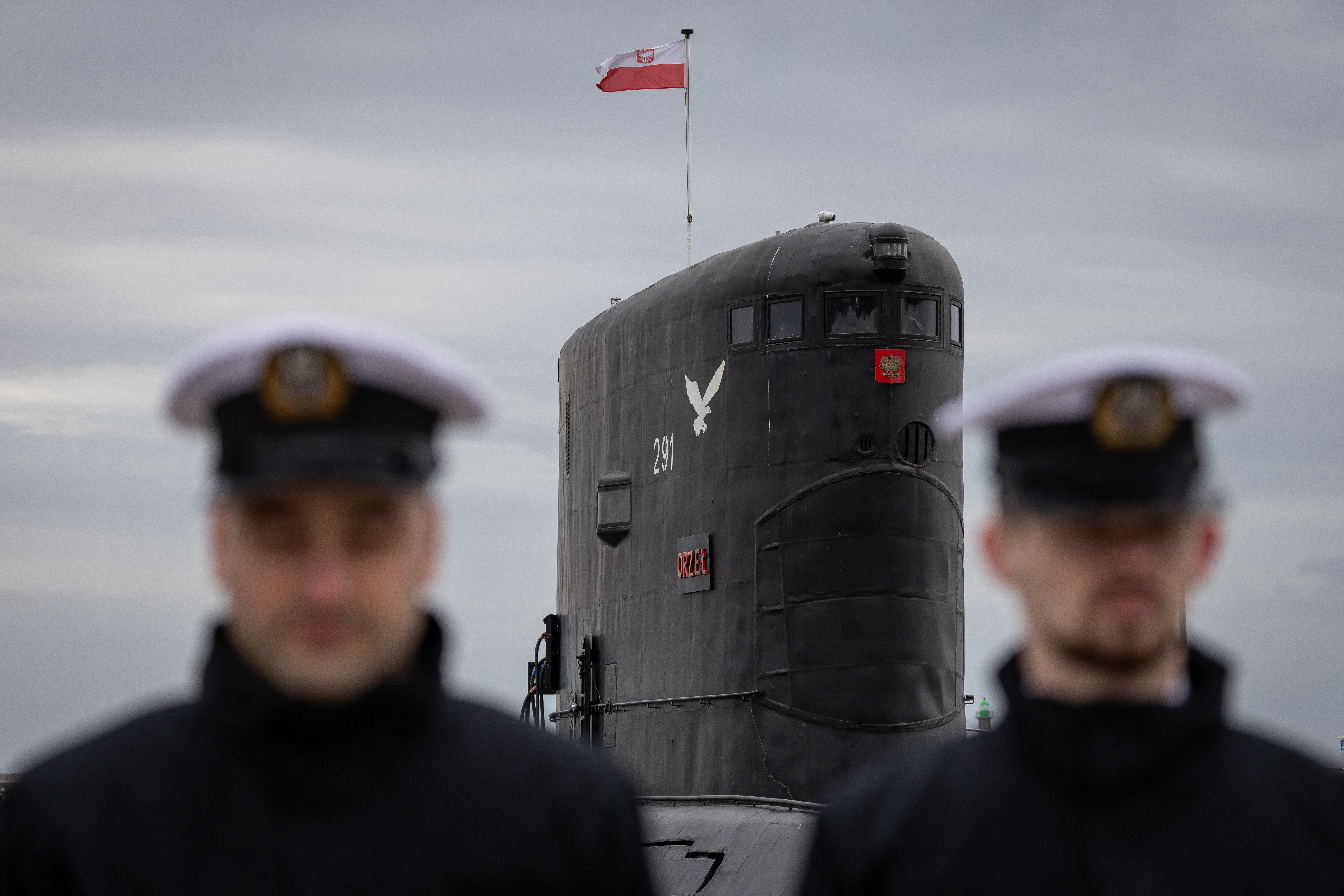
Polish President Rejects $50 Billion Military Loans, Escalates Political Standoff
Poland's refusal of a substantial $50 billion military loan underscores deepening political divisions and impacts European defense capabilities. The escalating tensions reveal a fracture in solidarity at a time of heightened security concerns across the continent.
Poland's President Andrzej Duda has decisively rejected a substantial offer of $50 billion in military loans from the European Union, marking a significant escalation in the ongoing political standoff with the centrist government led by Prime Minister Mateusz Morawiecki. This development emerges as a critical juncture in Poland's defense strategy, especially against the backdrop of rising threats from Russia and instability in Eastern Europe.
The friction between Duda and Morawiecki reflects deep-seated ideological divisions within Poland. President Duda, aligned with the right-wing Law and Justice (PiS) party, is asserting his authority over military matters, which has traditionally been a government prerogative. The ongoing quarrel has not only brought internal conflicts to light but also raised questions about Poland's unified stance on defense amidst external pressures, particularly with its NATO commitments.
This refusal has far-reaching implications for European defense initiatives, particularly as NATO grapples with bolstering its eastern flank following Russia's aggressive maneuvers in Ukraine. Poland’s rejection of these funds not only jeopardizes its own military modernization plans but also undermines collective European efforts to present a united front against external threats, potentially emboldening adversaries like Russia.
President Duda's motivations can be understood as an effort to consolidate military power and narrative control away from the centrist government. His administration is framing the rejection of the loans as a stand against external influence, appealing to nationalist sentiments. Additionally, his alignment with other right-wing leaders in Europe hints at a strategic pivot, leaning more towards independent defense procurement rather than EU-led initiatives.
Operationally, the proposed $50 billion would have significantly enhanced Poland's military capabilities, potentially funding advanced systems such as the F-35 fighter jets and Leopard 2 tanks. Instead, this rejection may leave Poland relying on its aging Soviet-era hardware, thereby exacerbating vulnerabilities in a region seeing increasing military readiness from neighboring nations.
In the immediate aftermath, Poland risks a decline in military readiness and might face pressures to seek alternative funding sources. The rejection could catalyze a military buildup by Russia along its western border, with further military exercises expected in the region. This standoff may ignite calls for increased defense spending within Poland, albeit with limited options due to the existing political climate.
Historically, Poland's defense decisions have oscillated between reliance on NATO frameworks and efforts for military autonomy. The present situation recalls the interwar period when Poland faced threats from both Germany and the Soviet Union, highlighting how political discord over military spending can produce national security vulnerabilities.
Moving forward, indicators to watch include changes in the Polish government's defense spending proposals and the reception of NATO’s eastern defense initiatives. Anticipation mounts on whether Duda will seek alternative alliances that could reconcile his political stance with critical defense needs, especially if external pressures intensify from Russia or Belarus in the coming months.