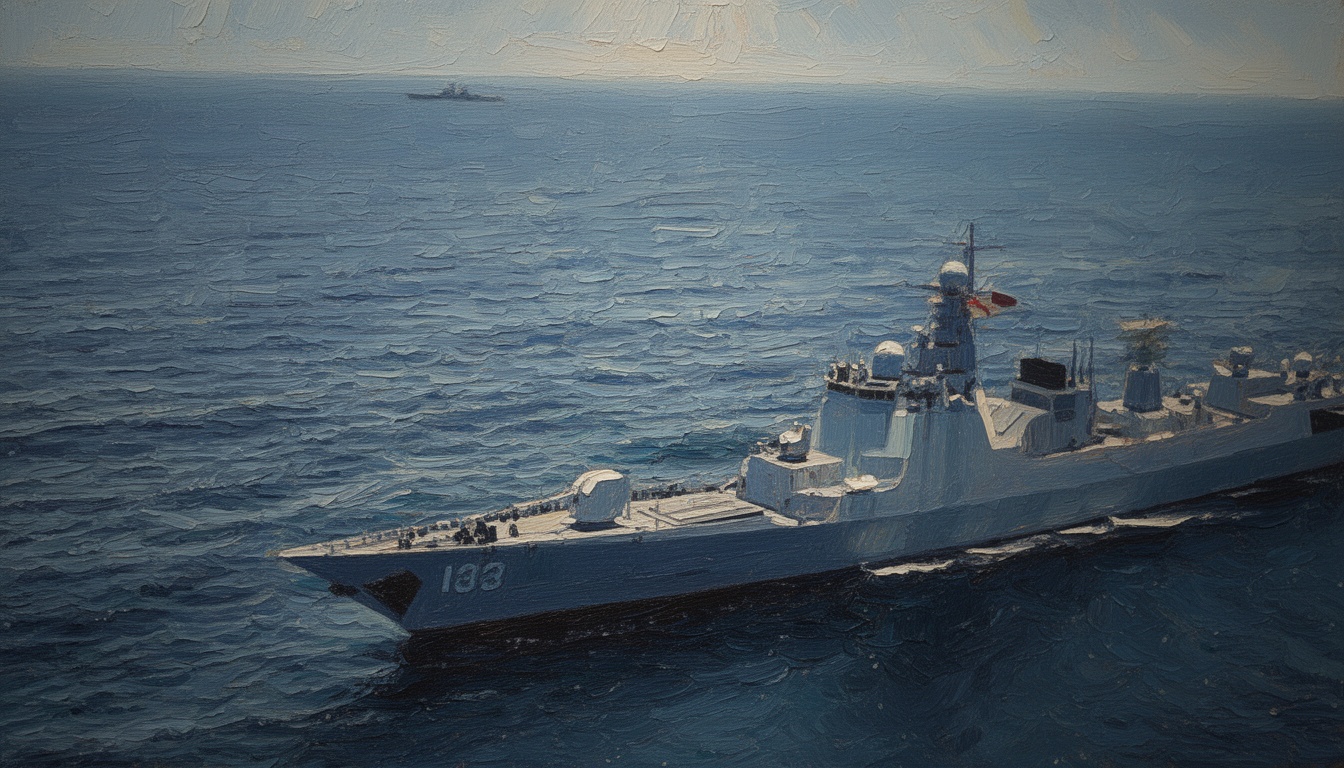
PLA warships transit off southwest Japan, signaling Taiwan warning
PLA warships conducted two transits through sensitive Western Pacific waterways near southwestern Japan this week. The moves are framed by Beijing as part of ongoing exercises and seen as a warning to Tokyo over Taiwan-related actions. Analysts assess implications for strategic signaling, alliance dynamics, and regional deterrence, with broader risks to maritime routes and crisis stability.
English content intentionally crafted as original intelligence analysis rather than a straight translation of a single source.
The sharpest fact is that PLA warships moved through two narrow corridors off southwest Japan, marking a rare dolphin-syllable of signaling rather than routine navigation. The first transit took place outbound through the Yokoate Channel on Sunday, the second return route was via the Yonaguni-Iriomote Waterway on Wednesday. Both passages occurred as the Western Pacific exercises commenced and concluded, underscoring a deliberate tempo tied to the Chinese military agenda regarding Taiwan. The Eastern Theatre Command framed the operation as the organization of naval forces, but the underlying motive is read by observers as a warning to Tokyo over Tokyo’s Taiwan-related policies.
Background: Beijing has consistently linked Taiwan-related actions to maritime stakes in the Western Pacific. The week’s transits come on the heels of heightened U.S.-Japan alliance activity and continued naval diplomacy across regional flashpoints. Analysts view this as part of China’s broader deterrence calculus, designed to signal resolve without triggering full-blown escalation. While Beijing emphasizes routine training, the choice of sensitive waterways near Japan indicates intent to press Tokyo on choices surrounding cross-strait dynamics.
Strategic significance: The transits occur in a period of rising regional tension, where sea-lane control and crisis communication channels matter as much as kinetic capacity. For Tokyo, the moves underscore a need to reinforce air and sea deterrence, while for Washington and its allies, they amplify the case for layered responses that deter coercive moves. The broader signal is that China seeks to normalize close military activity near sovereign Japan, potentially altering risk calculations for incidents at sea.
Technical/operational details: The outbound passage used the Yokoate Channel, a corridor with navigational challenges that tests fleet maneuvering and C2 coordination. The return route traversed the Yonaguni-Iriomote Waterway, a strait-laden path that constrains speed and demands precise timing. The Eastern Theatre Command publicly announced directing the 133rd Fleet, highlighting organizational control over the mission. Specific asset types, numbers, or weapon systems are not disclosed in the statement, leaving the operational picture incomplete but still signaling a measured display of naval reach.
Consequences and forward assessment: Beijing’s maritime signaling will likely influence allied planning in the region, including exercises that emphasize anti-access/area-denial postures and allied counter-denial capabilities. Short-term risks include accidental incidents in congested sea lanes and increased military-police communication needs to prevent miscalculations. Over the medium term, the episode reinforces the importance of continuous maritime-domain awareness, improved naval signals intelligibility, and a vigilant but calibrated approach to crisis management among Tokyo, Washington, and regional partners.