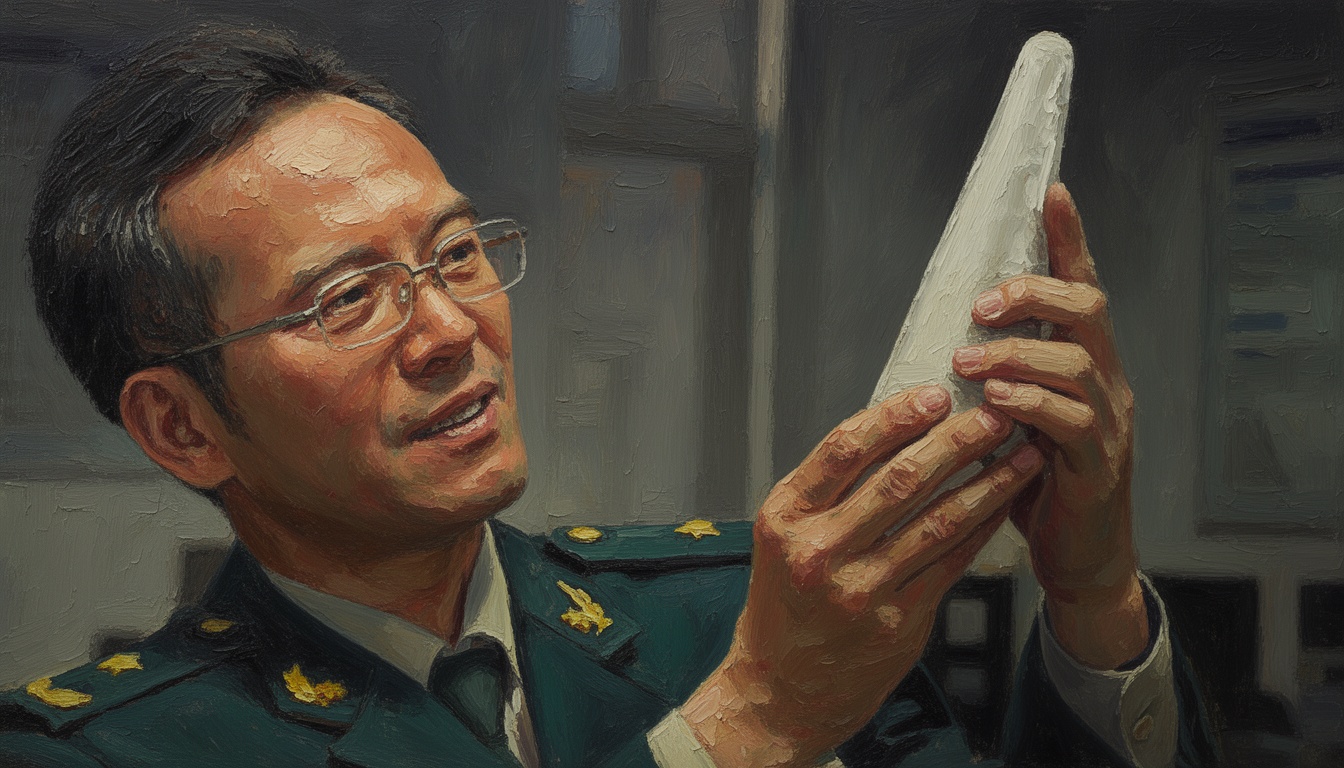
PLA Rocket Force scientist dies at 63, illness cited
A leading missile scientist with the PLA Rocket Force, Major General Feng Yufang, has died at 63. State media and the Chinese Academy of Engineering confirm his death on April 13 due to illness. Feng’s near four-decade career spanned military equipment development and strategic weapons research. The loss could affect ongoing projects within China’s long-range missile program, though official state accounts provide limited detail on the impact.
English
Major General Feng Yufang, a prominent missile scientist within the People’s Liberation Army (PLA) Rocket Force, has died at the age of 63. State media and the Chinese Academy of Engineering (CAE) reported his passing, with the CAE confirming he was an academicians and died on April 13. The official cause of death was not specified by CAE, but China Daily later cited illness as the likely factor. Feng’s career began decades ago and extended across nearly 40 years focused on military equipment development, a period during which China expanded its rocket and space-related research capabilities.
Background context shows Feng as a senior figure in China’s defense research establishment, often associated with advanced propulsion, guidance, and missile integration programs. His death comes amid a broader emphasis on maintaining and modernizing the PLA’s strategic arms complex, including long-range missiles and associated systems. While officials offered only a brief notice, the timing suggests a potential reshaping of internal teams and succession planning within units responsible for critical infrastructure and weapons engineering.
Strategic significance centers on how leadership transitions impact ongoing research initiatives tied to the PLA Rocket Force. Feng’s absence may influence mentorship lines, continuity in program leadership, and the prioritization of certain projects. The event underscores China’s emphasis on sustaining technical expertise in high-stakes domains such as propulsion, navigation, and missile test programs, which bear on regional deterrence dynamics and strategic balance.
Technical and operational details remain limited in public reporting. Feng’s exact roles within the CAE and internal Rocket Force projects are not specified beyond his status as an academicians and a leading missile scientist. The CAE’s public confirmation signals official recognition of his contributions, though no granular budgetary or project milestones are disclosed. Analysts will watch for official memorial notices or statements about any reorganizations within research teams and the potential implications for ongoing program schedules.
Likely consequences include a temporary reallocation of responsibilities among senior scientists and a possible acceleration of knowledge transfer to younger engineers. In the near term, program managers may emphasize continuity plans and risk mitigation to preserve critical capabilities. Over the longer term, Feng’s legacy may influence recruiting and training within China’s defense science community as the Rocket Force sustains its modernization trajectory.