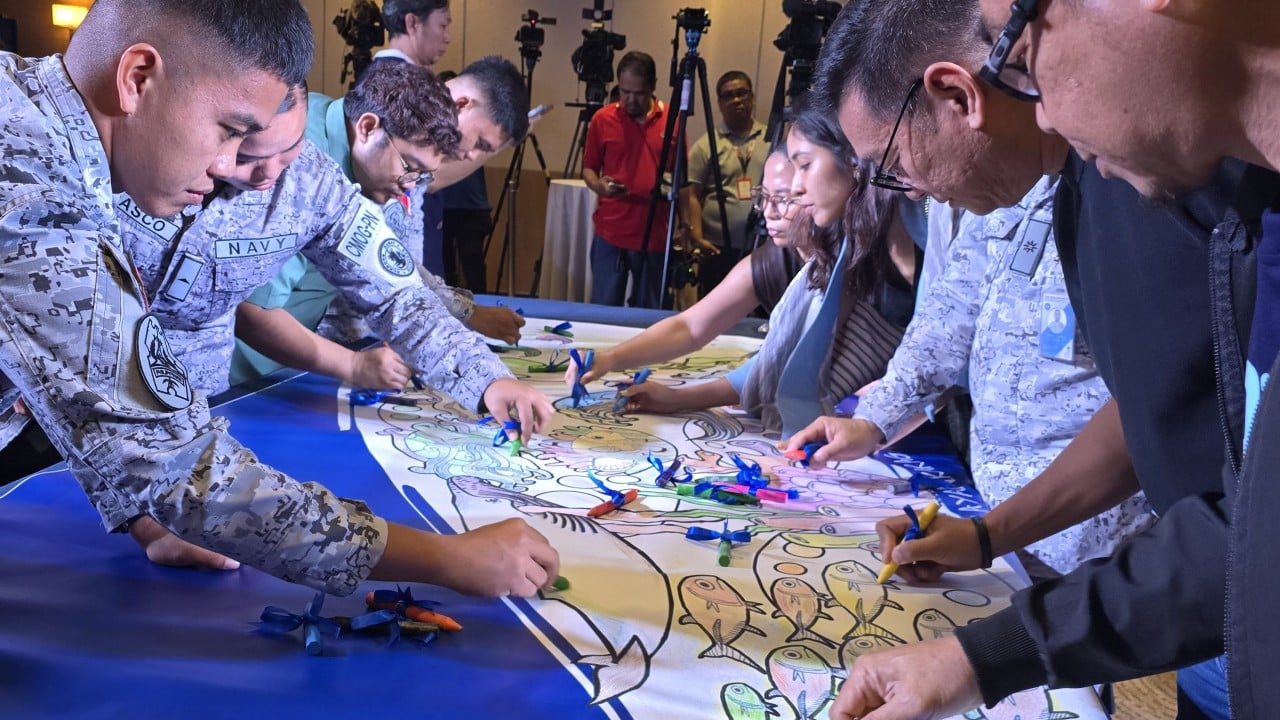
Philippines Launches Nationwide Mural Contest on South China Sea Dispute
The Philippine government has initiated a mural contest aimed at raising public awareness on the South China Sea issue. This cultural initiative aligns with broader efforts to assert national narratives regarding territorial claims in the region.
The Philippine government has launched a nationwide mural contest designed to engage the public in artistic expression regarding the ongoing South China Sea dispute, specifically asserting the country's claim over the 'West Philippine Sea'. Organized by a Manila-based maritime think tank and supported by various state institutions including the National Commission for Culture and the Arts, the contest invites participation from artists, students, and the general populace to create large-scale murals that reflect their views on this critical issue in Philippine sovereignty.
This initiative is strategically significant as it aims to shape national and international narratives surrounding the South China Sea, a region fraught with geopolitical tensions involving multiple nations, notably China, Vietnam, and the Philippines. By fostering public engagement through cultural expression, the Philippine government is seeking to reinforce historical claims and validate its stance against perceived intrusions by foreign powers, particularly China, which has aggressively pursued construction and military presence in contested waters.
Key players in this context include the Philippine government, which is leveraging cultural initiatives to bolster national unity and public awareness regarding territorial issues. The competition reflects the Philippine administration's proactive approach to national sovereignty, aligning cultural narratives with political objectives. Additionally, China's ongoing militarization of the area continues to threaten freedom of navigation and regional stability, pushing the Philippines to find innovative methods of defense and advocacy.
The global implications of this initiative are significant, as the South China Sea is a critical maritime corridor for international trade and is home to vital maritime resources. The Philippines' cultural push could resonate with other ASEAN members who have vested interests in the area, potentially pressuring China to reevaluate its assertive actions. Furthermore, fostering a unified national identity around the maritime dispute may encourage greater international solidarity among allies supporting freedom of navigation and adherence to international maritime law.
Historically, cultural expressions have played a crucial role in territorial disputes, with nations often utilizing art to rally domestic support and signal their claims internationally. This precedent suggests that the Philippines' mural contest may amplify its voice in regional dialogues and contribute to a cohesive stance among Southeast Asian nations regarding maritime rights and sovereignty.
Analysts assess this initiative as a pivotal step towards strengthening the Philippines’ narrative and resistance against external pressures. If successful, it could serve as a model for utilizing cultural platforms to address security issues, thereby influencing public perception and fostering greater international awareness of the situation in the South China Sea.