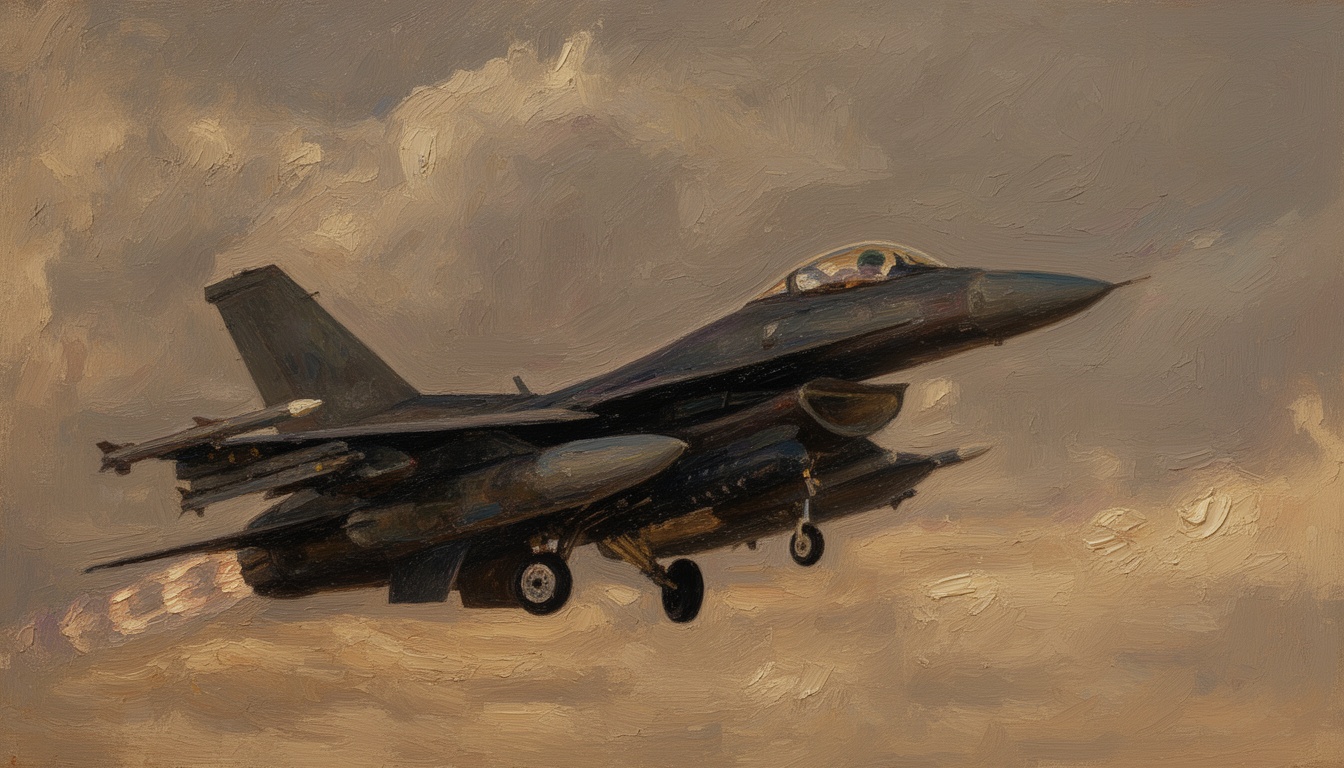
Peru ministers resign over stalled US F-16 deal
Peru’s foreign and defence ministers quit amid a government decision to stall a $3.5 billion purchase of 24 US F-16 fighters. The collapse exposes tensions between interim leaders and a looming presidential run-off. The move raises questions about Peru’s defense modernization and foreign policy alignment with the United States.
The core development is blunt: Peru’s foreign minister and defence minister have resigned in protest after the government paused a $3.5 billion contract to buy 24 F-16 fighter jets from the United States. The resignation signals a sharp rift between the administration and key ministries over a flagship defense modernization program. It also highlights broader governance challenges as Peru approaches a crucial electoral milestone. The immediate impact is a political crisis that could affect Peru’s short-term ability to advance critical defense procurements. The observers will watch whether the interim president can stabilize relations with Congress and the armed forces while maintaining credibility with international partners.
Background context centers on the interim president’s decision to defer finalizing the sale. Jose Maria Balcazar indicated that the winner of the June presidential run-off would have the final say on the agreement. This stance created a flashpoint with the ministries responsible for foreign relations and national defence. The deal, framed as a pillar of Peru’s modernisation, faced procedural and political scrutiny that widened into a test of executive resolve. The resignations reflect a broader pattern in which defense modernization becomes a proxy for political legitimacy and executive authority. Analysts will assess whether this crisis triggers shifts in Peru’s strategic orientation toward the United States or toward other regional partners.
Strategic significance lies in how this dispute shapes Peru’s posture in the Western Hemisphere. The standoff tests dissuasion and deterrence in the Andean region, where Peruvian commitments to modernizing air defenses intersect with domestic political dynamics. The United States views F-16s as a core element of regional airpower, and the stalled deal creates ambiguity about security guarantees and interoperability. Regional partners will monitor whether Peru can sustain credible defense-planning timelines under electoral uncertainty and cabinet turnover. The episode potentially alters the credibility calculus for future arms purchases in Latin America.
Technical and operational details are clear: the package is valued at approximately $3.5 billion for 24 F-16 fighter jets. The purchase would augment Peru’s air force capabilities, including pilot training, maintenance support, and associated weapons systems. The government’s pause appears to involve finalization steps and political approvals, rather than a technical shortfall in the aircraft themselves. The resignations remove two senior ministers from the process, potentially complicating negotiations with the U.S. defense industry and funding channels. Peru’s air force would likely require parallel investments in infrastructure, basing, and logistics to integrate the jets into the fleet over the coming years.
Likely consequences point toward renewed political friction and reconfigured defense diplomacy. The resignations increase the odds of cabinet reshuffles, delays to modernization timelines, and potential budgetary reshaping. Washington may press for rapid clarification to preserve the training and deployment schedule of the jets. Domestically, the leadership crisis could erode confidence in the government’s capability to execute large-scale procurement programs, pressuring Peru to reframe its defense strategy and diversify partners if the run-off outcome shifts policy.