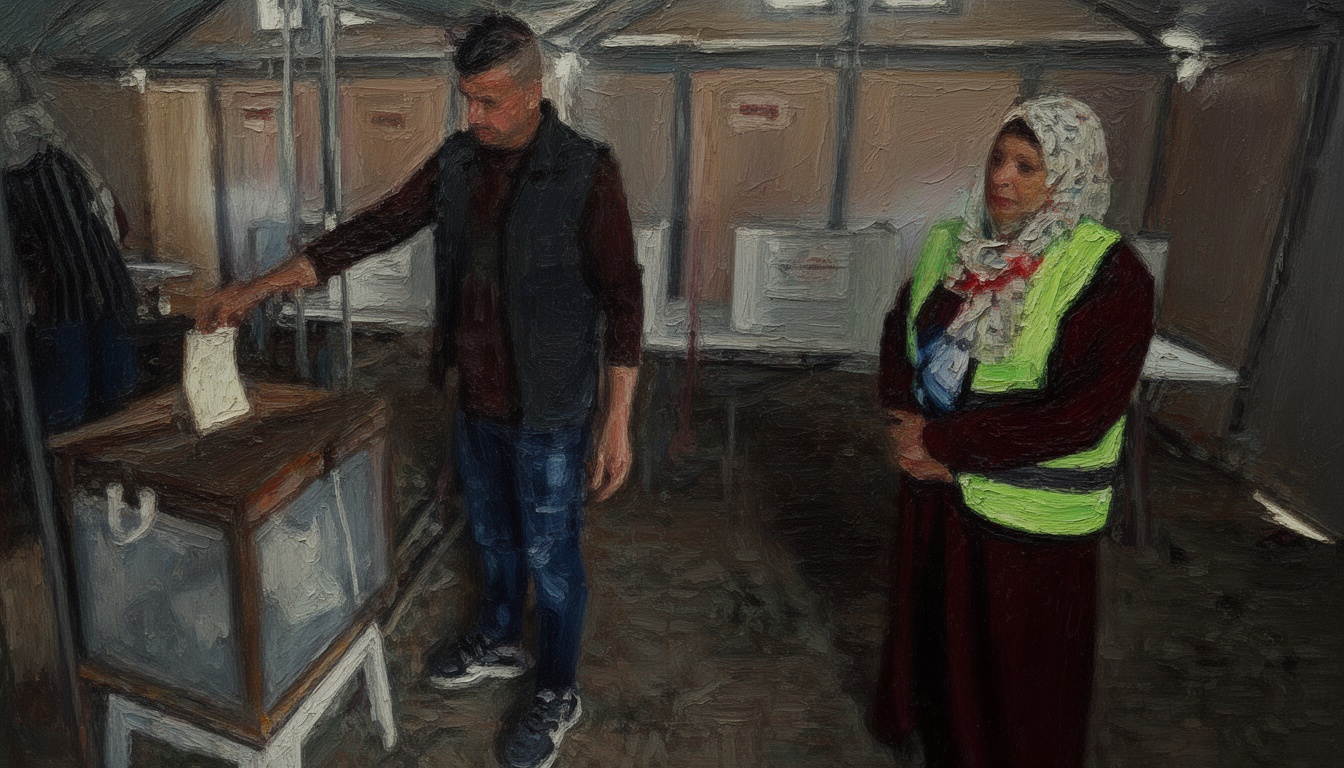
Palestinians Hold Local Elections in West Bank; Hamas Boycotts
Local elections proceed in the occupied West Bank and one Gazan city, with Hamas and allied groups deliberately staying away. The vote tests municipal governance amid a fractured Palestinian landscape and heightened security restrictions. Outcomes could reshape local power dynamics and external legitimacy scenarios.
In the occupied West Bank, local elections proceed as planned, while in one Gazan city voting is also held, though Hamas and allied factions abstain from participation. The move signals a cautious attempt to regularize municipal governance despite a long-standing political split between Fatah and Hamas. Security forces maintain controlled environments around polling sites, and observers report uneven turnout influenced by fatigue with factionalism and concerns over electoral reforms. The absence of major Islamist participation underscores persistent doubts about the process’s inclusivity and long-term impact on Palestinian political reconciliation.
Historical context matters: local elections have repeatedly tested Palestinian unity efforts, serving as a barometer for how much authority each faction is willing to concede to the other. In the West Bank, municipal councils have gradually expanded administrative responsibilities, yet budget constraints and administrative bottlenecks limit transformative outcomes. In Gaza, Hamas maintains governance over municipal services but faces limited external legitimacy and recurrent humanitarian pressures. The latest vote thus becomes a focal point for intra-Palestinian legitimacy contests and broader regional reactions to a still-fragile peace trajectory.
Strategically, the elections carry implications for regional power balance and external engagement with Palestinian authorities. A credible local mandate could bolster the Palestinian Authority’s administrative credibility in the West Bank and offer Hamas a pathway to demonstrate governance competence without formally renouncing its core stance. International actors will scrutinize turnout, fairness of candidate selection, and incidents of political intimidation as signals of whether the Palestinian political system can stabilize despite enduring divisions. The event also risks provoking renewed discourse on governance reform, election law changes, and the decentralization of authority to municipalities.
Operational specifics shed light on the electoral framework: multiple municipalities across the West Bank are holding polls, with observers noting limited competition in some districts due to boycotts and party withdrawals. Security planning emphasizes crowd management and safeguarding ballot boxes in contested zones, with independent election observers reportedly monitoring procedural integrity in several sites. Funding streams for local government projects remain constrained, curbing promised reforms and potentially dampening voter enthusiasm. The procedural hurdles—candidate vetting, boundary delineations, and post-election council formation—will shape the durability of any local mandates that emerge from this vote.
Looking ahead, outcomes are likely to influence governance credibility, inter-faction dynamics, and regional messaging. A strong showing by non-Hamas candidates in the West Bank could pressure Hamas to recalibrate its strategy toward governance and outreach, while limited participation in Gaza may reinforce the enclave’s isolation from broader Palestinian political processes. International actors will weigh the vote’s conduct against reform benchmarks, potentially using the results to calibrate aid and diplomatic engagement. Over the medium term, failed reconciliation or weak turnout could perpetuate administrative paralysis, whereas credible local governance may offer a degree of stability amid a protracted regional turmoil.