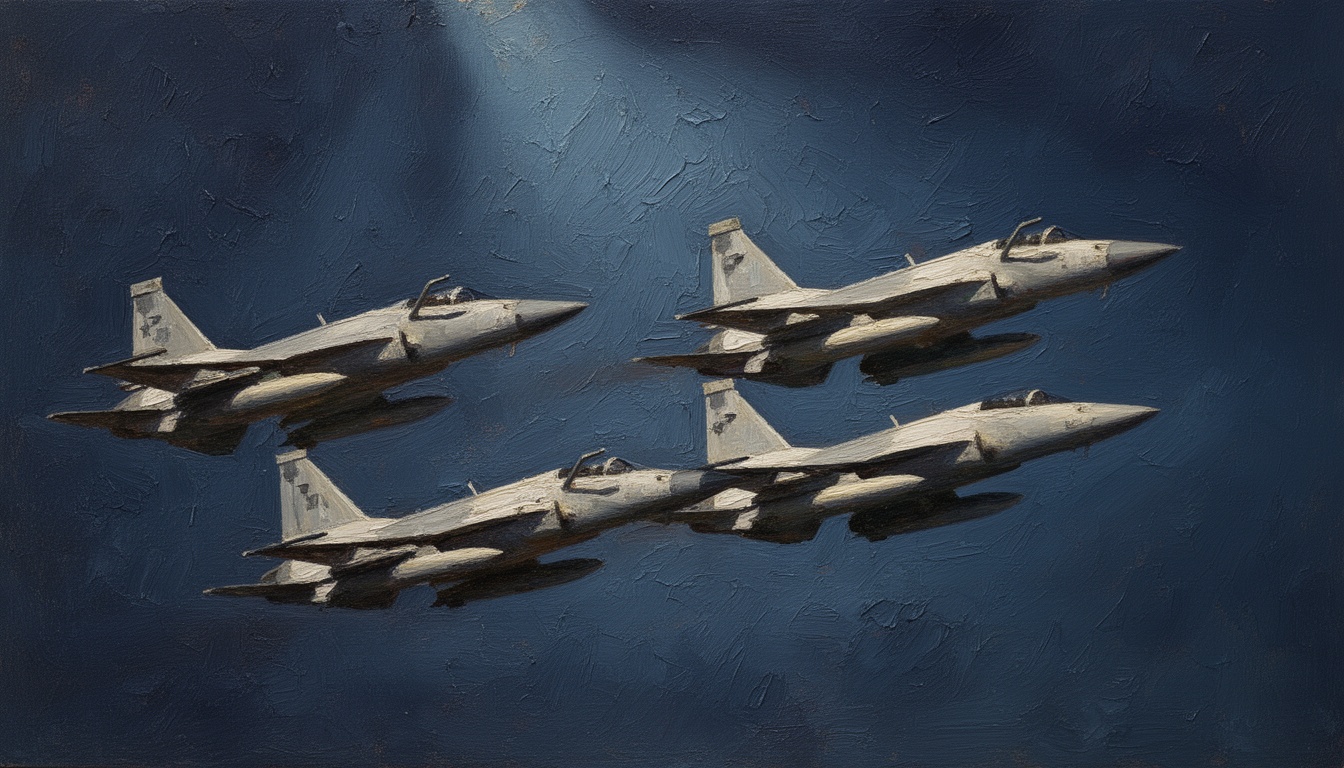
Pakistani Jets in Saudi Arabia Reshape Gulf Security
Pakistan's air force contingent at a Saudi Gulf coast base marks a rare security alignment amid Iran-US tensions. Analysts say the move could constrain Tehran’s options against energy infrastructure and test Gulf deterrence. The deployment signals deeper trilateral coordination and adds complexity to the region’s risk calculus.
An air force contingent from Pakistan has been deployed to a base on Saudi Arabia’s Gulf coast, a development that immediately alters the balance of security in the Gulf. The force appears strictly defensive in mandate, but its presence complicates Tehran’s calculations should hostilities flare again. The move comes as Pakistan was simultaneously involved in mediating discussions between Iran and the United States, underscoring a broader push to stabilize the region while avoiding a wider conflict. Analysts describe the deployment as a significant deepening of security ties among Pakistan, Saudi Arabia, and to a lesser extent, regional partners, in a period of heightened strategic sensitivity.
Background context centers on Iran’s loyalty to safeguarding its energy corridors and critical infrastructure, particularly around the Gulf. Tehran has previously targeted energy assets to exert pressure, insinuating that Gulf stability remains a high-stakes objective for adversaries. The Saudi-Pakistani alignment, during talks aimed at cooling tensions with Washington, signals that the security architecture of the Gulf may be diversifying beyond traditional guard arrangements. While the force’s mission is framed as defensive, its presence inherently raises the stakes for any prospective adversary in the Persian Gulf.
Strategically, the Pakistan deployment introduces a new variable in Gulf deterrence. It creates an additional layer of risk assessment for Iran as it weighs potential strikes against energy infrastructure within Saudi territory and beyond. The move could also influence what Tehran views as acceptable risks in a future confrontation, potentially leading to more cautious calculus about crosses-border aggression. For partners in the region, the sight of Pakistani airpower in Saudi skies reinforces the credibility of a broader, multi-actor posturing that could stabilize or harden the deterrence landscape depending on future movements.
Operational details point to a compact PAF task force integrated at a base with robust air-defense and logistics support. While the unit’s exact composition remains unconfirmed, observers expect a mix of fighter aircraft and support elements designed for rapid dispersion and defensive scrambles. Budgets linked to the deployment are part of a broader modernization of Gulf security provisions, under which external partners contribute complementary capabilities. Analysts forecast that the presence may foster joint exercises and expanded intelligence-sharing, increasing interoperability in a way that would complicate any regional escalation trajectory.
Looking forward, the Pakistan-Saudi axis here could shape the region’s risk dynamics for the coming months. If Tehran interprets this as a consolidating front against energy-targeting strategies, it could either recalibrate or postpone potential kinetic actions. Conversely, the arrangement could prompt Gulf partners to accelerate additional deployments or expand deterrence programs. The net effect will hinge on perceived credibility, flexibility, and the willingness of external powers to support or constrain this evolving security architecture.