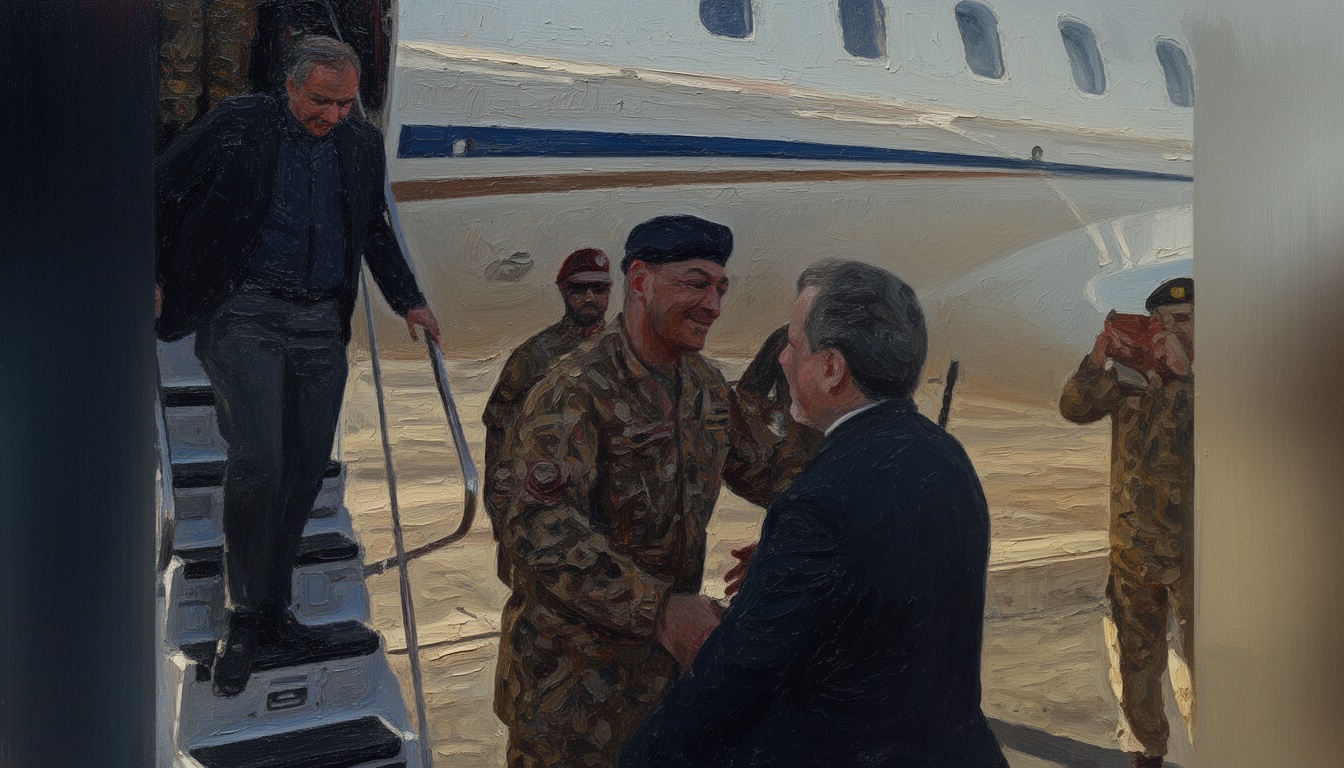
Pakistan Army Chief Visits Tehran to Seek Renewed US-Iran Talks
Pakistan's army chief travels to Tehran to press for renewed discussions between Washington and Tehran on a ceasefire. The initiative follows a seven-week pause in the Israel-US-Iran conflict that disrupted oil flows and unsettled markets. Presidents in the region hint at further dialogue on Thursday, potentially reshaping the crisis dynamics.
The Pakistani army chief arrives in Tehran to push for renewed talks between the United States and Iran. The visit represents a direct attempt to extend a ceasefire that has paused seven weeks of regional conflict involving Israel, the United States, and Iran. The aim is to stabilize the situation and prevent further escalation that could threaten global energy markets. The meeting occurs as regional leaders signal a possible summit on Thursday to discuss halting the fighting between Israel and Lebanon as well. The immediate objective is to restore dialogue channels that could reduce regional volatility and limit civilian harm.
Background for this visit lies in a fragile ceasefire framework that has withstood repeated pressure but remains vulnerable to shifts in external support and domestic political calculus in the involved states. Pakistan, often playing a mediator role in regional security dynamics, seeks to preserve its own strategic interests by fostering diplomatic engagement among major powers. Tehran views renewed talks as a path to alleviate economic strain from sanctions and to reassert influence over the broader security environment in the Gulf and Levant. The broader context includes ongoing international efforts to prevent a broader conflagration that could involve additional state and non-state actors.
Strategically, the move signals a networking of influence around a volatile crisis that touches multiple power centers. Renewed talks could moderate escalation risks and re-align deterrence postures across the region. For Pakistan, success would enhance its diplomatic leverage and align with its stated objective of regional stability. For Iran and the United States, an extended dialogue could create space for limited compromises on sanctions, assistance, or humanitarian corridors while keeping military options on the table. The diplomatic thread now runs through Tehran with potential follow-ons in regional capitals and at international forums.
Operationally, the pledge centers on restoring a ceasefire and resuming formal communications. The Pakistani delegation is expected to press for concrete steps: verifiable pauses in hostilities, monitoring mechanisms, and a timetable for de-escalation. Military and intelligence informants will likely be consulted to assess compliance risks and to identify red lines. If talks progress, funding and supply lines for humanitarian relief and energy security could feature in the next rounds, shaping the crisis’s short- to medium-term trajectory. The likely consequences include renewed optimism about stabilizing markets and a tempered pace of conflict escalation, albeit with persistent uncertainty until verifiable agreements are in place.