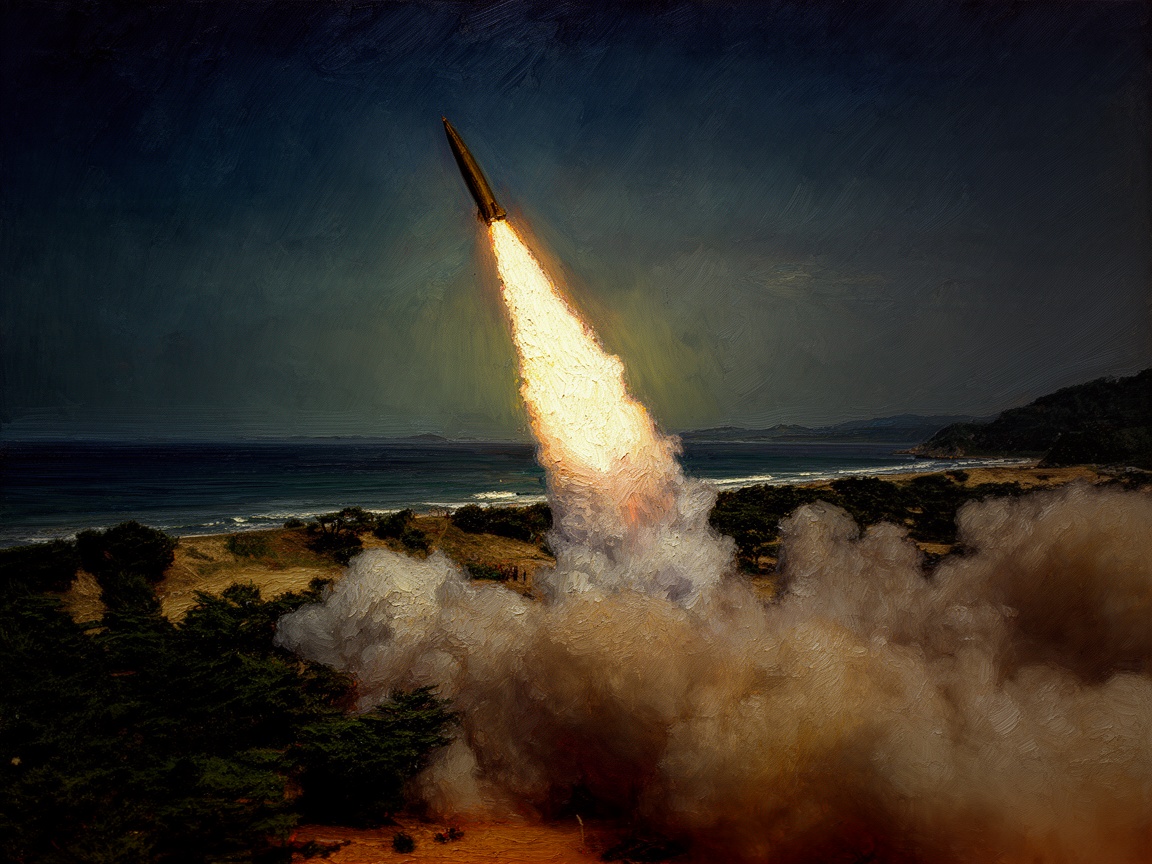
North Korea Launches Ballistic Missiles Off East Coast in Seventh Test
Pyongyang conducts a seventh ballistic missile test this year, firing from the eastern Sinpo region toward the sea. The salvo underscores a persistent program and rising regional risk. The international response is likely to coalesce around increased sanctions pressure and allied deterrence postures.
North Korea has fired multiple ballistic missiles from the eastern Sinpo area toward the sea in what constitutes the seventh test of its ballistic program this year. The launches demonstrate a continued cadence of testing despite international pressure and United Nations sanctions. Observers assess this as a display of the regime’s resolve to advance its military-technical capabilities while avoiding overt escalation into full-blown conflict.
The incident fits into a broader pattern of North Korean behavior in recent years, where periodic launches punctuate periods of diplomacy and strategic signaling. The Sinpo site remains a focal point for development of short-, medium-, and potentially intercontinental-range systems. Regional powers track the test cadence closely, as each flight adds data on propulsion, guidance, and debris trajectories that inform future deployments.
Strategically, the tests complicate deterrence calculations for neighboring states and the United States. They emphasize North Korea’s desire to coerce concessions while preserving space for negotiation, a dynamic that raises the risk of miscalculation during crises or diplomatically fraught episodes. The launches also risk triggering renewed sanctions chatter and accelerated defense postures among allies in the region.
Technically, the missiles reportedly use existing North Korean propulsion families and guidance packages associated with known systems launched from Sinpo in prior years. Industry and defense analysts watch for indicators such as missile velocity, burn time, and reentry behavior to infer the range and accuracy improvements. Budgets and procurement within the Korean People’s Army’s strategic forces may shift to sustain or accelerate the flight-test program.
Looking ahead, the international security environment could tighten further as capitals weigh sanctions, intelligence-sharing, and joint exercises. A persistent test rhythm heightens the probability of accidental engagements during hostile flare-ups. Analysts expect continued monitoring of Sinpo and adjacent facilities, with warning frameworks and crisis-management plans likely to be revised in response to the evolving threat.