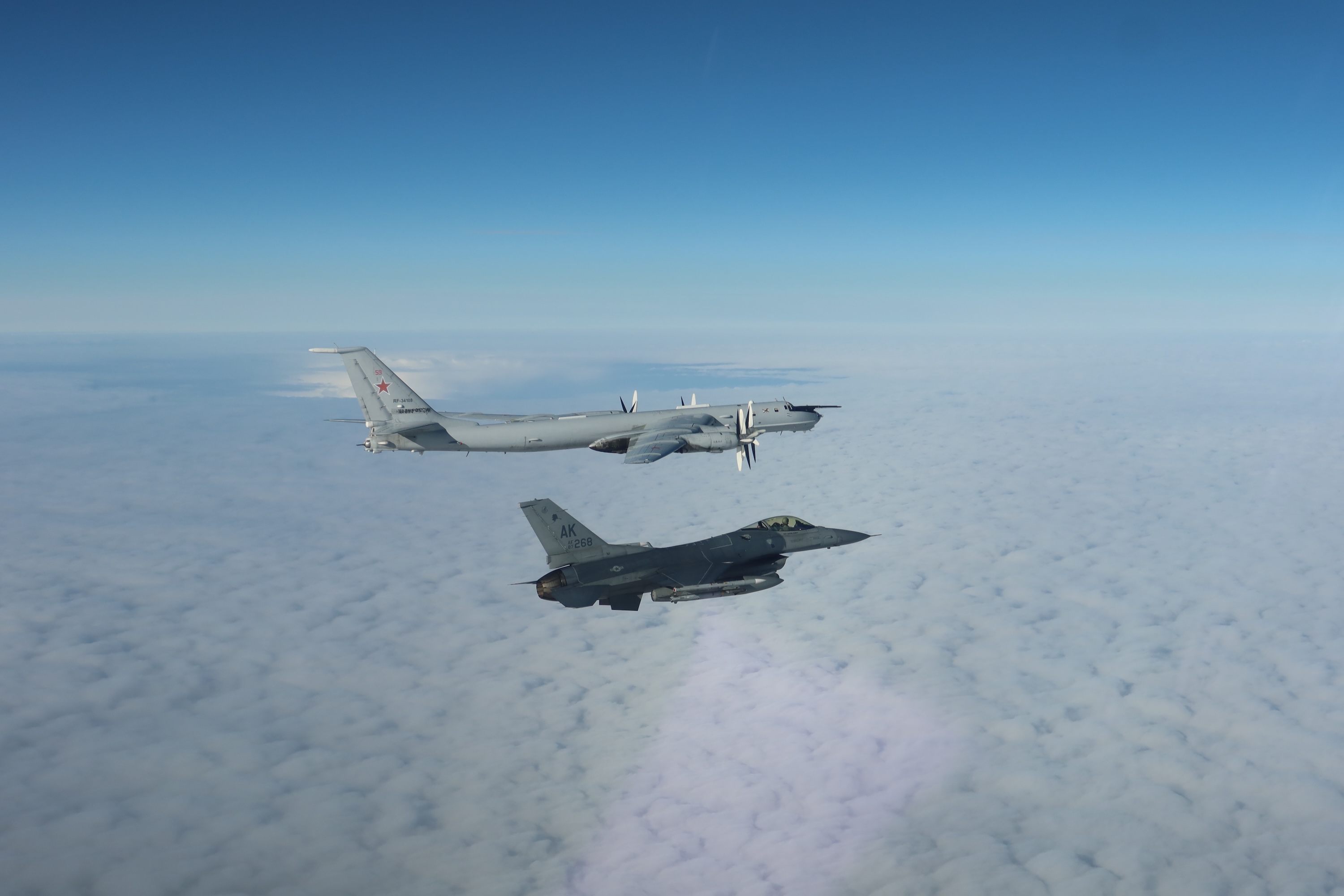
NORAD Intercepts Russian Tu-142 Aircraft In Alaskan Airspace Crisis
The interception of two Russian Tu-142 maritime patrol aircraft by NORAD signals escalating Russian military activity around North America, highlighting vulnerabilities in U.S. and Canadian air defenses.
NORAD intercepted two Russian Tu-142 maritime patrol aircraft that entered the Alaskan and Canadian Air Defense Identification Zones on Wednesday. This significant event underscores a growing pattern of Russian military provocations in proximity to North American airspace, raising alarms about national security vulnerabilities in the region.
Historically, the North American airspace has faced intermittent probing by Russian military aircraft since the Cold War. However, such encounters have intensified in recent years, reflecting a more aggressive posture from Russia under President Vladimir Putin. These provocations are not merely reconnaissance missions; they represent strategic maneuvers meant to test the readiness and response capabilities of NATO and North American air defense systems.
The significance of this incident lies in its demonstration of Russia's strategic intent. By consistently intruding into North American airspace, Moscow aims to showcase its military capabilities and assert influence in a region traditionally viewed as secure by the United States and Canada. This engagement poses risks to the existing balance of power, exposing potential weaknesses in air defenses and prompting military leaders to reconsider their strategies and readiness levels in the Arctic and beyond.
The key actors here are the Russian military and North American air defense systems. Russia aims to project power and deter Western influence in Eastern Europe and the Arctic, while NORAD's mission is to safeguard North American territories against such intrusions. The interceptions indicate a cat-and-mouse game, where Russia continues to challenge airspace sovereignty while North America scrambles to maintain a credible response.
On the technical front, the Tu-142 is a long-range maritime reconnaissance and anti-submarine warfare aircraft, capable of flying distances of up to 8,000 kilometers without refueling. Its presence in these zones highlights Russian capabilities in tracking maritime routes and potential naval operations, emphasizing the need for a robust defensive posture from NORAD, which operates various advanced fighter jets and early warning systems for timely detection.
The likely consequence of this incident is an increased military presence in the Arctic by both Russian and NATO forces, as each side attempts to assert dominance. Additionally, the incident could prompt North America to enhance its air defenses and develop joint response strategies with allies, raising the stakes for future encounters. The risk of escalation increases with each provocation, where a miscalculation could lead to more severe military confrontations.
Historically, similar incursions have led to heightened tensions, as witnessed during the Cuban Missile Crisis when air interception became crucial in preventing direct confrontation. The more frequent interceptions of Russian aircraft in the vicinity of North America may evoke memories of Cold War tensions, where airspace violations led to standoffs and increased military readiness.
Moving forward, intelligence efforts should focus on Russian air and naval movements in the Arctic, while monitoring NORAD's responses and readiness levels. Additionally, surveillance capabilities must be optimized for early detection and engagement of Russian aircraft to mitigate the risk of future crises. Future developments will depend heavily on Russia's strategic decisions and any resultant shifts in U.S.-Canada defense postures and alliances in response to these challenges.