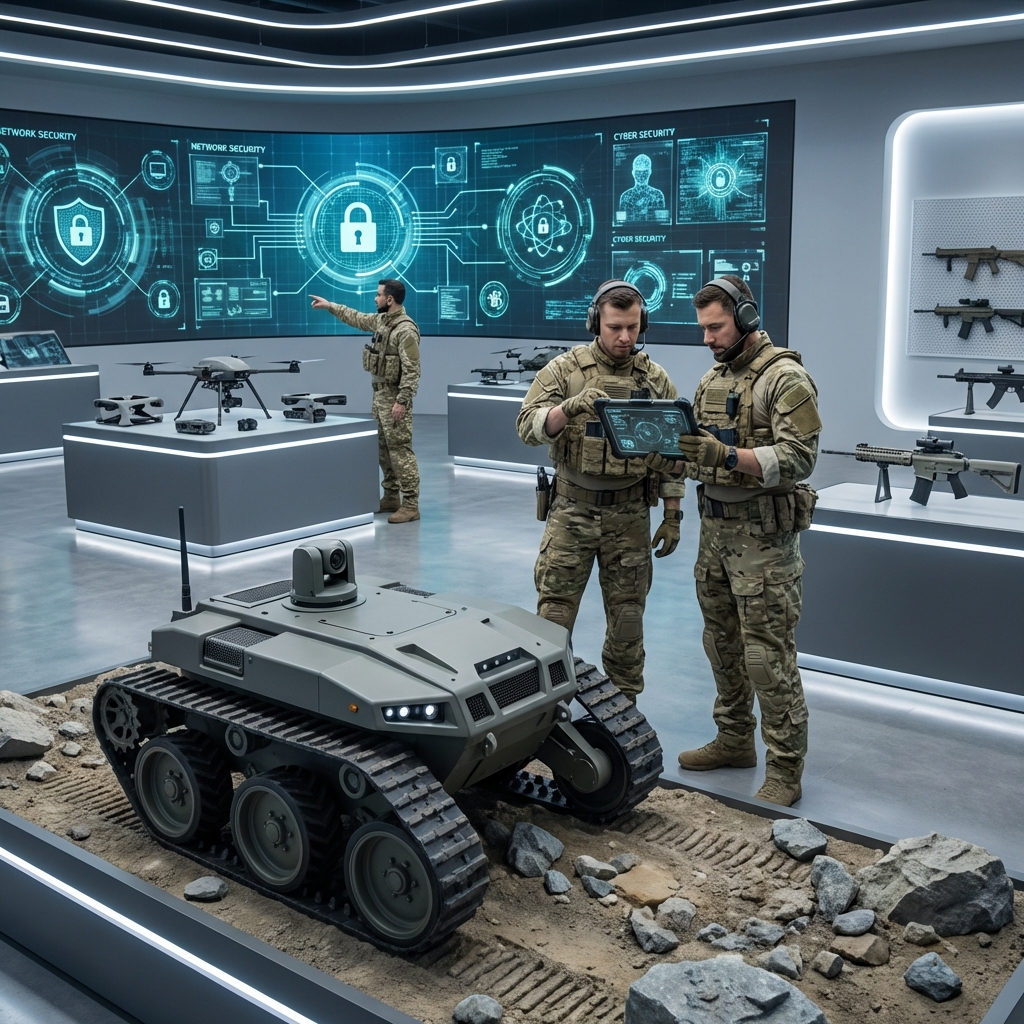
Next-Gen Warfare Demands Interoperability in Emerging Technologies
The integration of AI, autonomous systems, cyber capabilities, and electronic warfare signifies a shift towards interoperability in modern combat scenarios. Defense manufacturers are focusing on converging these technologies to ensure rapid battlefield effectiveness.
In a recent industry-led initiative, key defense manufacturers have underscored the necessity of interoperability among next-generation warfare technologies. The convergence of AI, autonomous systems, cyber operations, and electronic warfare (EW) is becoming fundamentally important as military operations evolve in complexity and speed. This shift aims to create a cohesive operational environment where various technologies can interact seamlessly, thus enhancing strategic decision-making and responsiveness in combat situations.
Technically, the advancements in AI are enabling autonomous systems to process vast datasets in real time, allowing for quicker tactical decisions on the battlefield. Coupled with robust cyber capabilities, these systems can conduct operations while minimizing vulnerabilities to adversarial threats. Additionally, the integration of electronic warfare competencies provides critical support in terms of disrupting enemy communications and enhancing situational awareness. The interoperability framework being pursued ensures that these disparate systems can share data and execute commands across platforms effectively.
The strategic significance of this initiative cannot be overstated. In a landscape characterized by rapid technological advancement and evolving threats, the capability to operate in a cohesive manner with allied forces is essential for maintaining military superiority. This interoperability paradigm not only reinforces national defense capabilities but also enhances partnerships among allied nations, fostering a unified front against common threats. The collective use of these advanced technologies could redefine tactical operations by enabling forces to achieve decisive outcomes more rapidly and effectively.
Leading manufacturers, who are at the forefront of this technological revolution, include established players such as Lockheed Martin, Northrop Grumman, and Raytheon Technologies. By investing heavily in research and development, these companies are focusing on creating platforms that not only utilize cutting-edge technologies but also prioritize interoperability as a core design principle. Their ongoing projects aim to enhance existing weapon systems and develop new solutions tailored for joint operations in complex environments.
Potential applications of these interoperable systems extend beyond traditional battlefield scenarios. They can also be critical in humanitarian missions, disaster response operations, and counter-terrorism efforts where rapid coordination and data sharing are vital. The evolving nature of warfare, which increasingly blurs the lines between military and non-military applications, highlights the need for versatile systems that can adapt to a range of operational contexts. As the industry moves forward, the emphasis on interoperability will likely shape the future of defense technology and military strategy.