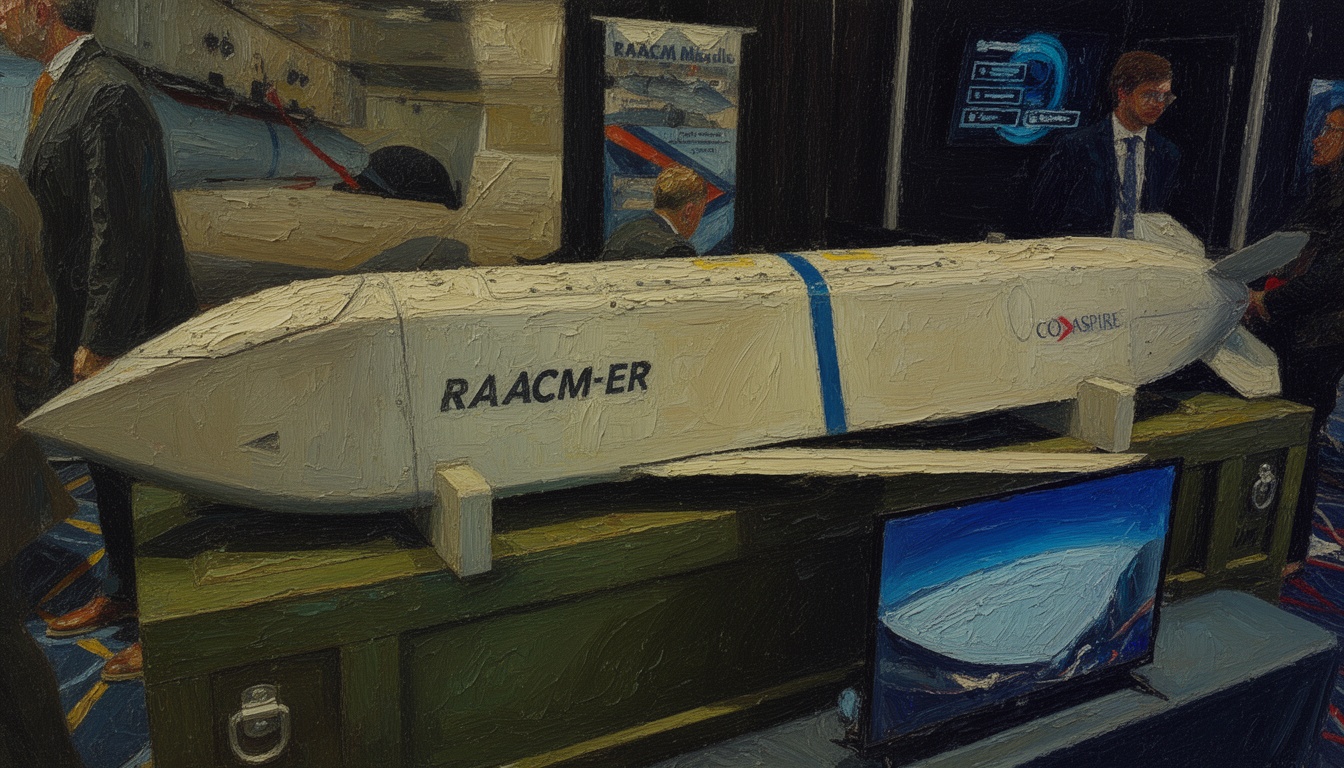
New RAACM-ER Low-Cost Cruise Missile Features Tomahawk-Like Range
A new RAACM-ER cruise missile offers a range exceeding 1,000 nautical miles, signaling a push for long-range, low-cost maritime strike capability. The weapon appears aimed at fulfilling an Air Force anti-ship requirement with Tomahawk-like reach. The development could reshape standoff dynamics and cost-per-shot calculations for adversaries and allies alike.
The RAACM-ER is described as a low-cost cruise missile with a range over 1,000 nautical miles, placing it in the same echelon as long-range strike solutions. Reportedly, the design prioritizes affordability without sacrificing striking distance, targeting a clear Air Force requirement for extended maritime reach. The feature set reportedly mirrors Tomahawk-class capabilities in range, but the cost profile is emphasized as a differentiator. This combination suggests a shift toward massed, affordable standoff fire options for integrated maritime campaigns.
Context around RAACM-ER indicates it belongs to a family of air-to-ground or air-to-surface missiles that the Air Force seeks to expand for long-range anti-ship duties. The emphasis on long range points to a strategy of hardening deterrence against sea-based attack and port disruptions, especially in contested littorals. Analysts will watch whether this missile adopts traditional navigation suites or novel guidance to ensure seaworthiness across merchant-dense, cluttered environments. The development also signals ongoing effort to diversify the armory beyond high-cost, precision missiles.
Strategically, a low-cost, Tomahawk-like option could alter blue-water and near-shab campaigns by enabling greater salvo sizes and more frequent launch cycles. If fielded at scale, adversaries might face intensified cost-exchange pressure and greater area denial capability without forcing major budget spikes. The move could spur accelerations in countermeasure development, including hardening of ships against cruise missiles and improved electronic warfare suppression. regional balance could tilt as power projection becomes cheaper per engagement.
Operationally, the RAACM-ER is said to carry a standoff reach that forces adversaries to respect extended maritime interdiction capabilities. While exact payloads and seeker details remain unconfirmed, the emphasis on a 1,000+ nm range implies robust navigation and terminal guidance to handle anti-access environments. If the missile integrates modular payload options, it could adapt to anti-ship, land-attack, or area-denial missions. In the near term, expect procurement plans to align with broader defense budgets and training for new launch platforms.
Forward assessment suggests a transition toward multi-domain deterrence with affordable long-range missiles. The RAACM-ER could pressure adversaries to invest more in sea-denial tactics, survivable ship designs, and layered defenses. Meanwhile, ally interoperability will hinge on shared ranges, data links, and targeting integration to maximize effectiveness across joint operations.