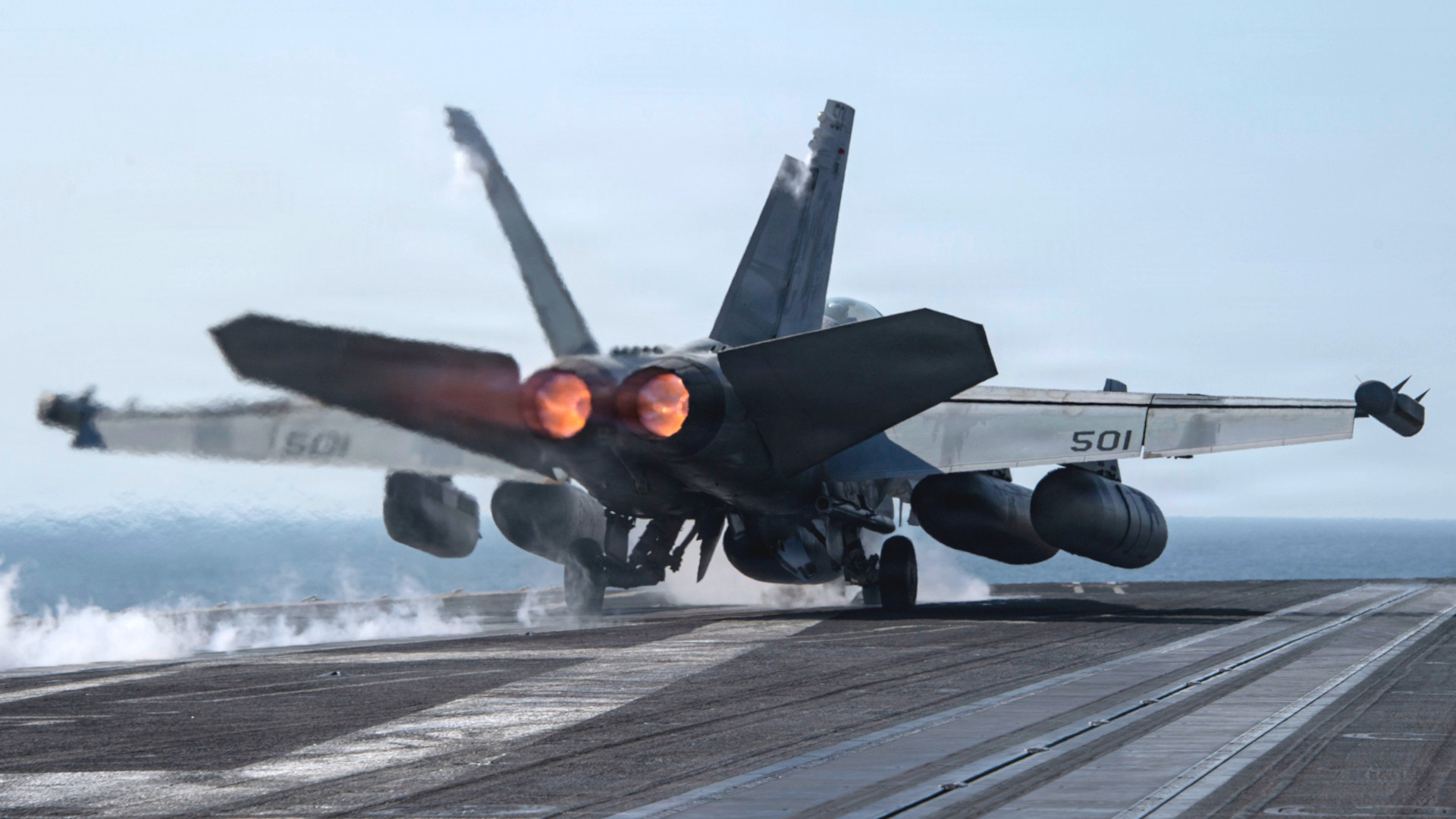
New Jamming Pods Face Issues in Iran Operations
The U.S. military's EA-18G Growler jets, equipped with both new and old jamming pods, are engaging in operations over Iran. However, a Pentagon report highlights significant technical problems with the new pods, potentially compromising mission effectiveness and risking escalation in the volatile region.
The U.S. Department of Defense has confirmed that EA-18G Growler aircraft are flying missions over Iran using a combination of new and legacy jamming pods. Despite their deployment in active conflict zones, a recent Pentagon report has uncovered significant issues with the performance of the new AN/ALQ-249 jamming pods, which are reportedly still in the 'teething' phase of development.
This development is critical as electronic warfare capabilities play a crucial role in modern aerial combat, particularly in complex environments like Iran's airspace. The Growler, the U.S. Navy's primary tactical jamming aircraft, depends heavily on its electronic attack systems to suppress enemy air defenses and ensure the safety of allied forces.
The discovery of these technical setbacks could shift power dynamics in the region. A malfunctioning electronic warfare capability could expose U.S. and allied aircraft to increased risks from Iranian air defenses, escalating tensions and complicating strategic objectives in the Middle East.
Analysts suggest that the U.S.'s accelerated deployment of these untested systems may be driven by an urgent need to maintain air superiority in a region where rival states, such as Iran, are rapidly advancing their own electronic warfare and air defense technologies. The reliance on partially unproven technology in a live operational environment reflects either a miscalculation or desperation on part of U.S. defense policymakers.
Technical specifications of the new AN/ALQ-249 jamming pods include advanced digital radio frequency memory (DRFM) technology designed to counter sophisticated surface-to-air missile systems. However, the identified issues hint at potential software and hardware integration problems, possibly leading to reduced jamming effectiveness.
If unresolved, these problems could compel a reassessment of current tactics and potentially lead to increased reliance on other allied capabilities or a shift in operational strategy. Such action might also strain the U.S. defense budget, already under pressure from other global commitments.
Historically, rushed deployment of new technology in conflict zones has resulted in mixed outcomes. The strategic implications of the current situation bear resemblance to past occasions where technologically superior forces faced setbacks due to immature weapons systems.
Going forward, monitoring the developments of the AN/ALQ-249 system's performance and the Pentagon's response to these technical issues will be critical. Defense analysts will be watching for indicators of Iran's response, particularly advancements in its electronic countermeasure tactics, which could further alter the balance of power in the region.