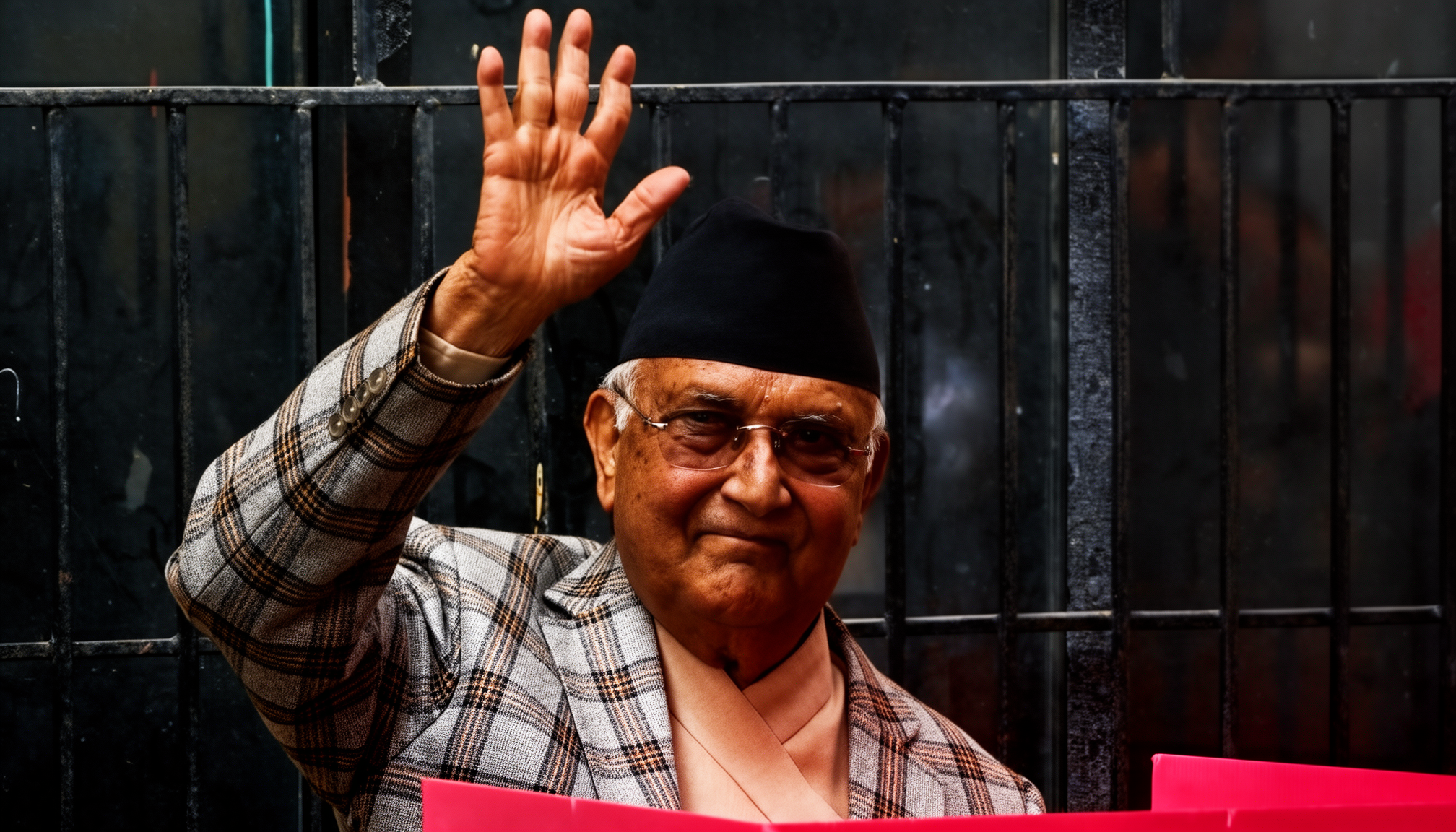
Nepal Arrests Ex-PM K.P. Oli for Deadly Protest Crackdown
Nepal’s arrest of ex-PM K.P. Sharma Oli exposes deep political rifts post-2025 uprising. This crackdown case heightens instability risks in a volatile region struggling with fragile democratic transitions.
Nepal’s former Prime Minister K.P. Sharma Oli and ex-Home Minister Ramesh Lekhak were arrested on Saturday morning for their alleged roles in a brutal crackdown on protesters in September that resulted in multiple deaths. The police confirmed the detentions followed investigations into the violent suppression which sparked national outrage.
The arrests come a day after newly elected Prime Minister Balendra Shah and his cabinet took office, marking the first government formed since the 2025 uprising that forced the resignation of Oli’s 74-year-old administration. This political shift has intensified factional tensions within the country.
Strategically, these developments highlight Nepal’s volatile post-uprising environment where democratic institutions remain fragile, and power struggles risk destabilizing both internal security and regional stability. The crackdown and subsequent arrests underline deep divisions within Nepal’s political elite.
Oli’s government employed security forces equipped with riot control weapons such as tear gas, batons, and armored vehicles to disperse largely peaceful demonstrators. The crackdown led to numerous casualties, with government figures acknowledging at least five deaths and dozens injured. Authorities claim arrests will proceed under anti-terrorism laws.
Looking ahead, this arrest risks igniting renewed unrest, with potential protests by Oli’s supporters and opposition factions. International observers warn Nepal’s fragile democracy faces critical tests as it balances demands for justice with maintaining order in a geopolitically sensitive Himalayan region.