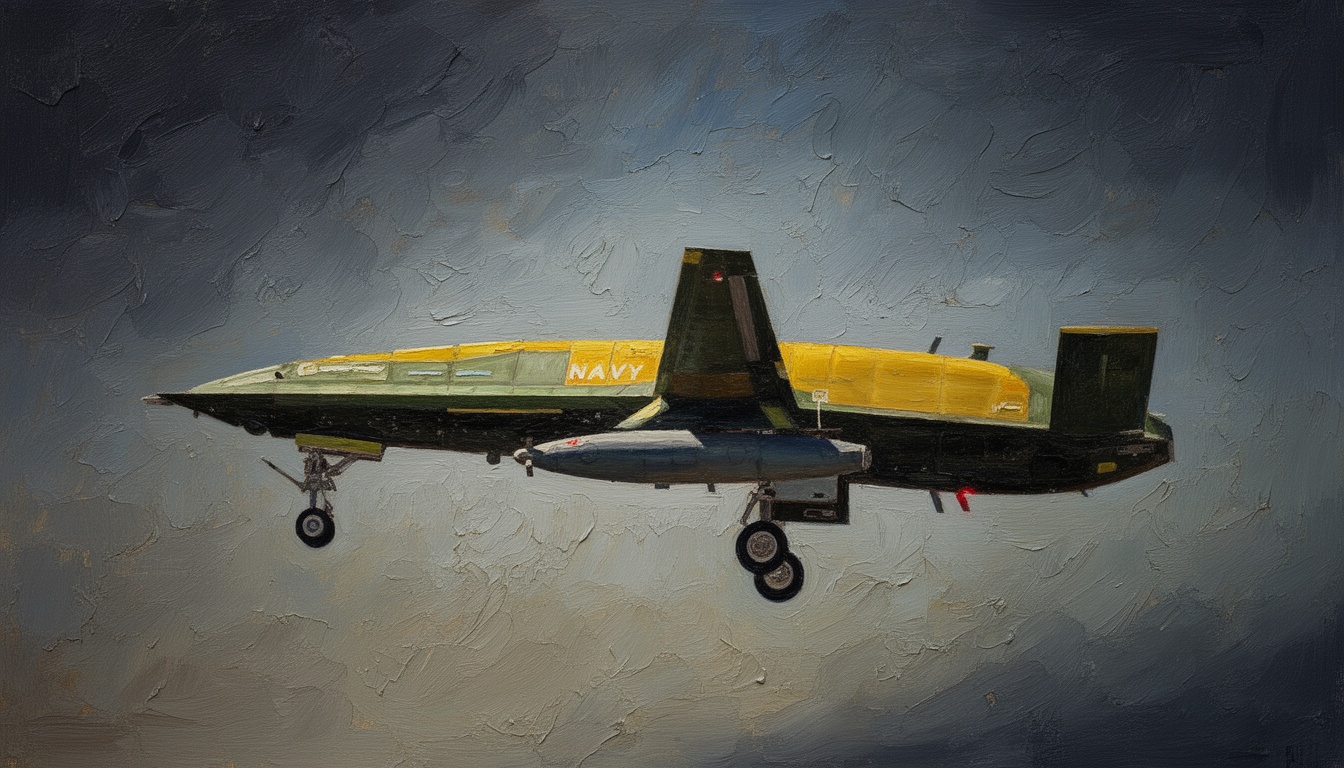
Navy's MQ-25 Stingray completes first test flight
The MQ-25 Stingray, Boeing’s carrier-drone program, executed a two-hour maiden flight from MidAmerica Airport. The test marks a milestone in integrating unmanned aviation into carrier operations, with potential implications for refueling and air wing composition. The development underscores a key pillar of future U.S. carrier strike capabilities and power projection.
The Navy’s MQ-25 Stingray has achieved a milestone by completing its first test flight, launching from Boeing’s facility at MidAmerica Airport in Mascoutah, Illinois. The aircraft conducted an approximately two-hour flight, marking the program’s initial foray into real-world flight testing outside controlled static environments. The mission, designed to validate basic aerodynamics, propulsion, and control systems, proceeded with the calm confidence typical of high-profile prototype programs. While early in the test series, the flight establishes a concrete data baseline for subsequent envelope expansion and mission simulations.
Background context centers on the Stingray’s intended role within the carrier air wing. Designed as a carrier-based unmanned aerial system, the program aims to extend the reach and endurance of carrier strike groups by performing air-to-air refueling duties and potentially other mission sets. The development comes after years of land-based testing, model refinement, and iterative hardware fixes, all aligned with the Navy’s broader shift toward unmanned platforms for risk reduction and operational flexibility. The flight underscores a continuing transition in naval aviation where autonomy complements manned aircraft rather than replacing them outright.
Strategically, the Stingray test flight signals potential shifts in fleet depth and sortie generation. A successful carrier-capable UAS would reduce the need for traditional tanker aircraft in certain mission profiles, thereby freeing manned assets for other tasks and increasing the number of aircraft that can be launched from a carrier air wing. The test aligns with long-running efforts to densify carrier capabilities, improve on-station time, and strengthen deterrence in maritime theaters. The outcome could influence allied navies assessing their own unmanned integrations and regional power dynamics in the Western Pacific and beyond.
Technical and operational details from the initial flight are intentionally guarded by program milestones, but the mission clearly reflects key design objectives. The Stingray platform leverages Boeing’s airframe and propulsion integration to sustain an extended flight envelope while fulfilling refueling or reconnaissance roles as defined by evolving requirements. The program’s cadence will hinge on data from this and subsequent flights, including sensor performance, flight-physics under varying loads, and reliability across subsystems. As the test program matures, expect incremental increases in complexity, target durations, and potential payload demonstrations that translate into tangible carrier operations impact.
Possible consequences and forward assessment point to a gradual integration timeline rather than an abrupt capability jump. If subsequent tests confirm reliability and interoperability with the Navy’s carrier imagery and control networks, Stingray could begin to influence air wing planning cycles, budget prioritization, and force posture calculations. In the nearer term, the program will continue to face the usual technical and governance hurdles—safety certifications, airspace integration, and mission-compatibility with manned platforms. The strategic takeaway is clear: unmanned carrier support aircraft are edging closer to shaping the next generation of naval dominance, while the broader maritime balance remains sensitive to unfolding procurement and testing outcomes.