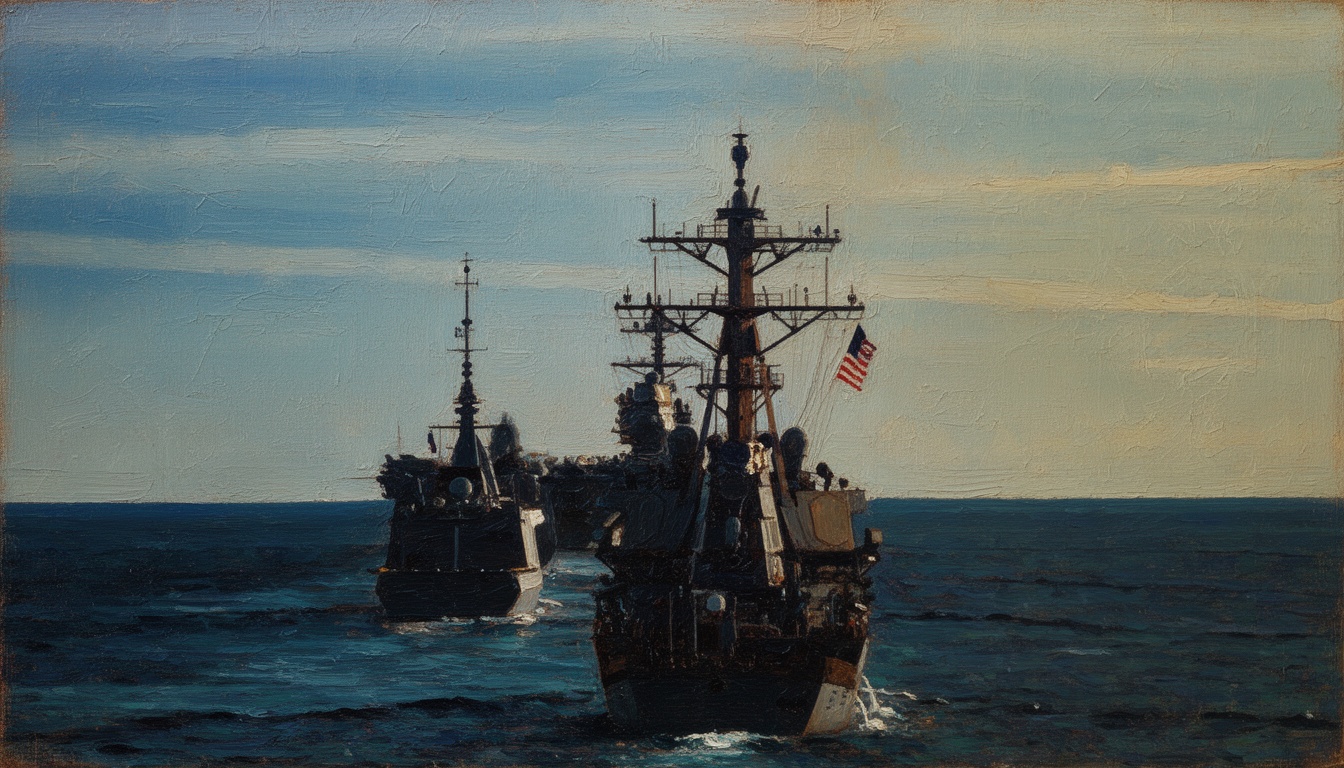
Navy’s ‘Fighting Instructions’ Fails Core Strategic Test
The U.S. Navy's 'Fighting Instructions' document, intended to shape future naval strategy, falls short of defining critical tradeoffs and force design choices. This gap undermines effective preparation for future maritime conflicts among major naval powers.
The Navy's 'Fighting Instructions,' authored under Adm. Daryl Caudle, aims to chart the service's strategic course forward but fails to establish decisive force design or prioritize tradeoffs crucial in true military strategy. Bruce Stubbs critiques this as a fundamental flaw that stalls the Navy's ability to compete against peer adversaries like China and Russia.
Developed as a framework to guide future naval warfare approaches, the Fighting Instructions lack the hard choices that define a clear and actionable strategy. Historically, successful naval strategies explicitly balance resources among competing platforms and missions, but this document leaves such critical decisions vague.
Strategically, this shortfall risks the Navy falling behind rivals advancing powerful anti-access/area denial (A2/AD) capabilities, including advanced missile systems and integrated naval air defenses. Without defined priorities and force structures, the Navy may fail to deter aggression and protect critical sea lanes essential to global commerce and power projection.
The document's limitations are clear in its failure to address specific weapon systems or force compositions, leaving ambiguity around fleet size, key ship classes, or emerging technologies like hypersonic weapons and unmanned platforms. The lack of concrete budgetary or operational directives signals an incomplete strategic vision.
Going forward, this gap necessitates urgent revision and leadership commitment to make tradeoffs that harden naval posture in a rapidly evolving global security environment. Without such clarity, the Navy risks strategic stagnation just as maritime rivals accelerate modernization and power projection capabilities.