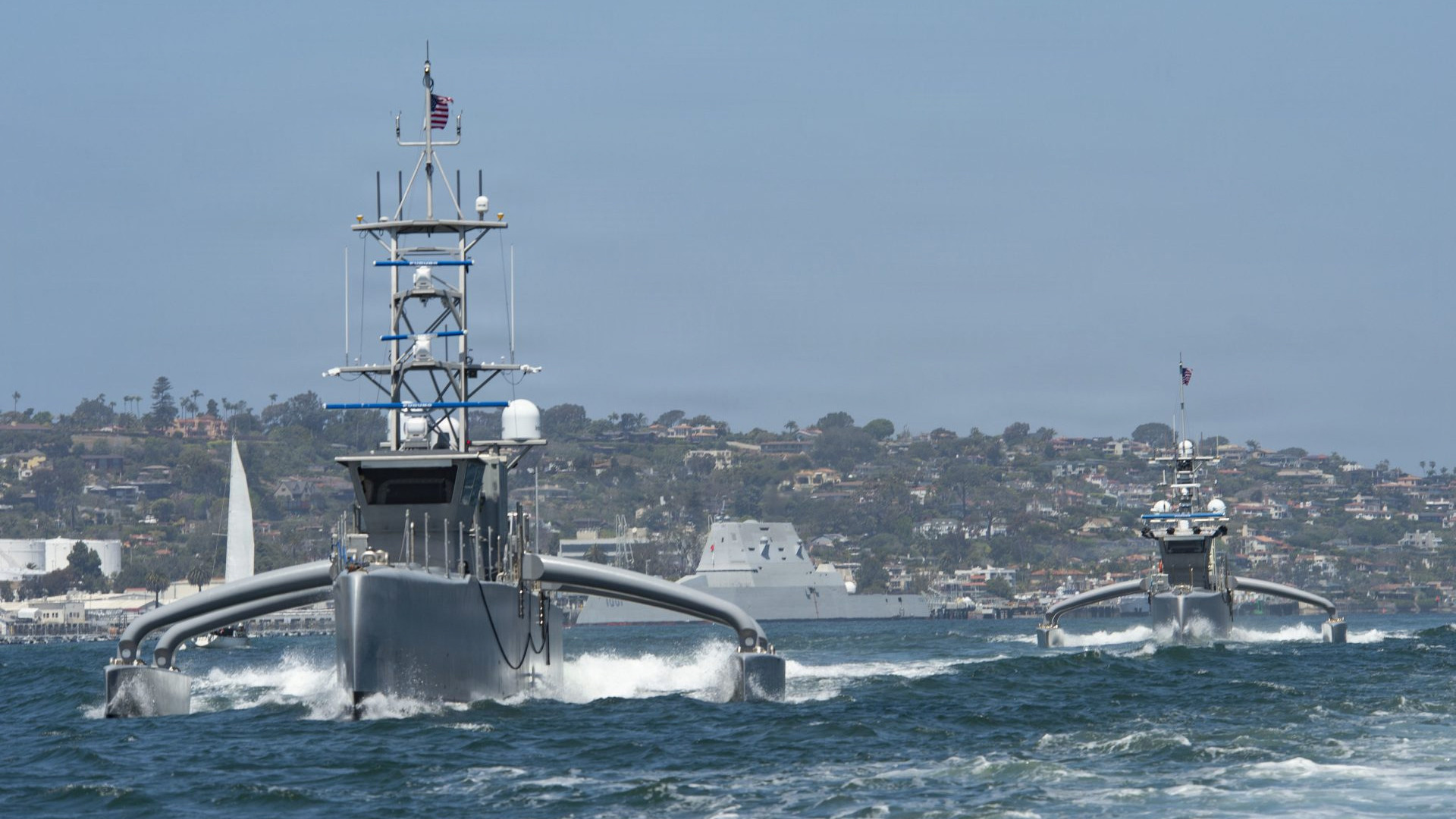
Navy Shifts to Deploy Mature Uncrewed Drone Ships Fast
The Navy abandons extended prototyping to field mature drone ship designs operated by contractors, signaling a shift in maritime unmanned strategy with global implications for sea control and naval power projection.
The U.S. Navy has altered its approach to uncrewed surface vessels (USVs), deciding to cut down on lengthy prototyping phases and instead push forward with deploying already mature drone ship designs operated by private contractors. This pivot aims to accelerate the integration of unmanned craft into naval operations.
Historically, the Navy invested significant time in developing and rigorously testing experimental USV prototypes to perfect the technology. This process has delayed the operational deployment of drone ships, despite their potential to transform naval warfare by increasing reach and reducing risk to crewed ships.
Strategically, this change reflects the urgent need to maintain maritime dominance against near-peer competitors like China and Russia, who are rapidly advancing in unmanned and autonomous naval technology. Accelerating fielding of proven designs boosts the Navy’s operational flexibility in contested waters.
The Navy is focusing on vessel models with established technological maturity, capable of remote operation by contractors, which cuts costs and timelines. These drone ships are equipped with advanced sensors, navigation systems, and modular payload options, enabling them to perform reconnaissance, surveillance, and potentially offensive roles.
Moving forward, the Navy’s expedited deployment of operational drone ships could prompt rival naval powers to accelerate their unmanned programs, escalating maritime competition. It also raises questions about contractor control of armed unmanned platforms in complex conflict environments, a critical factor for global naval stability.