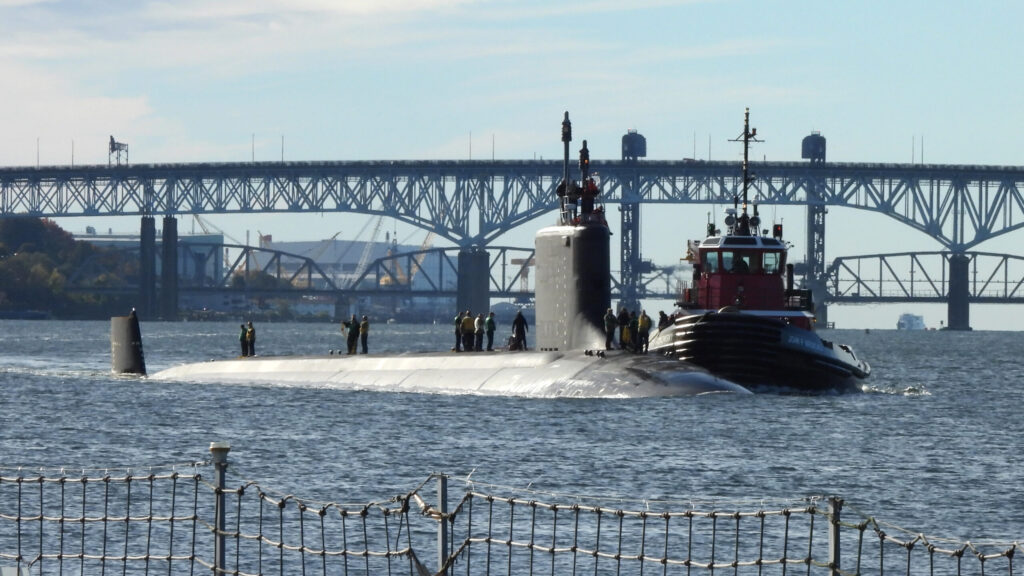
Navy-Hadrian Alliance Opens Submarine Parts Facility
The U.S. Navy's new public-private partnership with Hadrian marks a strategic shift toward outcome-based investments in submarine component production, signaling increased industrial base resilience amid rising underwater tensions globally.
The U.S. Navy and private defense firm Hadrian have launched a public-private partnership that inaugurates a facility dedicated to building submarine parts. Secretary of the Navy John Phelan called the initiative a “novel transaction” designed to ensure investments focus on tangible results rather than solely contractual promises. This development underscores the Navy’s intent to bolster critical supply chains for undersea warfare platforms.
Historically, submarine component manufacturing has been a tightly controlled process, often limited to government-owned or highly specialized contractors. By collaborating more closely with private industry, the Navy seeks to accelerate modernization and reduce risks of production delays that could affect fleet readiness. The partnership reflects growing recognition that continuous undersea dominance requires adaptability in industrial practices.
Strategically, this arrangement enhances the U.S. position in undersea warfare at a time when global naval powers, including China and Russia, aggressively expand and modernize their submarine capabilities. Reliable and timely access to advanced submarine components is vital to maintaining deterrence and operational superiority in contested maritime domains. This facility could be a critical node in securing supply-chain resilience amid increased geopolitical friction.
Technically, the Hadrian facility will focus on advanced manufacturing technologies for complex submarine parts, including components for propulsion systems, sonar arrays, and pressure hull elements. Hadrian leverages cutting-edge automation and digital twin modeling to improve production precision and agility. The partnership model includes performance-based contracts that link payments to measurable outputs, fostering accountability and innovation.
Looking ahead, this public-private model may serve as a blueprint for other military branches seeking to integrate industry capabilities with defense modernization requirements. The facility enhances the Navy’s ability to sustain undersea forces despite potential disruptions from global supply chain shocks or adversarial targeting. As submarine fleets become pivotal in future conflicts, ensuring robust industrial support becomes an urgent strategic imperative.