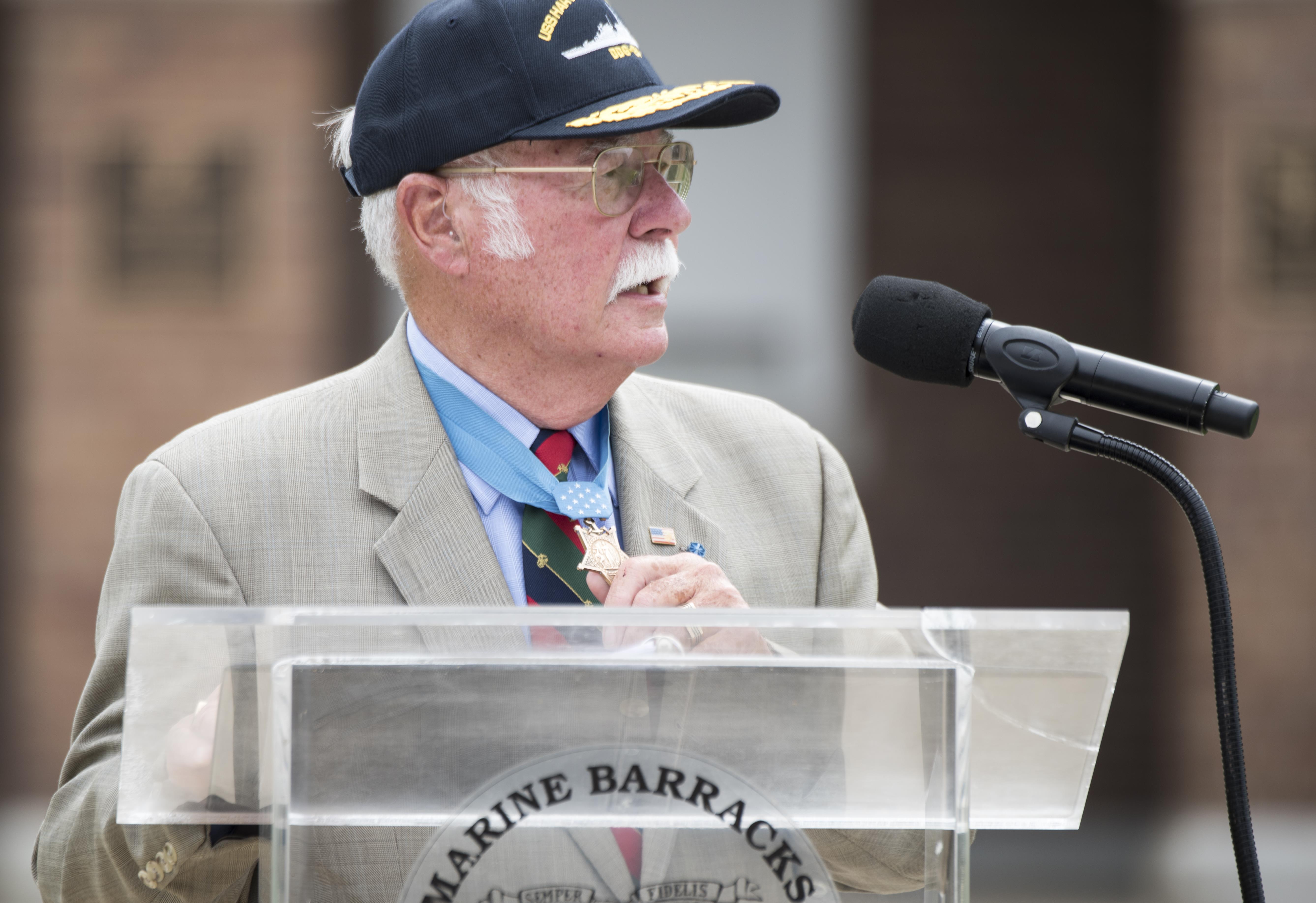
Navy Commissions USS Harvey C. Barnum Jr. Amid Crises in the Pacific
The commissioning of the USS Harvey C. Barnum Jr. carries significant implications amid heightened tensions in the Indo-Pacific region. This development underscores the U.S. Navy's strategic posture as it seeks to reinforce its presence against rising threats.
The U.S. Navy has commissioned the USS Harvey C. Barnum Jr., a vessel named in honor of the Marine Corps veteran who received the Medal of Honor for his valor during the Vietnam War. This event occurs during a period of escalating military activity in the Indo-Pacific, where U.S. forces are increasingly challenged by adversarial maneuvers and strategic posturing from nations such as China and Russia.
Since the end of the Vietnam War, U.S. military recognition for service members has taken many forms, but honoring an individual through a naval vessel specifically signals a commitment to uphold valorous legacies while simultaneously showcasing U.S. military capability. Following recent incidents involving Chinese naval confrontations in the South China Sea and Russia's assertive military actions, the commissioning could be interpreted as a direct message regarding U.S. resolve in maintaining maritime stability and protecting its interests across the globe.
This commissioning is particularly significant as it comes at a time when military power dynamics are increasingly strained. The U.S. seeks to reassure allies in the face of aggressive territorial claims, particularly as China continues to expand its military footprint. Furthermore, the ongoing conflict in Ukraine has diverted attention and resources, raising questions about U.S. commitments abroad and the sustainability of its force posture in various regions.
Key actors in this development include the U.S. Navy, which aims to bolster its fleet as tensions heighten, and adversaries such as the Chinese and Russian militaries, whose actions are being closely monitored. The U.S. government's motivations behind expanding naval operations include deterring aggression and reaffirming alliances with key partners in the Pacific region, as showcased by joint military exercises and increased naval presence.
The USS Harvey C. Barnum Jr. is a modern warship with advanced capabilities, including surface-to-air missile systems and enhanced radar technology. Such vessels are equipped not only for traditional naval engagements but also for multi-domain operations that address emerging threats, including cyber warfare and asymmetric tactics from non-state actors. The ship's commissioning represents an investment of millions in defense spending aimed at maintaining maritime supremacy.
In terms of likely consequences, the commissioning could escalate tensions further, provoking responses from rival military powers who view this move as a threat. Additionally, the U.S. Navy's immediate operational readiness may be scrutinized, forming potential flashpoints for larger confrontations should provocative actions escalate in contested waters.
Historically, the commissioning of ships named after military heroes serves to reinforce a nation’s ethos of heroism and sacrifice. Similar cases can be seen in previous naval commissions that coincided with periods of geopolitical friction, often used as a rallying point for U.S. foreign policy narratives and national pride during times of conflict.
Moving forward, attention should be placed on how the ship will be deployed in operational scenarios, especially concerning missions in contested areas like the South China Sea. Intelligence indicators to monitor include naval movements, joint exercises with allies in the region, and responses from adversarial naval forces, which could signal escalatory patterns in U.S. maritime strategy.