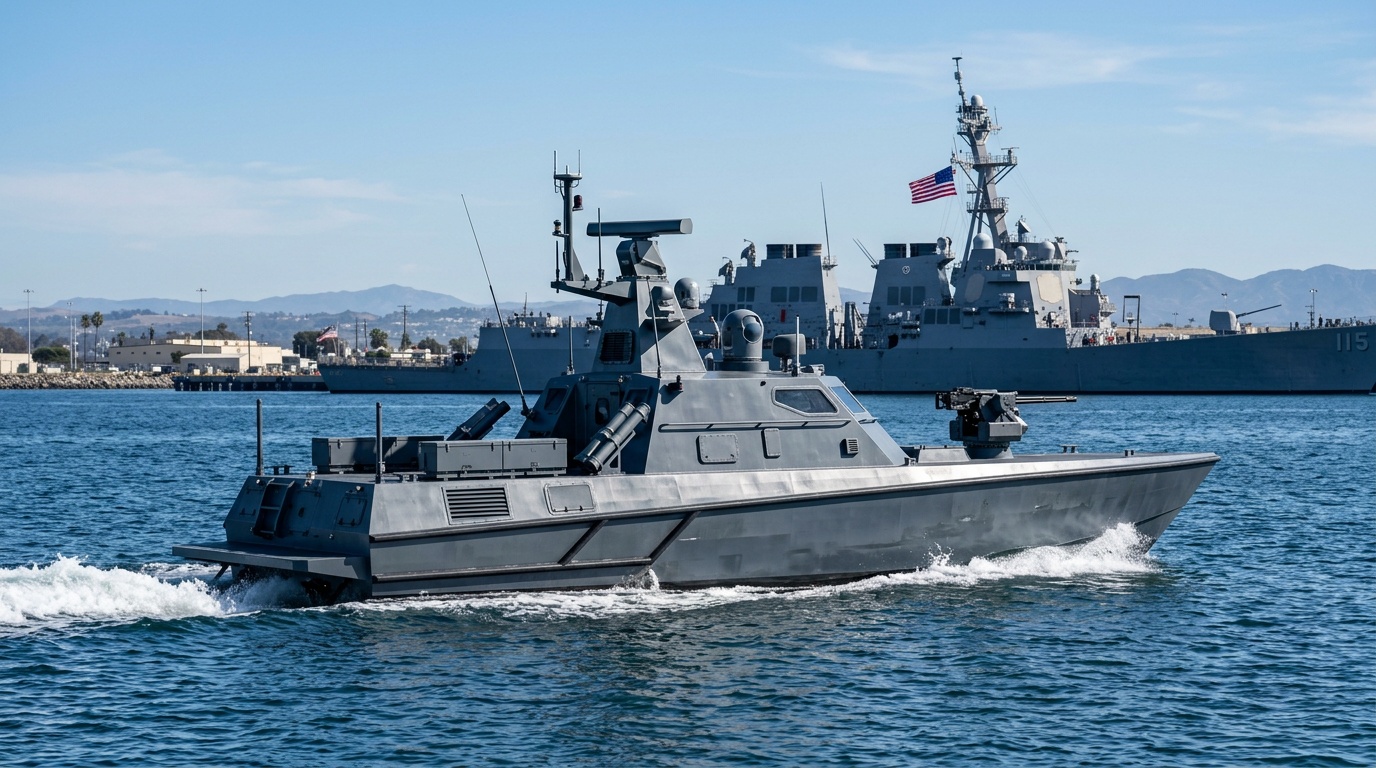
Navy Cancels MASC Program, Launches New MUSV Marketplace
The U.S. Navy has officially terminated the Medium Unmanned Surface Combatant (MASC) program, introducing instead a new marketplace initiative for Medium Unmanned Surface Vessels (MUSV). This platform-centric approach emphasizes production-ready and mission-capable systems, targeting initial deliveries by fiscal year 2027.
The U.S. Navy recently announced the cancellation of the Medium Unmanned Surface Combatant (MASC) program, shifting focus toward establishing a new marketplace model for Medium Unmanned Surface Vessels (MUSV). Unlike traditional procurement programs, this marketplace strategy prioritizes platforms that are near-production and fully mission-capable, aiming to accelerate deployment timelines and provide greater flexibility in vendor participation.
Technical specifications for the upcoming MUSV platforms are expected to include modular payload bays supporting diverse mission packages such as anti-submarine warfare, electronic warfare, and surface strike capabilities. Enhanced autonomy and networked operations between manned and unmanned assets will be critical to accelerating combat effectiveness in contested maritime environments.
Strategically, the shift aligns with the Navy’s broader Golden Fleet concept aimed at increasing the number of unmanned platforms within the fleet to improve distributed lethality and operational endurance. By focusing on production-ready solutions, the Navy hopes to leverage commercial innovations and lower-risk technologies to meet aggressive delivery schedules.
Leading defense manufacturers and unmanned systems developers will likely participate in this marketplace, providing the Navy with a variety of options tailored to specific mission sets. Potential applications range from intelligence, surveillance, and reconnaissance (ISR) to force multiplication in high-threat areas.
The inaugural deliveries under this new MUSV marketplace are projected as early as fiscal year 2027, consistent with the Navy’s strategic imperative to rapidly integrate unmanned capabilities into fleet operations.