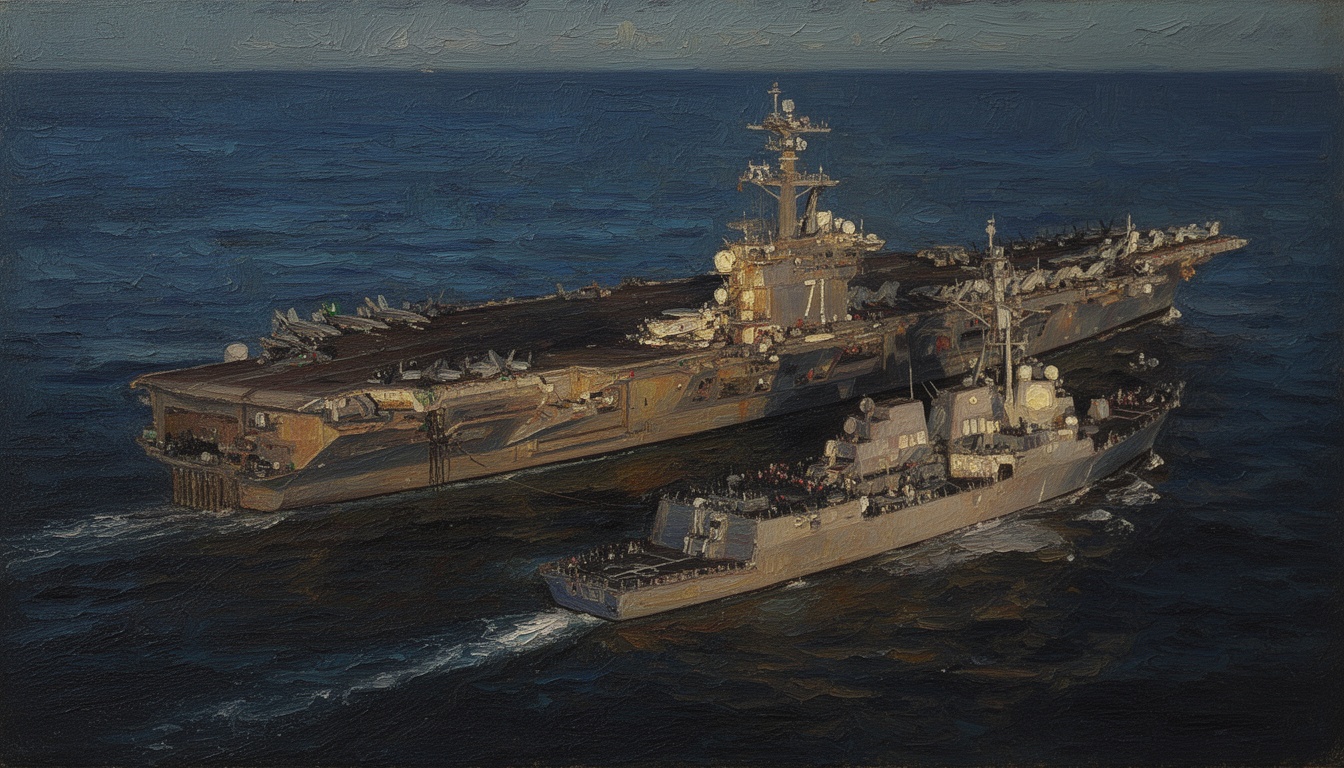
Navy Arms Carrier Groups With Hellfire Missiles for Anti-Drone Defense
Strategic shift accelerates in response to proliferating one-way attack drones. Naval authorities expand hard-kill counter-drone capabilities across carrier groups, signaling a move to deter and blunt swarm threats. The development tightens air-defense integration, elevating the front-line deterrent and potentially reshaping carrier battle group defense postures.
The Navy is accelerating the deployment of hard-kill counter-drone capabilities by arming carrier strike groups with Hellfire missiles. Officials describe this as a response to the growing threat from one-way attack drones that can disrupt, degrade, or threaten flight decks and escort ships. The measure signals an intent to raise the fleet’s resilience against swarming and precision drone tactics. The move comes as unmanned systems increasingly shape modern maritime warfare.
Context for this push includes recent demonstrations of drone swarms and the persistent risk of fast, inexpensive aerial threats to high-value platforms. Naval planners have long sought layered defenses; this acceleration focuses on close-in, high-precision denial options that can neutralize drones before they close to maneuvering range. The policy underscores the Navy’s emphasis on survivability and persistent presence in contested environments. It also reflects broader defense priorities around the joint force's ability to project power without breaking air superiority.
Strategically, the Hellfire counter-drone capability adds a multipronged option to carrier task forces, complicating an adversary’s access tactics. It enhances fleet-wide deterrence by reducing the window for drone-based disruption during carrier operations, amphibious insertion, and sustainment runs. The capability could shape adversaries’ calculations about where and when to attempt disruptive drone attacks. It also signals a broader modernization tempo for carrier battle group defense architectures.
Technical details point to integrating existing Hellfire variants into close-in defense roles, potentially leveraging targeting data from aircraft, ships, and airborne sensors. This development complements other active defenses such as directed-energy and short-range missiles, forming a more robust protective envelope around carriers. Budgets, procurement schedules, and training cycles will determine how quickly this capability becomes routine across carrier groups.
Looking ahead, expect a stepped-up emphasis on anti-drone warfare in fleet training plans and doctrine. We should see expanded exercises focusing on drone interdiction, rapid-fire engagements, and integration with unmanned aerial systems for surveillance and targeting. The operational impact will hinge on how opponents adapt, possibly driving new drone designs or tactics aimed at overwhelming point defenses. Overall, the move heightens deterrence and signals a prioritization of carrier group survivability in contested maritime theaters.