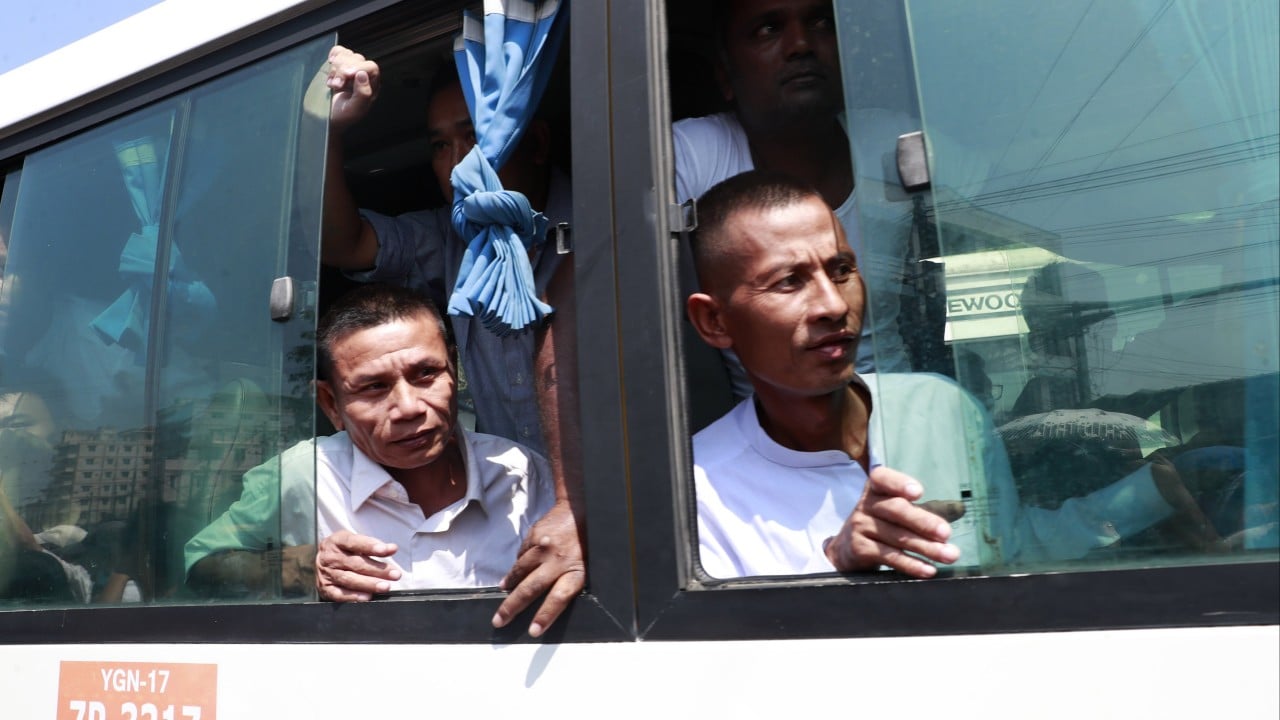
Myanmar Junta Frees Over 7,000 ‘Terrorists’ Amid Ongoing Repression
The mass amnesty reflects Myanmar's brutal crackdown on dissent, emboldening the junta while allowing pro-democracy activists to regroup. This move highlights the precarious state of human rights and the ongoing crisis in Myanmar post-coup.
Myanmar's military junta has released over 7,000 prisoners previously convicted of financing or providing shelter to what the regime designates as 'terrorist groups.' This sweeping amnesty comes just days after the junta intensified its violent repression of dissent against its rule following the 2021 coup, which abruptly halted the nation’s experiment with democracy. As a result, many pro-democracy supporters, including politicians and civilians, have faced harsh sentences under dubious terrorism-related charges.
Since seizing power, the junta has arrested thousands, targeting anyone associated with the pro-democracy movement or the National Unity Government, which operates in opposition to military rule. The charges against these individuals often lack substantial evidence and reflect the junta's attempts to delegitimize its rivals. The junta's crackdown has triggered armed resistance from multiple ethnic groups and pro-democracy militias, leading to widespread violence and instability across the nation.
This development exposes the junta's ongoing struggle to maintain control amidst a fractured society. Releasing prisoners categorically branded as terrorists may momentarily appease some factions but does little to alter the broader climate of fear and repression. Moreover, this move risks fueling further civil unrest as advocates seek to reclaim their rights and mobilize against the junta’s authoritarianism.
Key actors in this situation remain highly motivated by self-preservation. The military leadership, led by Senior General Min Aung Hlaing, continues to justify its actions under the guise of national stability, while various pro-democracy factions rally support among the populace. Many activists see the mass release as a mere tactical gesture rather than a genuine shift toward reform or reconciliation, particularly given ongoing conflicts.
Despite the official narrative of goodwill, the junta's military expansion continues, with substantial investments made in weaponry and logistics. Recent reports indicate that the regime has increased military funding to approximately $2 billion while stepping up procurement of advanced armaments from foreign partners, significantly boosting its operational capabilities against armed opposition. This military buildup further complicates the landscape of conflict and dissent in the country.
The consequences of this amnesty remain uncertain, but potential escalation vectors abound as both the junta's hardline stance and armed resistance intensify. If pro-democracy factions manage to consolidate their ranks and accelerate efforts for coordination, further clashes with the military could ensue. Conversely, the regime may respond with even heavier repression in a bid to stifle renewed dissent.
Historically, mass releases of political prisoners in oppressive regimes have often been linked to attempts to quell civil unrest or project an image of tolerance. However, these releases frequently follow a cycle of increased repression, leading to further entrenchment of conflicts rather than resolution. Myanmar’s current situation bears resemblance to numerous other cases where unilateral governmental actions fail to resolve core grievances.
As developments unfold, key indicators include the response from pro-democracy factions and international reactions to the junta's actions in connection to regional stability. Analysts will be closely monitoring any shifts in the armed groups' tactics or attempts to unify against a common adversary. The coming weeks are critical as the dynamics of resistance and repression will likely dictate Myanmar’s trajectory.