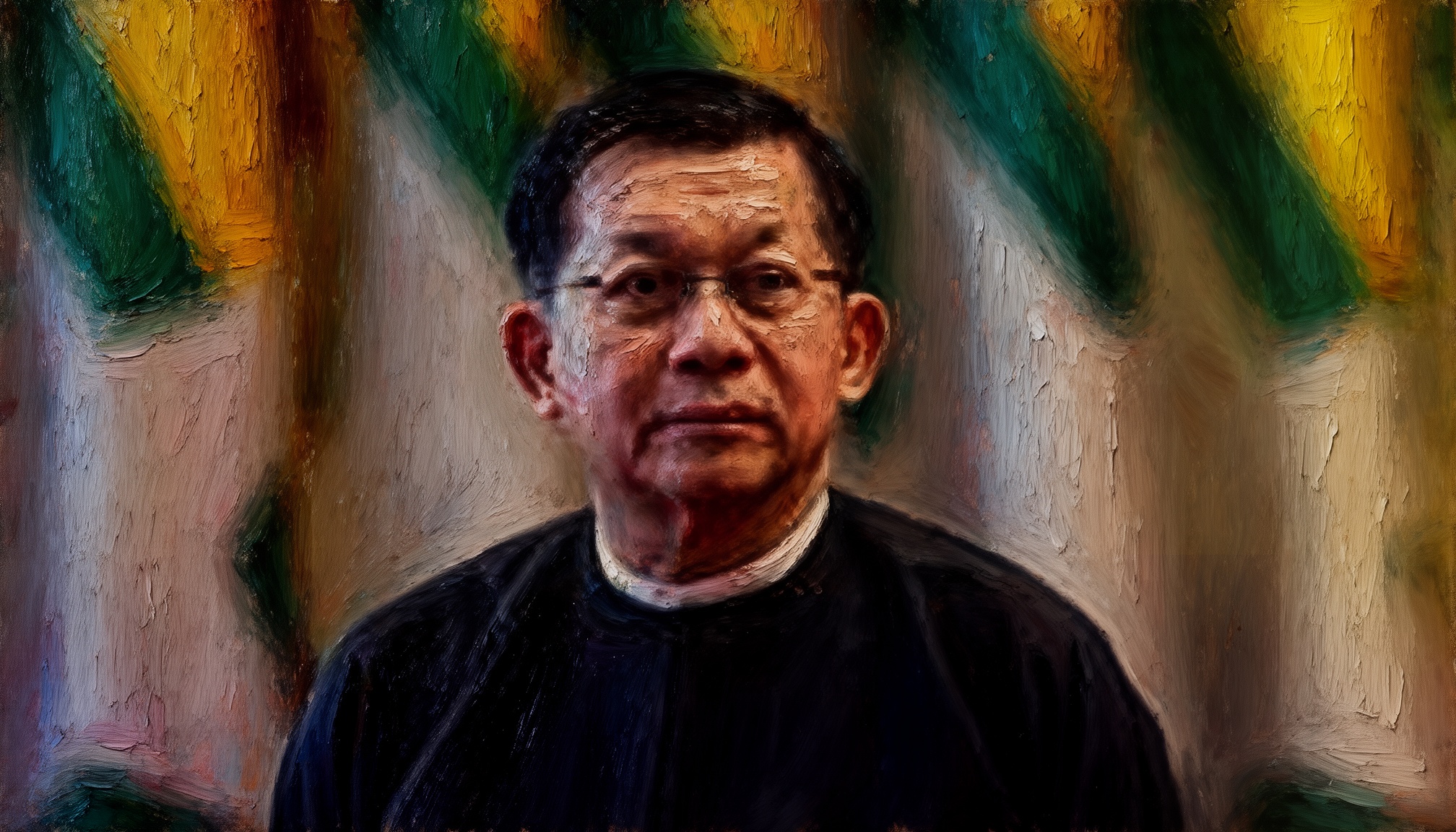
Myanmar Junta Chief Min Aung Hlaing Nominated President Amid Sanctions
Myanmar’s military leader Min Aung Hlaing, under international sanctions, secures presidency. This cements military dominance despite widespread condemnation and ongoing civil conflict.
Myanmar’s military chief Min Aung Hlaing has been formally nominated to become the country’s president, cementing the junta’s hold on power despite international sanctions. Western governments have imposed punitive measures against him for his role in the 2021 coup and subsequent violent crackdown on protests. The nomination signals a consolidation of military authority against popular civilian opposition.
Since the February 2021 coup, Myanmar has been engulfed in conflict, with armed resistance groups battling junta forces and civilians suffering harsh repression. The military’s refusal to cede power escalates instability in a region already sensitive to authoritarian backsliding. Min Aung Hlaing’s elevation will likely deepen Myanmar’s isolation and could provoke stronger international responses.
Strategically, this nomination underscores the junta’s determination to maintain control and reject democratic processes. It also complicates ASEAN’s diplomatic efforts and risks extending civil war conditions, threatening regional security and humanitarian conditions. Myanmar’s fragile peace is at greater risk as military rule is institutionally reinforced.
Technically, Min Aung Hlaing’s promotion consolidates the military’s grip, as he commands more than 400,000 troops and controls key state apparatus after dissolving the civilian government. The president role, while traditionally ceremonial, now serves as a vehicle to legitimize the junta’s illegal coup and imposed governance. International sanctions include asset freezes and travel bans aimed at curbing his global influence.
Looking ahead, Myanmar faces deeper conflict and international isolation. Civil war risks escalating with more ethnic armed groups joining resistance against military rule. ASEAN and global powers may reconsider engagement strategies, but the entrenched junta shows little interest in compromise. The path to democracy is increasingly obstructed by a reinforced military dictatorship.