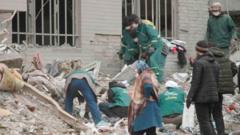
'My Daughter Is Under Rubble': Tehran Civilian Casualties Escalate
One month after US-Israeli strikes on Iran, Tehran faces rising civilian casualties and deep social trauma. The attacks amplify regional instability and highlight growing tensions between Iran and Western powers.
Tehran reels under the mounting civilian toll from a month-long series of US and Israeli strikes targeting Iran. Survivors describe harrowing losses, including homes destroyed and family members buried beneath rubble. The human cost is becoming a central issue as the conflict intensifies.
The strikes began amid heightened tensions over Iran’s nuclear program and regional influence. Washington and Tel Aviv aimed to cripple Iran’s strategic assets, but Tehran’s dense urban population has suffered disproportionate devastation. Civilians bear the brunt of this shadow conflict.
Strategically, these attacks mark an escalation between Iran and its adversaries, risking broader regional confrontation. Iran’s leadership doubles down on deterrence and retaliation rhetoric, while neighbors grow anxious over potential spillover. The crisis deepens already fragile Middle Eastern security.
The strikes employed precision-guided munitions reportedly supplied by Israel and U.S. intelligence, hitting infrastructure, weapons depots, and suspected command centers. Casualty estimates vary, but credible sources indicate hundreds of civilian deaths and thousands displaced. Reconstruction costs and humanitarian needs surge concurrently.
Looking ahead, Tehran’s rising civilian toll pressures Iranian domestic opinion and complicates diplomatic channels. Prolonged violence could trigger wider mobilization across the region, drawing in global powers. The escalating civilian suffering solidifies this as a dangerous flashpoint in international security.