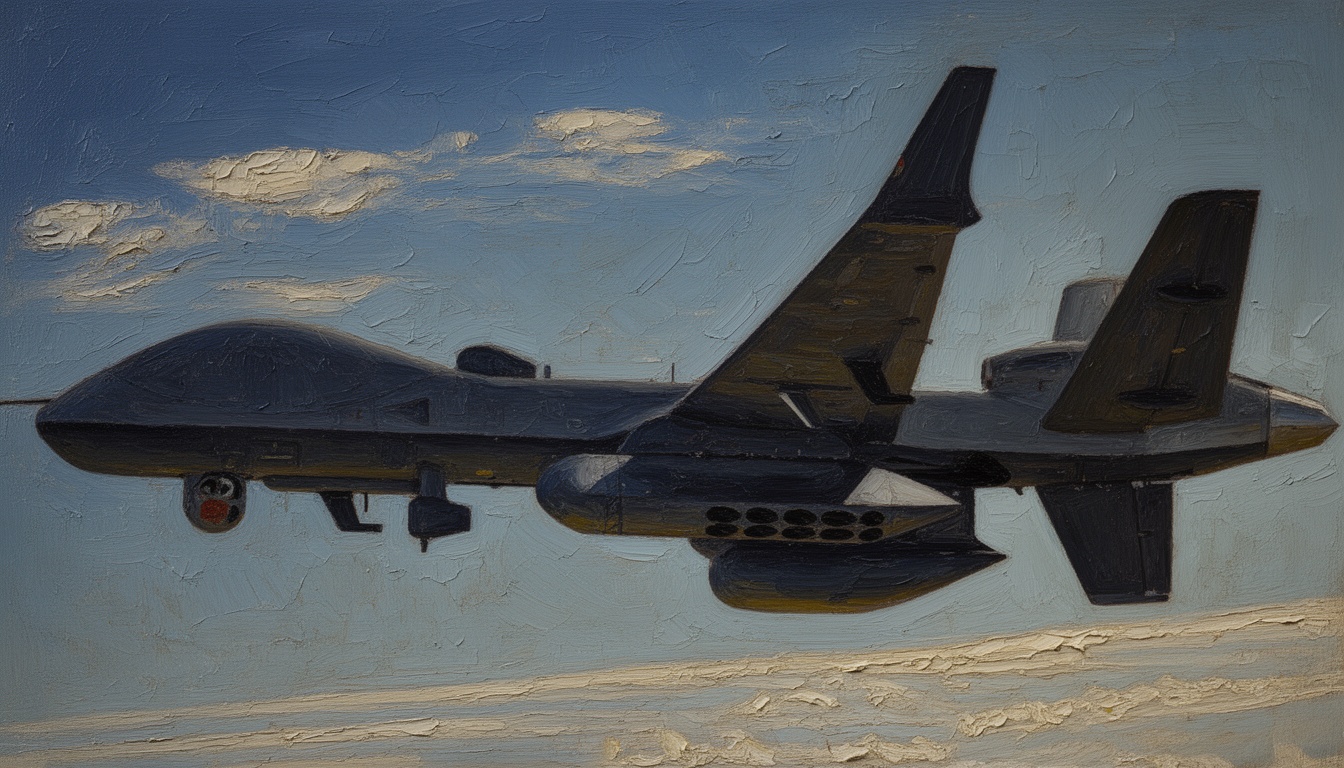
MQ-9B SeaGuardian to Team with P-8 Poseidon in Maritime ISR Push
Global defense balance hinges on how maritime patrol ISR evolves. The MQ-9B SeaGuardian readies for teaming with the P-8 Poseidon, signaling expanded kill-chain and persistence over sea lanes. The combination promises greater maritime domain awareness, with implications for power projection and alliance interoperability.
The MQ-9B SeaGuardian is positioned to operate in tandem with the P-8 Poseidon, aiming to extend maritime patrol and ISR reach. This teaming is framed as a practical enhancement of persistent surveillance, target tracking, and broad-area maritime awareness. The collaboration signals a strategic push to integrate unmanned and manned platforms for multi-domain maritime operations. Expect accelerated concept-of-operations development to leverage shared data streams and cross-platform fused intelligence.
Historically, maritime patrol has relied on a mix of long-endurance aircraft and surface assets. The SeaGuardian adds an autonomous layer capable of extended loiter, sensor payload flexibility, and high-altitude operations that complement the P-8’s sensor suite and crewed mission profile. The pairing aligns with renewed great-power attention to sea control, anti-submarine warfare, and threat detection near chokepoints. It also reflects a broader trend toward distributed maritime awareness in alliance networks.
Strategic significance centers on reinforcing NATO and allied maritime deterrence without proportionally increasing manned-aircraft exposure. The P-8 offers robust anti-submarine and surveillance capabilities; the SeaGuardian contributes persistent ISR and potential strike integration, depending on payloads. The arrangement could complicate adversaries’ access to sea lanes and command of the commons in contested theaters. It also tests the fusion of unmanned platforms with aircraft-carrier and fleet operations.
Technical details indicate modular payload acceptance for the MQ-9B, with compatibility for a range of radar, EO/IR, and electronic warfare suites. Data-link interoperability with the P-8 is a key requirement, enabling real-time fused targeting and mission planning. Budgetary and industrial implications include sustaining advanced propulsive and avionics ecosystems while expanding cross-service standards. Operational concepts will likely prioritize ISR sortie concentration, risk reduction for long-duration missions, and rapid transition to allied routine use.
Forward assessment suggests a rapid move toward integrated maritime patrol domes, where unmanned systems provide endurance and non-kinetic options. If successful, the teaming could influence procurement priorities across partners, spur joint training pipelines, and drive standardized data-sharing protocols. The evolution of this collaboration will shape future maritime crisis response, with potential ripple effects on alliance posture and theater-level readiness.