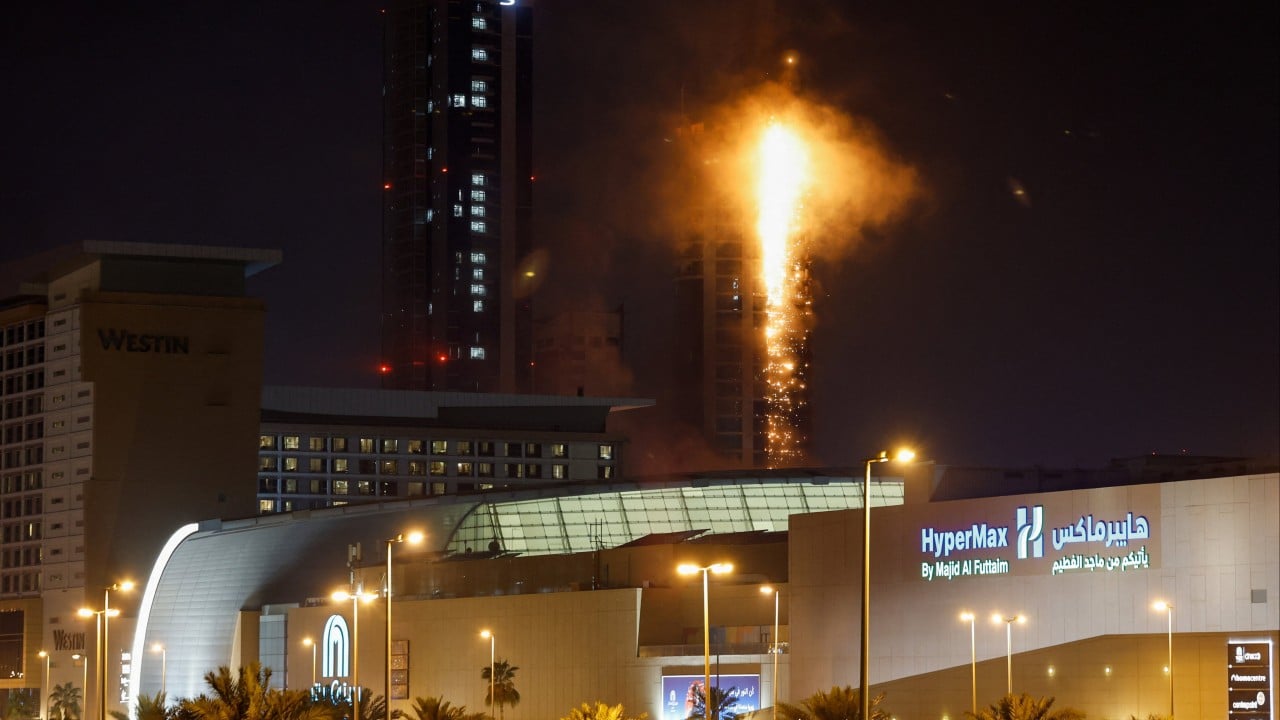
Millions of Asian Workers Face Peril as Iran War Escalates
The ongoing conflict between Iran and the US-Israel alliance poses substantial risks to millions of migrant workers across the Gulf, highlighting critical vulnerabilities in regional stability. Their essential contributions to economies now place them in immediate danger amidst rising hostilities.
Iran's escalating military conflict with the US-Israel coalition is putting millions of migrant workers from Southeast and South Asia in jeopardy. Recent airstrikes carried out by the US and Israel, which resulted in the death of Iran's supreme leader, have intensified retaliatory strikes from Tehran. The conflict’s spillover threatens the safety and livelihood of an estimated 24 million migrant workers who are integral to sectors such as healthcare, construction, and domestic services in the Gulf countries.
For years, the Gulf region has depended heavily on migrant labor, primarily sourced from countries like the Philippines, India, Pakistan, and Bangladesh. The influx of foreign workers was driven by the rapid economic development and infrastructural expansion within Gulf states, coupled with local labor shortages. However, this reliance has now placed these workers in harm's way as geopolitical tensions rise, especially during Iran's pushback against perceived aggressors.
The significance of this crisis cannot be overstated. As the conflict escalates, the vulnerability of migrant workers exposes critical gaps in regional security. They not only represent an economic backbone in the Gulf but also exemplify the risks associated with regional conflicts, highlighting how foreign policy decisions can have immediate and devastating effects on civilian populations.
The key actors in this scenario include the Iranian regime, which seeks to assert its power in response to foreign military actions, and the Gulf monarchies, which have traditionally relied on migrant labor for their economic engines. While the governments of the workers’ home countries are engaging in diplomatic discussions, their motivations to protect citizens overseas confront harsh realities where power dynamics are increasingly unstable.
Operationally, this situation creates a precarious environment for migrants, many of whom work on critical infrastructure projects or within healthcare systems strained by the ongoing hostilities. The threat of rocket attacks or military operations could disrupt these sectors significantly. These workers, already facing challenging living and working conditions, are now at heightened risk of violence and instability, which may lead to widespread chaos in these environments.
The likely consequences of this intensifying crisis are manifold. As hostilities continue, the potential for mass evacuations or a significant loss of life among migrant workers looms large. Moreover, a prolonged military engagement could prompt a regional refugee crisis, further complicating an already dire humanitarian situation and straining international resources.
Historically, conflicts in the Middle East have often put migrant labor at risk, from the Iraq Wars to the Syrian Civil War, resulting in significant casualties and displacement. Past incidents demonstrate how geopolitical conflicts can have extensive ramifications for civilian populations, particularly those reliant on foreign labor markets for stability.
Looking forward, the intelligence community should monitor further developments in Iranian military capabilities and any retaliatory measures taken by regional powers. Key indicators to watch include shifts in US military presence in the Gulf, potential evacuation plans from migrant-sending countries, and emergency measures put in place by Gulf states to safeguard their labor forces. The evolving scenario necessitates a keen focus on how international diplomatic pressures may shape the future of both the workers and the fragile geopolitical landscape in the region.