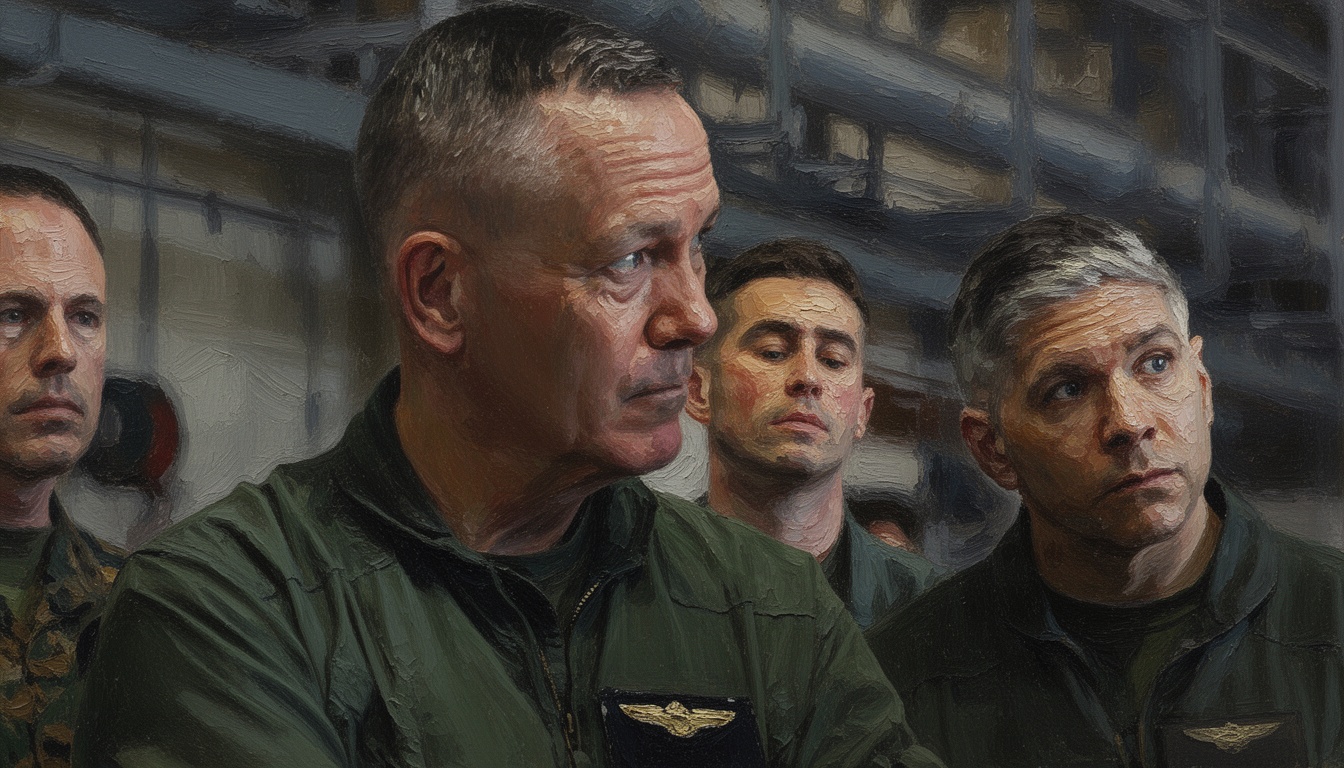
Marines Begin Early Sixth-Gen Fighter Concepts, Echoing Navy F/A-XX
The Marine Corps has launched preliminary work on a sixth-generation fighter concept. A senior Marine general suggests the platform could resemble the Navy's F/A-XX in look and capability. The move signals a shared acceleration of next-generation air power across the U.S. service network with wider regional implications.
The Marine Corps has kicked off early conceptual work for a sixth-generation fighter, signaling an accelerated push to renew air combat power before the 2030s. The development is framed as a long-range capability refresh rather than a specific procurement program. A top Marine general indicated the envisioned aircraft would bear a resemblance to the Navy's F/A-XX, pointing to shared design philosophy and potential cross-service interoperability. This early-stage work centers on concept trades, cost estimates, and how a sixth-gen fighter could integrate with unmanned systems and advanced sensors.
Background context: The United States has been signaling a strategic pivot toward more capable, networked aerial platforms that can operate in contested airspaces and with greater persistence. The Marine statement aligns with broader U.S. defense thinking about distributed, cockpit-plus-unmanned team concepts and hybrid manned-unmanned formations. The emphasis on appearance relative to the F/A-XX also hints at potential commonality in avionics architecture, propulsion concepts, and survivability features. Analysts view this as part of a larger family of fifth-to-sixth-gen transitions across the joint force, aimed at outpacing adversaries’ integrated air defenses.
Strategic significance: A successful move to a sixth-gen concept would sharpen Marine air power’s reach in littoral and expeditionary operations, increasing deterrence in contested regions and complicating adversaries’ air-defense planning. The convergence with the Navy’s program raises questions about joint budgeting, industrial base stability, and the pace of hardware maturation. If pursued in parallel with other next-gen efforts, this could push regional powers to reassess air superiority calculations and surge their own advanced fighter or unmanned programs.
Technical/operational details: The discourse centers on what sixth-gen features would look like—advanced sensors, autonomy-enabled wings, directed-energy or hypersonic integration, and next-gen propulsion concepts. While specifics remain under wraps, the comparison to the F/A-XX suggests emphasis on sensor fusion, stealth refinements, networked command-and-control, and a cockpit design that remains modular for future upgrades. Budget considerations, staffing of research hubs, and collaboration with defense industry partners are likely to shape early trades and risk reduction efforts.
Consequences and forward assessment: If the Marine Corps maintains an early, concept-focused trajectory, expect a staged series of demonstrations, white papers, and concept reviews over the next few years. The alignment with the Navy’s path could enable shared procurement streams, reduce duplication, and present a unified front to potential adversaries. However, timing remains uncertain given budget cycles, technology maturation timelines, and the need to balance modernization with current readiness.